

India’s Falling Fertility Rate: A Doctor’s Perspective on NFHS-6
Akshita (name changed) came to my clinic recently, planning her first pregnancy at thirty-four. Her mother had already completed her family by that age. In a single generation, the shape of motherhood in India has changed dramatically. India’s falling fertility rate is often discussed through numbers and headlines. Stories like Akshita’s reveal the human reality behind the trend.
Across years of obstetric practice, I have watched families grow smaller and pregnancies arrive later. As a Senior Consultant Obstetrician and Gynaecologist, I see this shift reflected in my clinic every day. Women now bring questions their mothers rarely asked. They want clear information, sensible timing, and a plan in place before they conceive.

Planning pregnancy begins with informed conversations
The latest National Family Health Survey has put numbers to what I observe daily. That reading misses what is actually unfolding in clinics and homes across the country. These findings align with broader trends in childbirth in India, where family size, pregnancy planning, and maternal healthcare practices continue to evolve.
A falling fertility rate is not a story of fewer births alone. It reflects informed reproductive choices and steadily improving maternal care. This article explains what the survey shows, and why a clinician reads it with cautious optimism.
Also Read:
- What to Expect in Pregnancy After Recurrent Miscarriage
- Bleeding in Early Pregnancy: Symptoms, Causes, and Outcomes
- Preterm Birth: Causes, Risk Factors and Prevention
NFHS-6 Findings Reveal a Falling Fertility Rate
The NFHS-6 survey provides one of the most comprehensive pictures of changing reproductive health trends in India. Two of its NFHS-6 findings stand out for any obstetrician. Fertility has settled at a lower level, while the quality of maternal care has risen.
The National Family Health Survey (NFHS-6) is India’s largest nationwide health survey, providing critical insights into fertility, maternal health, family planning, nutrition, and healthcare access across the country. Its findings help shape public health policies and healthcare planning.
NFHS-6 highlights India’s changing health trends
Before we explore what these trends mean for women, here are some of the key maternal health findings from NFHS-6 that are shaping India’s changing motherhood story.
- Total Fertility Rate:0 children per woman, below replacement level fertility of 2.1
- Institutional Deliveries:6% births now occur in healthcare facilities
- First-Trimester Antenatal Care:2% women register pregnancy in the first trimester
- Postnatal Care:3% mothers receive postnatal care within two days of delivery
- Contraceptive Prevalence Rate:1% of married women use family planning methods
What the Numbers Actually Show
India’s total fertility rate now sits at around two children per woman, just below the level needed to replace one generation with the next. At the same time, institutional deliveries have risen above ninety percent, and more women begin antenatal care in the first trimester than before. The message is consistent. Families are choosing fewer children, and they are receiving safer, more supervised care when they do. Read together, these trends describe India’s shifting childbirth patterns rather than a simple decline.
Why a Lower Number Is Not a Decline Story
A lower fertility rate often reads as something lost. In practice, the reasons behind the number tell a different story. Women are completing education, building careers, and deciding when to start a family. They are spacing pregnancies and choosing how many children to raise. Access to modern family planning methods and informed birth control choices has also helped women take a more active role These are decisions made with information and intent. A smaller family is frequently a planned one, and a planned pregnancy usually begins with better health and earlier care.
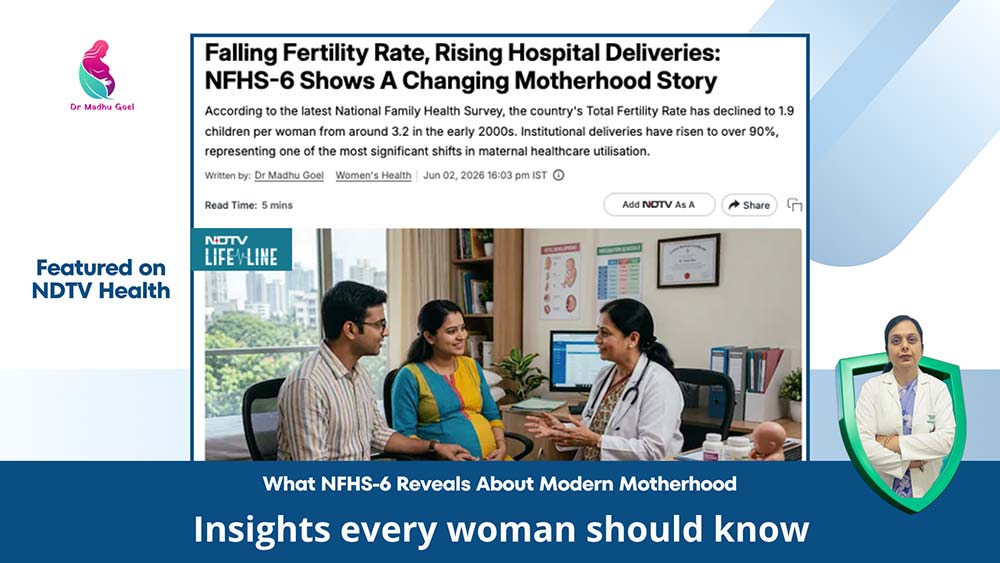
Featured perspective on India’s motherhood transition
News coverage of the survey, including my recent article for NDTV Life Line, framed this as a changing motherhood story. That description closely reflects what I see in clinical practice today. Women are approaching pregnancy differently, with greater awareness, careful planning, and a more active role in their healthcare decisions.
Informed Choices Drive India’s Lower Total Fertility Rate
Behind every shift in the total fertility rate are millions of individual decisions. Understanding why women now choose smaller families helps explain why this trend reflects progress rather than loss for maternal health.
What Is Changing in How Women Plan
Several social changes sit behind the lower birth rate, and most of them point in a healthy direction.
- Education access: More women complete schooling and higher studies before starting a family.
- Later timing: Many women plan a first pregnancy in their early or mid-thirties.
- Spacing pregnancies: Couples leave longer gaps between children for recovery and stability.
- Family planning: Wider access to contraception supports planned and intended pregnancies.
What This Means Clinically
These choices change what I watch for, and when I begin watching, in early pregnancy.
- More after 35: A growing share of pregnancies now occurs after the age of thirty-five.
- Planned conception: Many women seek advice before conceiving, not only afterward.
- Earlier consults: First-trimester visits allow concerns to be identified early.
- Steadier monitoring: Planned pregnancies fit more readily into structured antenatal care.
Each choice carries clinical meaning. Later and planned pregnancies need careful assessment, yet they also arrive with better preparation. The falling number reflects women taking informed control of their reproductive lives.
Maternal Health in India Has Improved Alongside Fewer Births
The NFHS-6 findings show that maternal healthcare access and utilisation have improved steadily, helping more women receive timely care before, during, and after pregnancy.
Why Better Care Matters More Than Birth Numbers
More than ninety percent of births now take place in hospitals or health facilities. More expectant mothers are connecting with healthcare providers early in pregnancy, creating opportunities for better monitoring and preventive care. Skilled birth attendance and postnatal care have both improved. For a clinician, these figures matter more than the fertility rate itself. Early, supervised care is how a healthy pregnancy is protected, and how a complication is caught before it becomes serious. Fewer pregnancies handled with greater care points toward safer motherhood.
Is a Falling Fertility Rate Good or Bad for Maternal Health?
A falling fertility rate is not harmful to maternal health on its own. When it occurs alongside rising antenatal care and supervised hospital deliveries, as recent national data shows, it reflects safer and more planned motherhood rather than a health risk.
The two trends belong together. Women are having fewer children, and they are receiving better care throughout pregnancy. Read this way, the survey describes maternal progress, not maternal concern. The fertility rate India reports today reflects these changing life choices rather than a simple decline in family values or aspirations.
A Doctor’s Guidance for Women Planning Pregnancy Today
Numbers describe a population. Individual choices shape each pregnancy. Whatever the national trend, a few steps help every woman plan a healthier pregnancy, and most of them begin before conception.
- Plan early: Speak with a doctor before pregnancy or during the first weeks.
- Know your history: Share past pregnancies and family health conditions openly.
- Manage health first: Address blood pressure, blood sugar, and weight before conceiving.
- Choose supervised care: Book regular antenatal visits and a planned hospital delivery.
- Ask questions: Understanding your care reduces fear and supports better decisions.
These steps do not remove every risk. They give a pregnancy structure and support, so that any concern is found early and managed with care. That is what modern maternal care now makes possible.
Also Read:
- Recurrent Miscarriage Causes: Why It Happens and What Helps
- Missed Abortion Explained: Causes, Symptoms, and Recovery
Conclusion
The conversation around India’s falling fertility rate often focuses on numbers. As a gynaecologist, I see the women behind those numbers. The NFHS-6 findings reflect a generation making more informed decisions about family planning, pregnancy, and reproductive health.
What encourages me most is that maternal healthcare indicators are improving alongside the falling fertility rate. More women are seeking care early, delivering in healthcare facilities, and taking an active role in decisions about their health.
From my clinical perspective, the falling fertility rate is not a warning sign. It is a reflection of informed choices, better healthcare access, and changing aspirations for women across India. For some women, this journey may also include fertility assessment or assisted reproductive options such as IVF when pregnancy does not occur naturally despite careful planning.
If you are planning a pregnancy or have questions about your reproductive health, book a consultation with me for personalised guidance and evidence-based care.
Our Digital Imprints:
Dr. Madhu Goel
Senior Consultant Obstetrician and Gynaecologist
Director, Fortis La Femme
I am passionate about women’s health and believe that informed, compassionate care empowers women to make confident choices. With experience in high-risk pregnancies, infertility, and gynaecological care, my focus remains on guiding patients with clarity, empathy, and trust.
Stay informed with Health Hub, my newsletter dedicated to women’s health and wellness, where I share evidence-based insights and practical guidance.
You can also connect with me on Instagram | Facebook | LinkedInfor regular updates on women’s health.