
Preterm Birth: Causes, Risk Factors and Prevention
Every expecting parent hopes to reach full term, yet many pregnancies face unexpected challenges along the way. One of the most common concerns I hear in my practice is whether a baby could arrive earlier than expected and what that might mean for both mother and child. The possibility of a baby being born too soon often creates anxiety, particularly when there are no obvious warning signs.
Preterm birth affects thousands of pregnancies each year and can occur for several different reasons. While some women have identifiable risk factors, others may experience early delivery despite having an otherwise healthy pregnancy. This uncertainty is why regular antenatal care and ongoing pregnancy monitoring are so important throughout pregnancy. Recent maternal health trends in India have further highlighted the importance of supporting healthier outcomes for mothers and babies.
 As a Senior Consultant Obstetrician and Gynaecologist with extensive experience managing high-risk pregnancies, I have seen how early identification of concerns can significantly improve pregnancy outcomes. Timely assessment allows doctors to monitor risks more closely and provide personalised care when needed.
In this blog, I will explain what preterm birth is, its common causes and risk factors, prevention strategies, and how proactive medical care can help support a healthier pregnancy journey.
Also Read:
- India’s Falling Fertility Rate: A Doctor’s Perspective on NFHS-6
- What to Expect in Pregnancy After Recurrent Miscarriage
Preterm Birth and the Importance of Gestational Age
Understanding preterm birth begins with understanding gestational age. Every week of pregnancy supports important stages of fetal development, which is why the timing of delivery plays a significant role in a baby’s health and immediate care needs after birth.
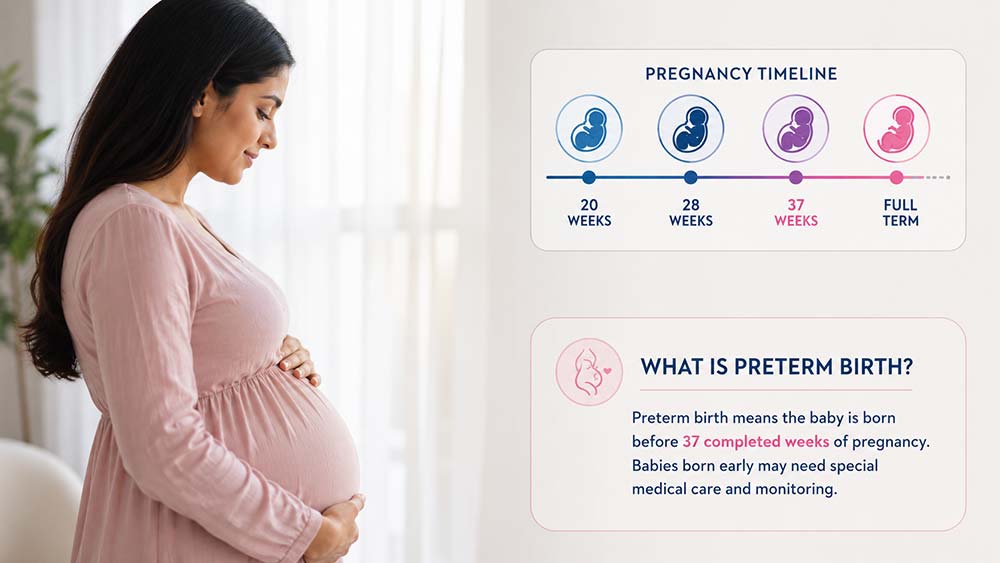
Preterm birth refers to the birth of a baby before 37 completed weeks of pregnancy. Since vital organs such as the lungs, brain, and immune system continue developing throughout pregnancy, babies born early may require specialised monitoring and medical support after delivery.
Understanding Preterm Birth in Clinical Practice
A full-term pregnancy usually lasts around 40 weeks, allowing the baby adequate time for growth and organ maturity. When birth occurs before 37 weeks, the baby may face challenges that vary depending on how early the delivery takes place.
In my clinical practice, I often explain that preterm birth is not a single condition. It includes a wide range of early deliveries, and outcomes can differ considerably based on the stage of pregnancy at which the baby is born.
Categories of Preterm Birth Based on Gestational Age
Doctors classify preterm birth according to gestational age because the timing of birth influences both immediate and long-term outcomes. Extremely preterm birth occurs before 28 weeks of pregnancy. Very preterm birth occurs between 28 and less than 32 weeks, while moderate to late preterm birth refers to babies born between 32 and less than 37 weeks of pregnancy.
Babies born closer to full term generally experience fewer complications than those born much earlier. Understanding gestational age helps doctors assess risks, guide pregnancy monitoring, and provide appropriate care throughout pregnancy.
Premature Baby Care and NICU Support
The health needs of a premature baby often depend on gestational age at birth. Babies born before full term may require additional medical attention because important organs continue developing throughout pregnancy. Understanding the challenges associated with early delivery can help parents feel more informed and prepared if specialised newborn care becomes necessary.
Premature babies may experience difficulties with breathing, feeding, temperature regulation, and infection resistance during the early days after birth. The level of support required varies depending on how early the baby is born and their overall health condition. Advances in neonatal medicine have significantly improved outcomes for babies born before full term.
Can Premature Babies Grow Normally?
Many premature babies achieve healthy growth and developmental milestones with appropriate medical care, nutritional support, and regular follow-up. Outcomes often improve when potential concerns are identified early and managed through specialised neonatal care.
With timely medical support and ongoing monitoring, many premature babies go on to lead healthy and active lives. Early intervention and regular follow-up remain important parts of supporting long-term growth and development.
Preterm Birth Causes and Risk Factors
Preterm birth rarely occurs because of a single reason. In most cases, it develops due to a combination of maternal health conditions, pregnancy-related complications, and individual risk factors. Understanding the causes of preterm birth and identifying women at higher risk allows doctors to provide closer pregnancy monitoring and personalised care throughout pregnancy.
Common Causes of Preterm Birth
Several medical and pregnancy-related conditions can contribute to preterm birth. While some causes develop unexpectedly, others can be identified during routine antenatal care and pregnancy assessment.
- Spontaneous preterm labour: Labour contractions begin before 37 weeks of pregnancy.
- Premature rupture of membranes: The amniotic sac breaks before full-term pregnancy.
- Pregnancy complications: Certain conditions may require early delivery for maternal or foetal safety.
- Placental disorders: Problems affecting placental function can influence fetal growth and pregnancy progression.
- Maternal health conditions: Chronic medical conditions may increase the likelihood of early delivery.
Risk Factors Associated With Preterm Birth
Not every woman with a risk factor will experience preterm birth. However, recognising these factors helps doctors identify pregnancies that may benefit from additional monitoring and preventive strategies.
- Previous preterm birth: A prior history can increase future pregnancy risk.
- Multiple pregnancy: Twins, triplets, or higher-order pregnancies carry a greater risk of early delivery.
- Pregnancy infections: Certain infections may trigger changes associated with preterm labour.
- Short cervical length: Cervical changes can increase the risk of early birth.
- Cervical insufficiency: A weakened cervix may open earlier than expected during pregnancy.
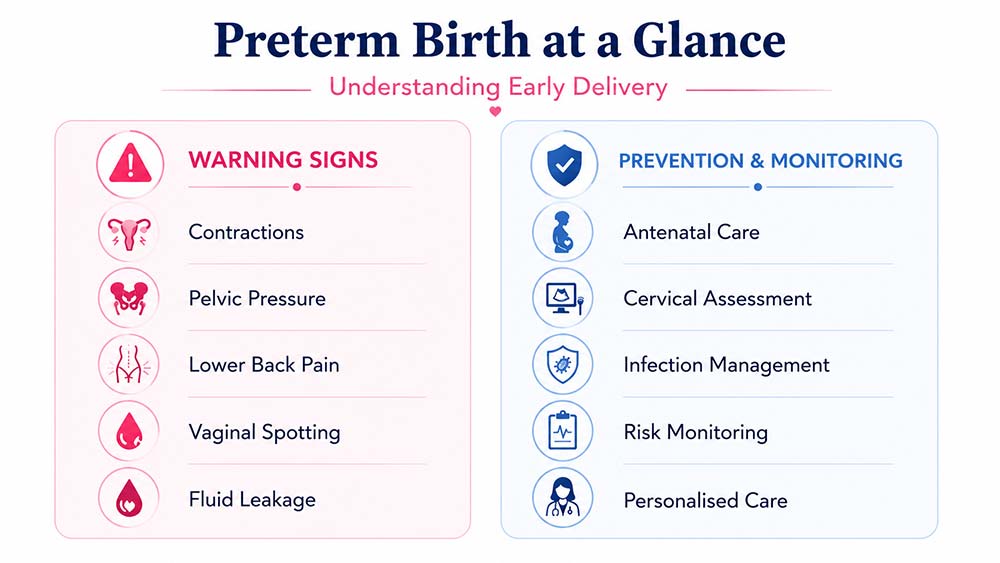
Early identification of preterm birth risk factors allows doctors to assess cervical health, monitor pregnancy progression, and provide appropriate guidance. Regular antenatal visits remain one of the most effective ways to recognise potential concerns before they become more serious.
 Preterm Birth Prevention and Pregnancy Monitoring
Although every case of preterm birth cannot be prevented, careful pregnancy care and regular monitoring can help reduce certain risks. Prevention focuses on understanding individual risk factors, recognising concerns early, and taking timely action when needed. The medical goal is not only prevention but also improving outcomes through personalised pregnancy management.
Prevention Strategies and Pregnancy Monitoring
Effective preterm labour prevention begins with good antenatal care. Many women focus only on major pregnancy complications while overlooking everyday symptoms that can affect their wellbeing. Concerns such as persistent nausea should also be discussed during routine antenatal visits, as timely management can improve comfort and support overall pregnancy health.
Managing existing health conditions, following recommended screening schedules, maintaining healthy lifestyle habits, and discussing previous pregnancy complications all contribute to a more informed approach to care. Because every pregnancy is different, prevention strategies should always be individualised rather than based on general assumptions.
Can Preterm Birth Always Be Prevented?
Preterm birth cannot always be prevented because some causes develop despite appropriate medical care. However, early risk assessment, regular pregnancy monitoring, and timely intervention can help reduce certain risks and support better outcomes for both mother and baby.
Women with a previous history of preterm birth may benefit from closer surveillance and specialised guidance in future pregnancies. Early consultation allows doctors to identify potential concerns, create a suitable monitoring plan, and provide ongoing support throughout pregnancy. Proactive care remains one of the most important tools for improving pregnancy outcomes and reducing avoidable complications.
How to Reduce the Risk of Preterm Birth
While not every case of preterm birth can be prevented, regular antenatal care and timely medical guidance can help identify concerns earlier. Understanding risk factors and following a personalised care plan allows doctors to monitor pregnancy more effectively and support better outcomes.
Good nutrition supports both maternal health and fetal development throughout pregnancy. Following a Early identification of risk factors can help meet increased nutritional requirements and support overall pregnancy wellbeing.
- Attend regular antenatal visits: Enables early identification of pregnancy-related concerns.
- Manage existing medical conditions: Good control of conditions such as diabetes and hypertension may reduce complications.
- Follow recommended pregnancy assessments: Screening and monitoring help guide timely medical decisions.
- Maintain healthy lifestyle habits: Balanced nutrition, adequate rest, and healthy routines support maternal wellbeing.
- Discuss previous pregnancy complications: Past pregnancy history helps doctors plan appropriate monitoring strategies.
Although prevention is not always possible, proactive care helps ensure that potential concerns are recognised and managed at the right time. Regular pregnancy monitoring remains one of the most important tools for supporting a healthier pregnancy journey.

Also Read:
- What to Expect in Pregnancy After Recurrent Miscarriage
- Premature Baby Care: Growth, Feeding and Development After Preterm Birth
Conclusion
Preterm birth remains one of the most important challenges in modern pregnancy care, but awareness and timely medical support can make a meaningful difference. Understanding the causes of preterm birth, recognising risk factors, and following appropriate prevention strategies allow doctors to identify concerns earlier. Planning pregnancies and seeking preconception guidance can also support informed reproductive health decisions before conception.
Regular antenatal care, pregnancy monitoring, and early risk assessment play a vital role in supporting healthier outcomes for both mother and baby. Even women with a history of preterm birth or a high-risk pregnancy can often achieve successful pregnancy outcomes with the right medical guidance and monitoring plan.
If you have concerns about preterm birth risk or pregnancy complications, consult an experienced obstetrician for personalised assessment, pregnancy monitoring, and expert care tailored to your pregnancy journey.
Our Digital Imprints:
Dr. Madhu Goel
Senior Consultant Obstetrician and Gynaecologist
Director, Fortis La Femme
I am passionate about women’s health and believe that informed, compassionate care empowers women to make confident choices. With experience in high-risk pregnancies, infertility, and gynaecological care, my focus remains on guiding patients with clarity, empathy, and trust.
Stay informed with Health Hub, my newsletter dedicated to women’s health and wellness, where I share evidence-based insights and practical guidance.
You can also connect with me on Instagram | Facebook | LinkedInfor regular updates on women’s health.