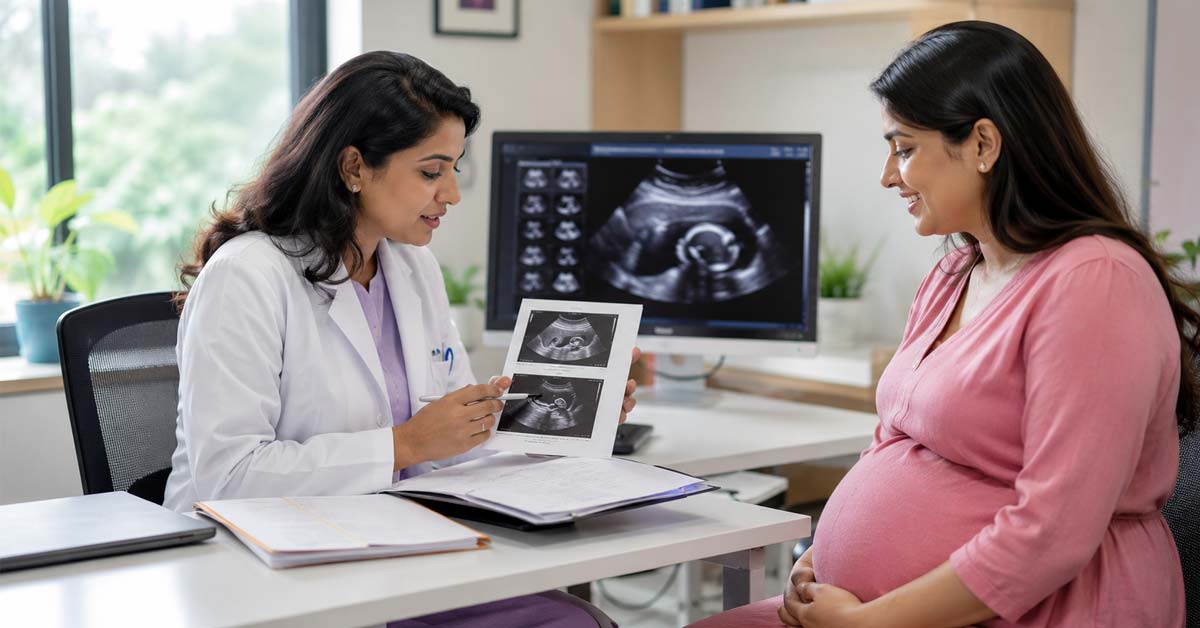

High-Risk Pregnancy Tests and Monitoring: What to Expect
Pregnancy often comes with excitement, but being advised to undergo additional tests can quickly bring uncertainty. You may wonder why you need more scans or investigations when everything seems fine. High-risk pregnancy tests help us assess your health and your baby’s wellbeing more closely when additional monitoring is needed.
High-risk pregnancy tests are recommended when a pregnancy requires closer assessment beyond routine antenatal care. Specialised scans, laboratory investigations, prenatal screening, and foetal monitoring provide different clinical insights, helping doctors assess maternal health, foetal development, and pregnancy progress.
Closer Monitoring for High-Risk Pregnancy Care
As an obstetrician and gynaecologist experienced in managing high-risk pregnancies, I regularly guide women who require closer monitoring and specialised investigations. In my practice, I have seen how timely pregnancy monitoring helps identify concerns early and supports informed decisions for both mother and baby.
In this article, I explain the key high-risk pregnancy tests, specialised investigations, prenatal screening, foetal monitoring, and ongoing assessments you may encounter. Understanding why each test is recommended can help you approach pregnancy monitoring with greater clarity and confidence.
Also Read:
- India’s Falling Fertility Rate: A Doctor’s Perspective on NFHS-6
- What to Expect in Pregnancy After Recurrent Miscarriage
- Anaemia During Pregnancy: Risks for Mother and Baby
High-Risk Pregnancy Tests Support Personalised Monitoring
No two high-risk pregnancies are the same. High-risk pregnancy tests are selected according to individual risks, helping doctors monitor maternal and foetal health appropriately.
High-risk pregnancy tests may include specialised ultrasounds, blood and urine investigations, prenatal screening, and foetal monitoring. The tests recommended depend on individual risk factors and help doctors assess maternal health, foetal development, placental function, and pregnancy progress more closely.
Specialised Ultrasounds Assess Foetal Growth and Wellbeing
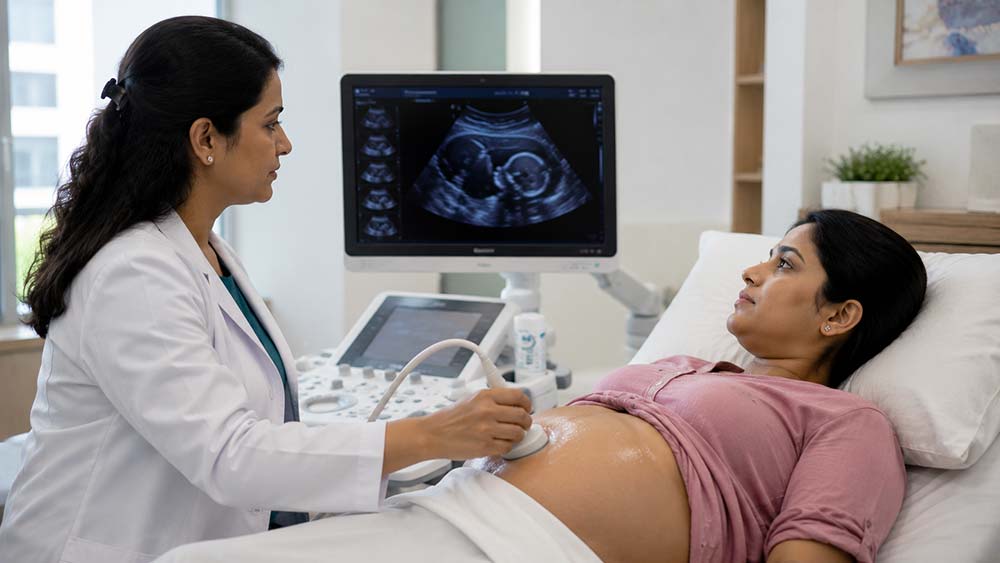
Routine ultrasounds provide important information about your baby’s development. In a high-risk pregnancy, additional scans may be recommended when doctors need more detailed information about foetal growth, placental function, or overall wellbeing.
Depending on your individual risk factors, growth ultrasounds may be advised at specific stages of pregnancy. Doppler ultrasound assesses blood flow through important maternal and foetal vessels, providing information about placental function and the baby’s circulation. Ultrasound can also assess amniotic fluid levels and monitor foetal growth over time.
Not every woman requires every specialised scan. The type and frequency of ultrasound monitoring depend on the individual pregnancy and the clinical concerns being assessed.
Blood and Urine Tests Monitor Maternal Health
Blood and urine investigations are an important part of pregnancy monitoring. They help doctors identify or monitor conditions such as anaemia, infections, gestational diabetes, and other maternal health concerns that may influence pregnancy care.
Regular antenatal monitoring also includes blood pressure assessment, which is particularly important for identifying hypertension and signs that may require further evaluation for preeclampsia. Results are interpreted alongside scans, symptoms, medical history, and other clinical findings rather than in isolation.
Additional investigations provide specific information that guides personalised antenatal monitoring. Understanding their purpose can reduce uncertainty and help women participate confidently in decisions about their pregnancy care.
Prenatal Screening and Foetal Monitoring in High-Risk Pregnancy
Prenatal screening and foetal monitoring provide different information during pregnancy. Together, they help doctors assess potential concerns and determine when closer evaluation may be appropriate.
Prenatal Screening Assesses Chromosomal Conditions
Prenatal screening helps assess the likelihood of certain chromosomal conditions. Screening options are discussed during pregnancy, while individual choices depend on clinical guidance and informed patient preference.
- First-Trimester Screening: Combines early pregnancy assessments to estimate the likelihood of certain chromosomal conditions.
- Non-Invasive Prenatal Testing: NIPT analyses cell-free DNA in maternal blood to screen for common chromosomal conditions.
- Further Evaluation: A higher-risk screening result does not confirm a diagnosis. Your doctor may discuss genetic counselling or diagnostic testing when appropriate.
Understanding the difference between screening and diagnosis is important. Screening identifies probability, while diagnostic tests are used when a definitive assessment is clinically required.
Foetal Monitoring Assesses Baby’s Wellbeing
As pregnancy progresses, foetal monitoring may be recommended to assess your baby’s wellbeing, particularly when closer surveillance is clinically indicated.
- Biophysical Profile: Uses ultrasound to assess foetal movements, breathing movements, muscle tone, and amniotic fluid volume.
- Non-Stress Test: Monitors the foetal heart rate and its response to movement over a period of time.
- Ongoing Surveillance: Findings are considered alongside growth scans, maternal health, and other pregnancy monitoring results to guide further care.
Prenatal screening and foetal monitoring serve different purposes within high-risk pregnancy care. Used appropriately, they provide valuable information that supports informed clinical decisions and personalised antenatal monitoring.
Personalised Pregnancy Monitoring Guides Timely Care
Pregnancy changes continuously, and so can the level of care you need. Regular pregnancy monitoring helps doctors assess maternal health, foetal development, and emerging risks throughout pregnancy.
Cervical Length Assessment Identifies Preterm Birth Risk
Cervical length may be measured during a transvaginal ultrasound, particularly when there are clinical reasons to assess the risk of preterm birth. A shorter cervical length is associated with an increased risk of spontaneous preterm birth, but it does not mean that premature delivery will definitely occur.
When a short cervix is identified, your doctor considers the cervical measurement alongside gestational age, previous pregnancy history, symptoms, and other risk factors. Depending on these findings, closer monitoring or appropriate preventive management may be recommended.
How Does Pregnancy Monitoring Guide Ongoing Care?
Regular pregnancy monitoring allows doctors to track maternal and foetal wellbeing, recognise emerging concerns, and adapt care as the pregnancy progresses. Scans, test results, symptoms, medical history, and clinical findings are reviewed together to guide timely, personalised decisions throughout pregnancy for both mother and baby.
Doctors do not make important decisions based on a single report. Your scans, laboratory results, blood pressure, symptoms, and overall pregnancy progress are considered together to understand the complete clinical picture and determine whether your care plan needs adjustment.
Regular pregnancy monitoring creates continuity throughout a high-risk pregnancy. By assessing changes over time, your doctor can personalise antenatal monitoring and make informed decisions according to your individual needs.
 High-Risk Pregnancy Monitoring Supports Delivery Planning
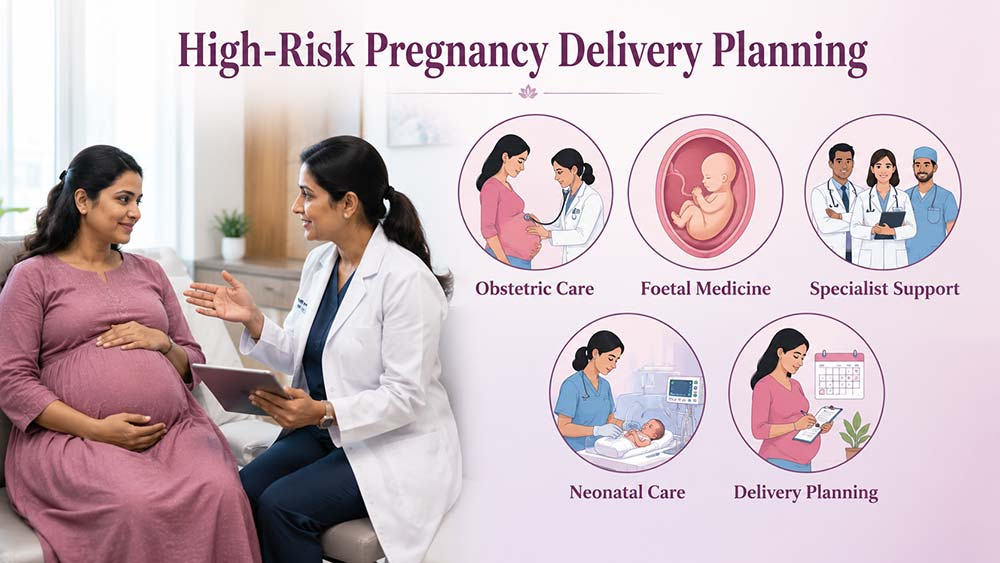
As pregnancy progresses, monitoring also helps us plan for delivery. Test results, maternal health, foetal wellbeing, and individual risk factors guide decisions about when, where, and how delivery should be planned.
- Obstetric Care: Your obstetrician reviews pregnancy monitoring results and determines the safest timing and mode of delivery based on your individual clinical needs.
- Maternal Foetal Medicine Support: A maternal foetal medicine specialist may provide additional assessment and guidance when a pregnancy requires specialised monitoring or management.
- Specialist Collaboration: Physicians, diabetologists, cardiologists, or other specialists may be involved when pre-existing or pregnancy-related medical conditions require coordinated care.
- Neonatal Support: When a baby may require specialised care after birth, delivery can be planned at a hospital with appropriate neonatal and NICU facilities.
- Personalised Delivery Planning: Decisions consider maternal health, foetal wellbeing, pregnancy monitoring findings, and potential complications so the medical team is prepared for different clinical needs.
High-risk pregnancy care requires planning and collaboration. Bringing monitoring findings and specialist expertise together helps the medical team prepare for delivery and support safer outcomes for mother and baby.

Personalised Care Throughout Your Pregnancy Journey
Also Read:
- Premature Baby Care: Growth, Feeding and Development After Preterm Birth
- Preterm Birth: Causes, Risk Factors and Prevention
Conclusion
High-risk pregnancy tests may feel overwhelming, especially when you are unsure why additional investigations are needed. Each test provides specific information that helps us assess maternal health, foetal wellbeing, and pregnancy progress.
With regular pregnancy monitoring, prenatal screening, foetal monitoring, and antenatal monitoring, we can identify concerns early and make timely, personalised decisions for you and your baby.
If you need guidance through a high-risk pregnancy, I am here to provide personalised care, clear medical advice, and support throughout your pregnancy journey.
Our Digital Imprints:
Dr. Madhu Goel
Senior Consultant Obstetrician and Gynaecologist
Director, Fortis La Femme
I am passionate about women’s health and believe that informed, compassionate care empowers women to make confident choices. With experience in high-risk pregnancies, infertility, and gynaecological care, my focus remains on guiding patients with clarity, empathy, and trust.
Stay informed with Health Hub, my newsletter dedicated to women’s health and wellness, where I share evidence-based insights and practical guidance.
You can also connect with me on Instagram | Facebook | LinkedInfor regular updates on women’s health.