

Bleeding in Early Pregnancy: Symptoms, Causes, and Outcomes
Seeing blood on the tissue after you use the bathroom is one of the most frightening moments in early pregnancy. The mind jumps to the worst outcome before the body has even processed what is happening. Yet bleeding in early pregnancy is far more common than most women realise, and it does not always mean the pregnancy is ending.
In my years of clinical practice as an obstetrician, I have sat with hundreds of women carrying this exact fear. The condition we are often describing has a specific medical name: threatened abortion. It refers to bleeding in early pregnancy where the pregnancy is still live and viable on ultrasound.
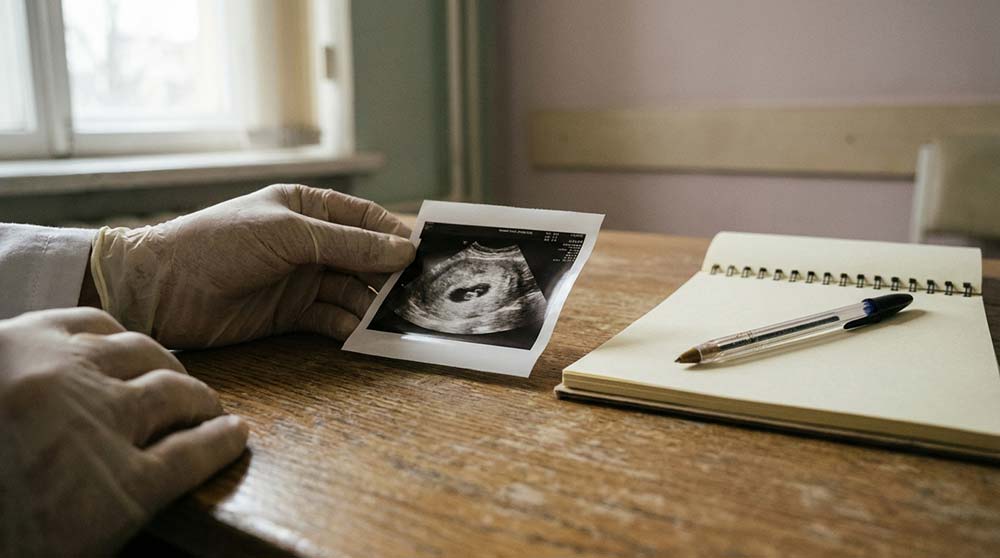 Most women are told that any bleeding means miscarriage. Clinical evidence tells a different story. With timely evaluation, many of these pregnancies continue safely to term.
This article explains what early pregnancy bleeding causes look like clinically, how doctors assess viability, and what outcomes you can realistically expect with proper monitoring and care.
Also Read:
- Recurrent Miscarriage Causes: Why It Happens and What Helps
- Missed Abortion Explained: Causes, Symptoms, and Recovery
Understanding Bleeding in Early Pregnancy
Before we examine your specific symptoms, it helps to understand what early pregnancy bleeding actually is clinically — and where the term threatened abortion fits within it. This clarity is where calm decision-making begins.
The Medical Reality of Spotting
Any vaginal bleeding within the first twelve weeks is classified as first-trimester bleeding. It occurs in nearly one in four pregnancies. During these weeks, the cervix becomes highly vascular — softening and developing new blood vessels to support the pregnancy. Light spotting, usually pink or brown, often arises from these local cervical changes. A heavier flow that resembles a period suggests the blood is coming from higher up within the uterine cavity, and requires closer evaluation.
What Threatened Abortion Means Clinically
When bleeding occurs in early pregnancy but the ultrasound confirms a live pregnancy with a heartbeat, the clinical diagnosis is threatened abortion. The word can sound alarming, but in practice it simply means the pregnancy is at some risk and needs monitoring — not that loss is inevitable. With supportive care, a large proportion of these pregnancieshttps://trendvisionz.com/health/morning-sickness-remedies-tips-for-expectant-moms/ continue normally. Recognising this distinction is the first step in replacing panic with informed observation.
Understanding the clinical baseline reframes bleeding from a verdict into a finding that needs evaluation. From here, we can examine the specific causes that produce these symptoms in early pregnancy.
Recognising Early Pregnancy Bleeding Causes
Identifying the source of bleeding is what allows us to guide care correctly. Most early pregnancy bleeding causes are localised and far less serious than patients first fear, but each source needs distinct clinical recognition before the right management can follow.
Common Causes Seen in Clinical Practice
The most frequent cause I diagnose is implantation bleeding, which occurs when the embryo settles into the uterine lining and disrupts small blood vessels. It often coincides with the expected period date, which adds to the confusion. Cervical changes are equally common — because the cervix becomes highly vascular in early pregnancy, a pelvic exam, a transvaginal ultrasound, or intercourse can cause temporary irritation and light spotting that resolves on its own. A subchorionic hematoma is another recognised cause, where a small collection of blood forms between the uterine wall and the chorionic membrane. The body usually reabsorbs it over a few weeks, and most pregnancies continue without complication.
Is implantation bleeding different from a period?
Yes. Implantation bleeding is lighter, shorter, and usually pink or brown rather than bright red. It lasts a few hours to two days, does not progress to a full flow, and occurs around six to twelve days after conception — earlier than an expected period.
Most early pregnancy bleeding causes are identifiable and manageable once examined. With the source confirmed, the next clinical priority is to assess whether the pregnancy itself remains viable through proper evaluation.
 Bleeding in Early Pregnancy: Tests and Diagnosis
When a patient arrives with bleeding, the priority is to determine the status of the pregnancy through clear clinical evaluation. The goal is not to rush a diagnosis, but to confirm where the pregnancy stands so the right care can follow.
The Diagnostic Process
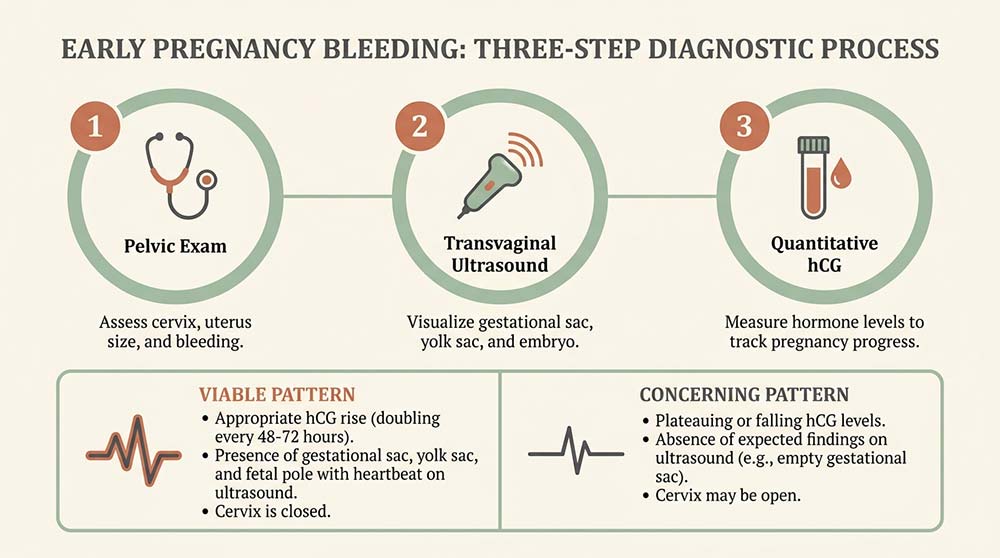
Evaluation in early pregnancy follows a structured sequence designed to assess both the source of bleeding and the status of the pregnancy itself.
- Gentle pelvic exam: Assesses the cervix and the volume of bleeding before further investigation.
- Transvaginal ultrasound: Our most important tool in early pregnancy — lets us visualise the gestational sac and look for embryonic development and a heartbeat.
- Quantitative hCG blood tests: Measured over forty-eight hours, hCG levels indicate whether the pregnancy hormone is rising as expected, giving a reliable picture of progression.
Interpreting the Results
Interpretation requires both imaging and hormone findings to be read together before any clinical conclusion is reached.
- Viable pregnancy pattern: A clear heartbeat on ultrasound alongside hCG levels doubling appropriately — bleeding is most likely from one of the benign causes already discussed.
- Concerning pattern: hCG plateauing or declining, or no heartbeat seen when one is expected — a different clinical picture that we discuss carefully with the patient before making any decisions.
A clear diagnosis sets the foundation for the right management plan. Equally important is knowing which symptoms cannot wait for a routine appointment and require immediate medical attention.
When Bleeding in Early Pregnancy Needs Medical Attention
Some early pregnancy bleeding is normal, and some is not. Recognising the difference is what determines whether to monitor at home or seek urgent care, and the patterns that signal each are distinct enough to act on with confidence.
Light pink or brown spotting that settles on its own — particularly after a pelvic exam or intercourse — is usually not an emergency. The same applies to a small amount of bleeding when a subchorionic hematoma has already been diagnosed and is under monitoring. These patterns warrant a call to your doctor at the next available appointment, not a trip to the emergency room.
Certain symptoms, however, need urgent evaluation. Reach the nearest emergency facility if any of the following appear:
- Heavy bleeding: soaking through a full-sized sanitary pad in under an hour.
- Severe or sharp pelvic pain: especially when localised to one side, which may indicate ectopic pregnancy.
- Passing clots or tissue: collect any tissue passed in a clean container for clinical examination.
- Dizziness or fainting: these may signal a significant drop in blood pressure or internal bleeding.
- Fever or chills with bleeding: a strong indicator of possible pelvic infection requiring urgent treatment.
These warning signs are not meant to alarm, but to give you a clear threshold for action. Erring on the side of evaluation is always the right clinical choice in early pregnancy.

Also Read:
- Premature Baby Care: Growth, Feeding and Development After Preterm Birth
- Blighted Ovum Causes Symptoms and Diagnosis Explained
- What to Expect in Pregnancy After Recurrent Miscarriage
Conclusion
Bleeding in early pregnancy is frightening, but it is not a verdict. Many causes — implantation, cervical changes, subchorionic hematomas — are benign and resolve with monitoring rather than intervention.
When bleeding occurs but the ultrasound still shows a healthy ongoing pregnancy, the condition is medically classified as threatened abortion. In many cases, these pregnancies continue normally with timely monitoring and proper medical care.
What matters most is timely evaluation, accurate diagnosis, and recognising the warning signs that need urgent attention. Trust the diagnostic process, and let your clinical team guide your care.
If you are experiencing bleeding in early pregnancy, book a consultation today for clear evaluation, accurate diagnosis, and expert-led care through your first trimester.