
Anaemia in Pregnancy: Causes, Symptoms, Diagnosis and Treatment
You are at a routine antenatal visit, feeling only a little tired, the way most pregnant women do. Then you are told your haemoglobin is low and that you have Anaemia in Pregnancy. It catches you off guard.
In my practice of over 30 years, the important question is not only how low the haemoglobin is, but why it has fallen. That distinction helps decide whether the woman needs nutritional support, further investigation, or a different treatment approach.
Anaemia in pregnancy is common, and it is often silent. WHO’s global estimates show that 35.5% of pregnant women aged 15–49 were affected by anaemia. A haemoglobin reading confirms anaemia, but it does not explain the underlying cause. Identifying that cause is essential because treatment depends on what is driving the low haemoglobin.
In this blog, I explore what anaemia in pregnancy means, why it develops, the symptoms to watch for, how it is diagnosed, and the treatment options used to manage it safely.
Also Read:
- High-Risk Pregnancy Tests and Monitoring: What to Expect
- Pregnancy After 35: Risks, Care, and Healthy Outcomes
- Anaemia During Pregnancy: Risks for Mother and Baby
Understanding Anaemia in Pregnancy and Why It Develops
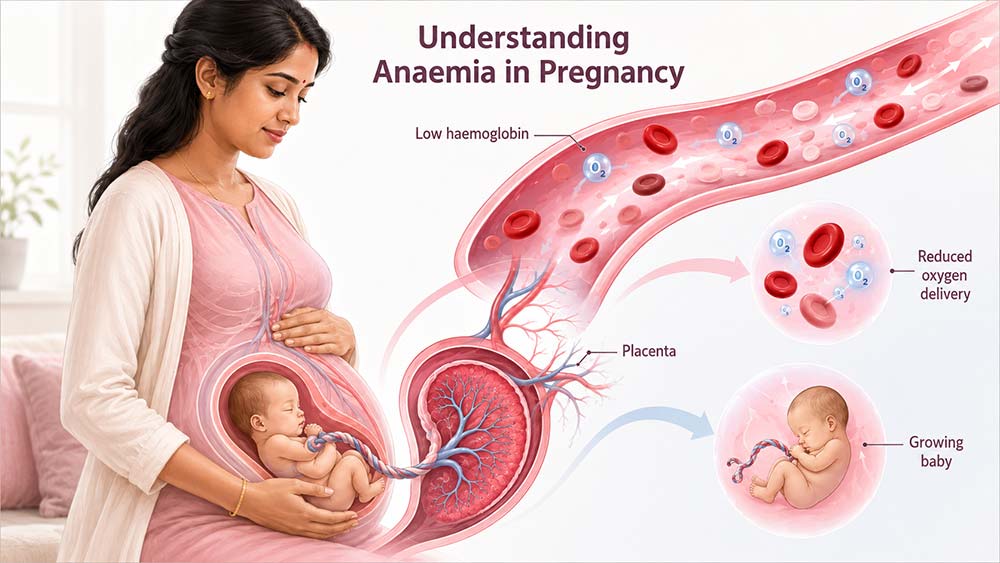
Anaemia in pregnancy means your blood carries too few healthy red cells, seen as a low haemoglobin level. Pregnancy naturally raises the demand for iron as your blood volume expands to support you and your baby.
Anaemia in pregnancy occurs when haemoglobin falls below the expected level for pregnancy, reducing the blood’s oxygen-carrying capacity. Iron deficiency is the most common cause, although nutritional deficiencies, blood loss, infections, and inherited blood conditions may also contribute.
 Haemoglobin Changes During Pregnancy
Haemoglobin is the part of red blood cells that carries oxygen around your body and to your baby. When it falls below a healthy level for pregnancy, that is anaemia. A small dip can be a normal part of pregnancy.
This happens because your blood volume rises faster than red cell production early on, gently diluting haemoglobin. A genuine drop, though, is different. It reflects a real shortfall and deserves proper attention rather than reassurance alone. Pregnancy-related hormonal and physiological changes expand blood volume, increasing the body’s demand for iron and healthy red blood cells.
Increased Iron Needs During Pregnancy
Your body makes far more blood during pregnancy, and every red cell needs iron to form. At the same time, your growing baby and the placenta draw steadily on your own iron stores to develop.
As pregnancy advances into the second and third trimesters, this demand climbs sharply. For many women, everyday diet alone cannot fully meet it, which is why iron support becomes a routine part of antenatal care.
Understanding why anaemia develops helps remove the self-blame I so often see. It is a common, expected strain on the body, and when it is picked up early, it is very manageable.
Causes of Anaemia in Pregnancy Beyond Iron Deficiency
Pregnancy itself brings changes such as nausea, vomiting, reduced appetite, fatigue, and shifting food preferences. These can affect nutritional intake and make anaemia harder to recognise. Iron deficiency remains the most common cause, but other nutritional and medical factors may also contribute.
Nutritional Causes of Anaemia in Pregnancy
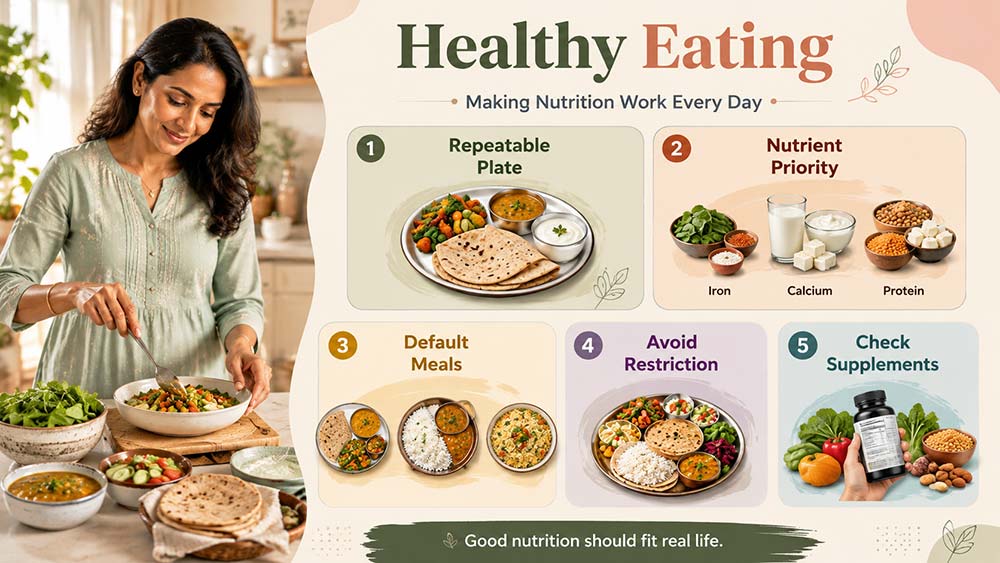
In my practice, iron deficiency is the most common cause, but nutritional deficiencies, blood loss, and other medical conditions may also contribute. Identifying the cause early helps guide the right treatment.
- Iron deficiency: The most common cause, from low dietary intake or depleted iron stores before pregnancy.
- Folate or B12 deficiency: More likely with limited, restricted, or largely vegetarian diets.
- Blood loss: Heavy menstrual bleeding before pregnancy or other blood loss can reduce iron stores.
Medical Causes of Anaemia in Pregnancy
Some medical causes of anaemia may be less obvious and need further evaluation. Infections, inherited blood disorders, and chronic inflammation can affect red blood cell production and change the treatment approach.
- Infections: Malaria and certain other infections can contribute to anaemia in some regions.
- Inherited conditions: Haemoglobin disorders such as thalassaemia affect how red cells form.
- Chronic inflammation: Ongoing illness can quietly interfere with healthy red cell production.
Identifying the actual cause is what guides the right treatment. Adding more iron will not correct anaemia that is not caused by iron, which is why the reason behind a low haemoglobin matters. A healthy diet for women is the much-needed fuel.
Anaemia Symptoms and Diagnosis in Pregnancy
Anaemia symptoms can be subtle, which is why I encourage women not to wait for obvious physical signs Routine haemoglobin testing during antenatal care catches it far more reliably than physical signs alone.
Signs Worth Noticing
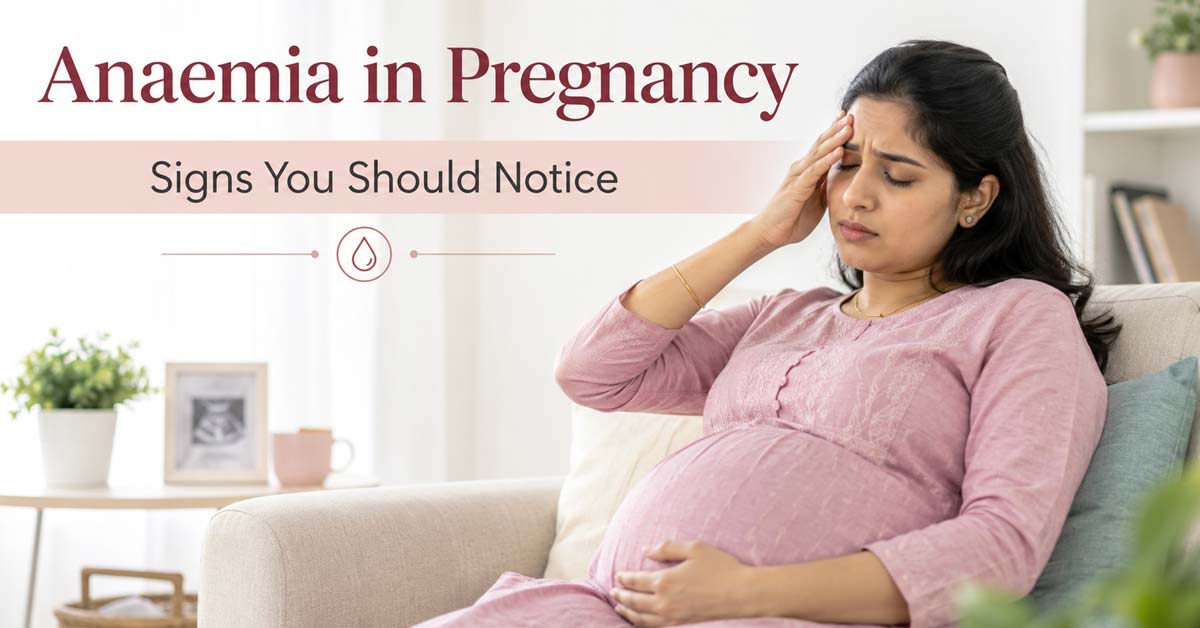
When anaemia symptoms do appear, they can be easy to dismiss as ordinary pregnancy tiredness. Common ones include fatigue, breathlessness on mild exertion, dizziness, unusual paleness, and a general sense of weakness.
These signs of anaemia during pregnancy are worth noticing, but they do not confirm a diagnosis. If you experience several of them, discuss them with your doctor and have your haemoglobin checked.
How Is Anaemia in Pregnancy Diagnosed?
Anaemia diagnosis in pregnancy begins with a haemoglobin or full blood count test during routine antenatal care. If the cause is unclear, tests such as serum ferritin can help identify iron deficiency and guide appropriate, personalised treatment for the mother.
Detecting anaemia is only the first step. Finding out what is behind it is what makes treatment effective, so the aim is always to understand the cause behind the number.
Anaemia Treatment in Pregnancy
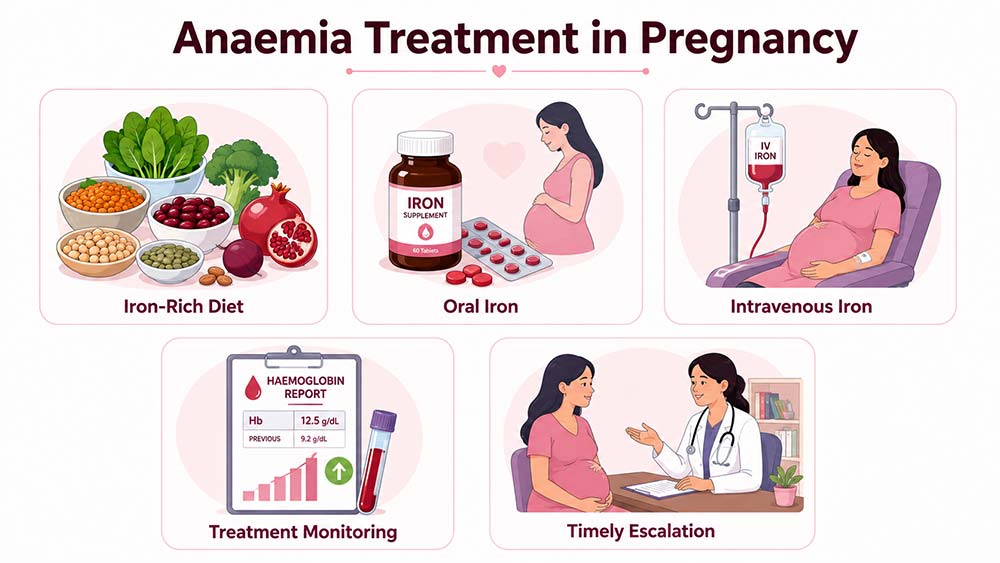
The right approach depends on the severity of the condition and what is causing it. Effective anaemia treatment should correct the condition, address the underlying cause, and confirm through follow-up testing that the plan is working.
- Iron-rich diet: Supports iron stores and complements anaemia treatment during pregnancy when iron deficiency is present. Fibre-rich foods support digestion and may ease constipation, especially when oral iron supplements are part of treatment.
- Oral iron: Commonly used as first-line treatment for iron-deficiency anaemia during pregnancy.
- Intravenous iron: May be considered after the first trimester when oral iron is ineffective or poorly tolerated.
- Treatment monitoring: Follow-up haemoglobin testing helps confirm improvement and identify women who need reassessment.
- Timely escalation: Severe, symptomatic, or poorly responding anaemia requires prompt obstetric review and personalised management.
Magnesium supports general pregnancy nutrition but does not treat anaemia and may need separate timing from oral iron. Anaemia in pregnancy should be managed according to its severity and underlying cause. Regular follow-up helps assess treatment response and ensures that care remains appropriate for both mother and baby.
Also Read:
- High-Risk Pregnancy: Causes, Risk Factors, and Safe Pregnancy Care
- Preventing Anaemia in Pregnancy: Diet, Iron and Healthy Habits
Moving Forward With Confidence
Anaemia in pregnancy is common, and in most cases it can be managed effectively when identified early. A low haemoglobin result should lead to proper evaluation, not unnecessary worry.
What matters is understanding the underlying cause, choosing the right treatment, and checking that your haemoglobin is improving. With timely care and regular follow-up, most women can continue their pregnancy with greater confidence and appropriate medical support.
If your haemoglobin is low, I recommend discussing it early rather than waiting for symptoms to worsen. Book a consultation with me for personalised assessment, treatment guidance, and ongoing pregnancy care.
Our Digital Imprints:
Dr. Madhu Goel
Senior Consultant Obstetrician and Gynaecologist
Director, Fortis La Femme
I am passionate about women’s health and believe that informed, compassionate care empowers women to make confident choices. With experience in high-risk pregnancies, infertility, and gynaecological care, my focus remains on guiding patients with clarity, empathy, and trust.
Stay informed with Health Hub, my newsletter dedicated to women’s health and wellness, where I share evidence-based insights and practical guidance.
You can also connect with me on Instagram | Facebook | LinkedInfor regular updates on women’s health.