

Puberty in Girls: Body Changes, Timeline and What Is Normal
For many parents who visit me for consultation, puberty in girls begins with questions rather than clear answers. One teenager may start developing earlier than her classmates, while another shows few changes at the same age. The concern is often the same: what is normal, and when should I worry?
India is home to an estimated 120 million adolescent girls between 10 and 19 years. Adolescent health guidance must recognise that development can vary from one girl to another. Timing remains one of the most common reasons parents bring their daughters to a gynaecologist.
As a practising obstetrician and gynaecologist, I regularly counsel adolescent girls and their parents during this important stage of development. My role is to provide clear, age-appropriate guidance, address concerns without judgment, and help families feel supported through changing health needs.
In this blog, I explore how puberty begins, the usual sequence of body changes, when the first period typically occurs, the emotional changes that may accompany adolescence, and when early or delayed development needs medical evaluation.
Also Read:
- First Period in Girls: Signs, Preparation and What to Expect
- First Gynaecologist Visit for Teen Girls: What to Expect and Prepare
Puberty in Girls: Hormonal Changes and Development
Puberty is a gradual hormonal process that prepares a girl’s body for adulthood. It unfolds over several years, and its early stages often begin well before any change is visible.
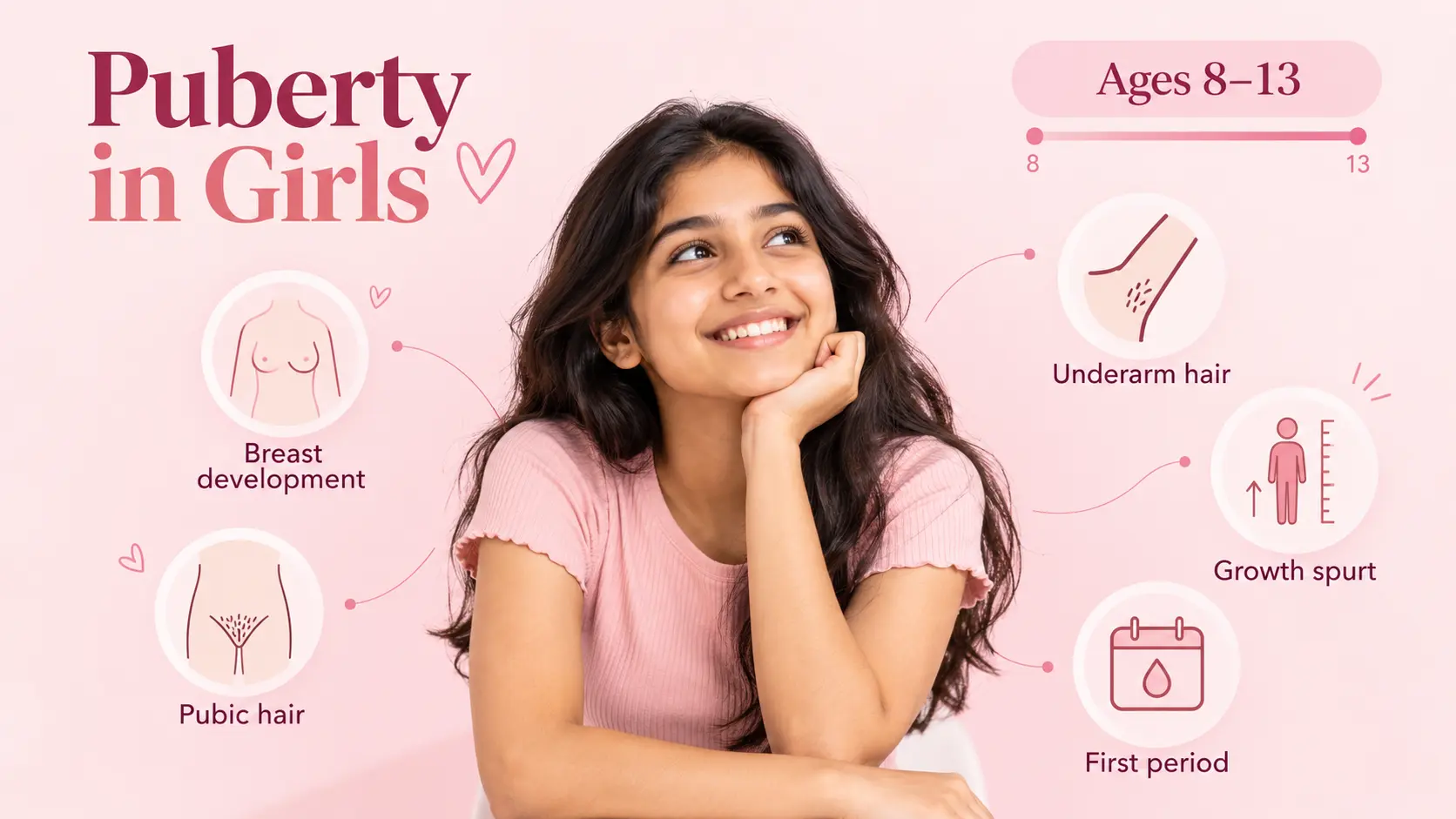
Puberty in girls usually begins between 8 and 13 years. Hormonal signals from the brain activate the ovaries to produce oestrogen, leading to breast development, body hair, a growth spurt and, later, the first period.
 Hormonal Changes That Start Puberty
Puberty starts in the brain. A small region called the hypothalamus begins releasing a hormone that signals the pituitary gland, which then sends messages to the ovaries. The ovaries respond by producing oestrogen, the main hormone behind female development.
These hormonal changes begin months before any physical sign appears. Once oestrogen levels rise, the body responds step by step over the following years, reflecting the wider role of women’s hormones. Each change builds on the one before it, so development rarely happens all at once.
Normal Age Range for Puberty
Most girls show the first signs of puberty between 8 and 13 years of age. Genetics play a large part, so a girl often follows a pattern similar to her mother or older sisters. Nutrition and general health also influence timing during adolescence.
Over the years, through my consultations, I have seen that every girl develops at her own pace. Comparing her with classmates can create unnecessary worry. I look at the overall pattern of development, including the sequence of changes, their pace, and family history, rather than one age alone.
A wide age range is part of healthy development. When parents understand this, an early or later start becomes easier to watch calmly, with concern kept for patterns outside the expected range.
The Usual Sequence of Puberty Changes
Parents during my OPD often notice one change and worry that puberty may be starting too early or progressing too quickly. I usually explain that it is easier to understand when we look at the sequence of changes, not one sign in isolation
The First Visible Changes
The first changes are usually subtle, and some girls feel shy or self-conscious about them at first.
- Breast development: Small, firm breast buds form under the nipple, sometimes on one side first, and may feel tender.
- Pubic hair: Fine, soft hair appears soon after breast changes and gradually becomes darker and coarser.
- Underarm hair: This usually develops later, often around the time sweating increases.
Changes That Follow as Puberty Progresses
As oestrogen levels continue to rise, the body changes in size and shape, and the skin begins to respond to hormonal activity.
- Growth spurt: Height increases quickly, usually peaking before the first period, then slowing afterwards. It also marks an important stage in understanding menstrual health and the body’s reproductive changes.
- Body shape: Hips widen and body fat settles around the hips and thighs.
- Skin changes: Oily skin, acne, sweating and body odour become more noticeable.
- Vaginal discharge: Clear or white discharge often appears six months to a year before the first period.
My years of practice working with teenagers have shown me that the focus should not be on whether every change happens at the same age as a friend or sibling. What matters more is whether development is moving forward in a steady and expected pattern.
The First Period and Emotional Changes During Puberty
The first period, called menarche, is one of the later milestones of puberty. Emotional changes develop alongside it, and both are shaped by the same hormonal changes over these years.
Emotional Changes and Body Awareness During Puberty
Hormonal shifts during puberty can make a girl more sensitive, irritable or tearful at times. She may need more sleep, tire more easily, or seem preoccupied with how she looks. Growing awareness of her changing body can also bring moments of self-consciousness.
Most of these mood changes are a normal part of growing up, and they often settle as hormone levels become more stable. Parents can help by listening patiently and keeping conversations about body changes open and factual. If low mood, withdrawal from friends or distress lasts for weeks, it is worth discussing with a doctor.
When Do Most Girls Get Their First Period?
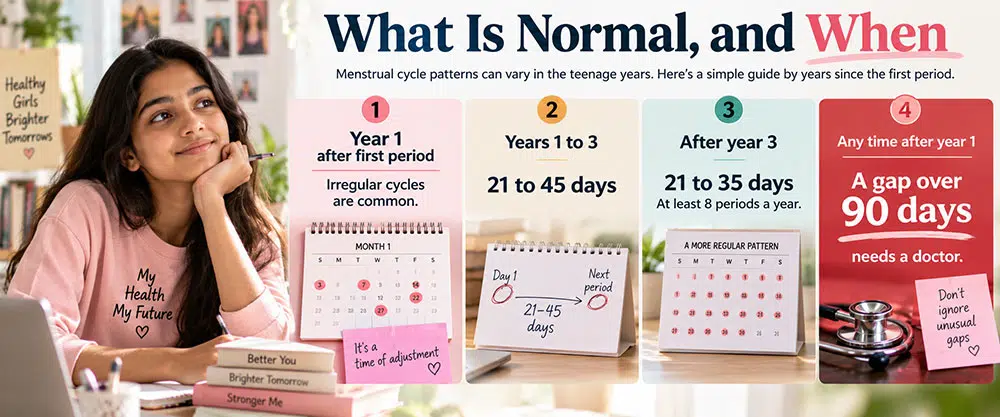
Most girls get their first period two to three years after breast development begins, usually between 10 and 15 years of age. Every girl follows her own pace, but if periods have not started by 15, a timely assessment by a gynaecologist is advised.
Seeing the first period and emotional changes as part of the puberty timeline helps girls feel prepared. It also helps parents respond with patience, guided by an understanding of what is normal.
Early Puberty, Delayed Puberty and When to See a Doctor
Most variation in puberty is normal. Some patterns, however, suggest that development is starting too early or later than expected, and these deserve a medical assessment to understand the reason.
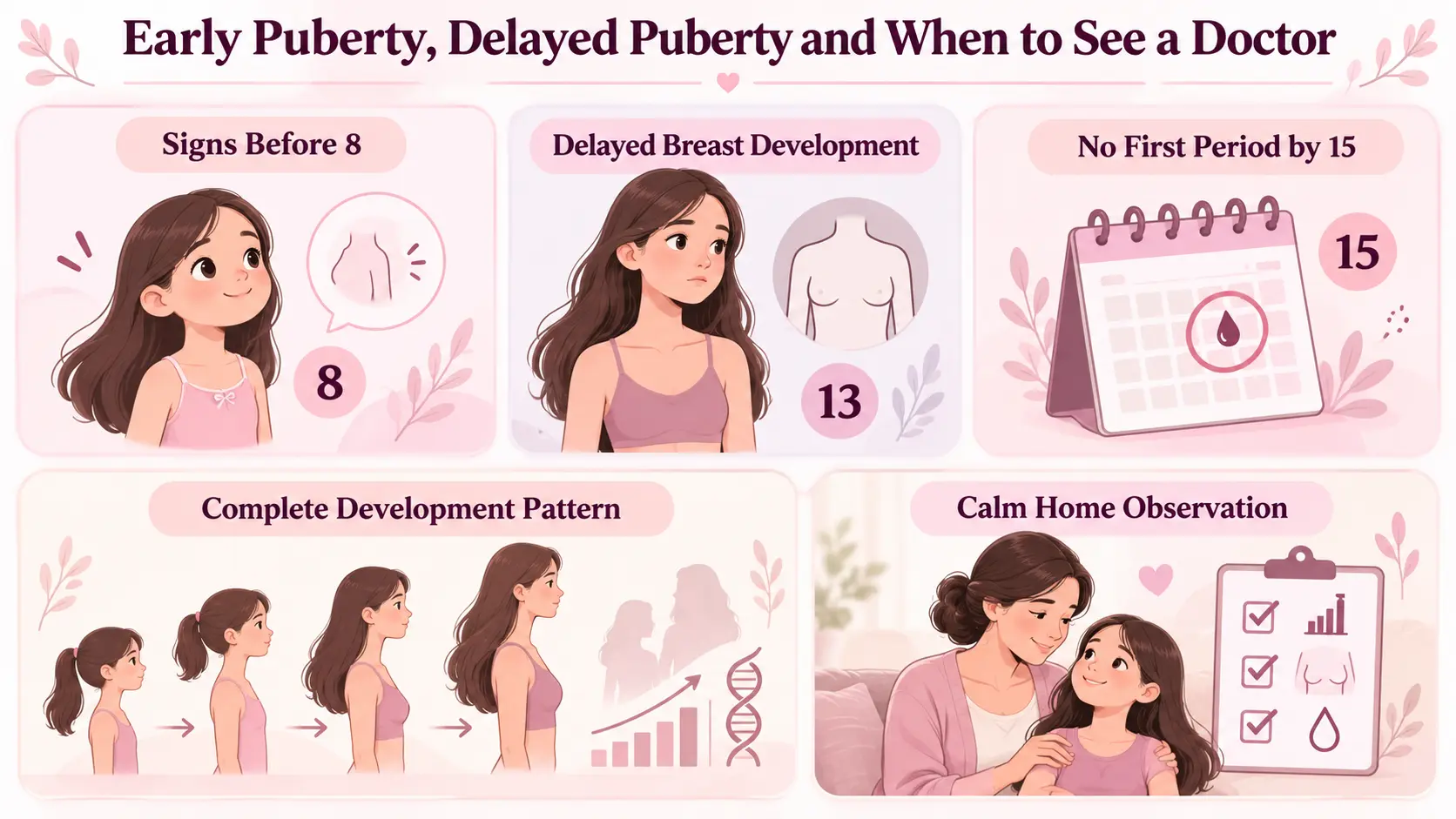
- Signs before eight: Breast development before eight years, especially when accompanied by other progressing puberty changes, should be medically assessed
- Delayed breast development: No breast development by 13 years may point to delayed puberty.
- No first period by fifteen: A period that has not started by 15, or within three years of breast development, warrants review.
- Complete developmental pattern: Doctors consider growth, the sequence and progression of puberty changes, and family history before deciding whether further hormonal evaluation is needed.
- Calm home observation: Note changes and their timing, and avoid daily checking or comparing your daughter with her peers.
Timely assessment of unusual patterns helps girls move through puberty with confidence and gives parents clear answers. It also means any underlying concern is identified early and managed by the right specialist.
Understanding Puberty in Girls With Confidence
Puberty in girls follows a broad sequence, from breast development and body hair to the growth spurt and first period. The timing can vary widely, and this variation is often part of healthy development.
Emotional changes are also common during these years. Medical attention is important when development begins very early, is significantly delayed, or does not progress in the expected pattern.
Parents should focus on steady development rather than comparison with peers. Clear guidance can help families understand what is normal and when further evaluation may be useful.
If you have concerns about your daughter’s development, book a consultation with me for personalised guidance.
Our Digital Imprints:
Dr. Madhu Goel
Senior Consultant Obstetrician and Gynaecologist
Director, Fortis La Femme
I am passionate about women’s health and believe that informed, compassionate care empowers women to make confident choices. With experience in high-risk pregnancies, infertility, and gynaecological care, my focus remains on guiding patients with clarity, empathy, and trust.
Stay informed with Health Hub, my newsletter dedicated to women’s health and wellness, where I share evidence-based insights and practical guidance.
You can also connect with me on Instagram | Facebook | LinkedInfor regular updates on women’s health.