

First Gynaecologist Visit for Teen Girls: What to Expect and Prepare
Seema visited me last Friday with her teenage daughter, who had been experiencing painful periods. Her daughter was hesitant about her first gynaecologist visit and unsure what to expect. However, as we talked, she became comfortable, asked questions and found our conversation helpful in understanding her changing body.
Many parents share similar concerns. In India, hesitation and silence around menstrual health often delay important conversations. While most girls experience puberty without major problems, some changes need medical attention. Understanding adolescent health helps parents recognise the physical and emotional changes their daughters experience. A timely consultation can provide clarity and reassurance.
As a practising obstetrician and gynaecologist, I guide adolescent girls and their parents through these important years. My approach is to provide age-appropriate, non-judgemental advice while ensuring that every teenager feels comfortable, respected and heard.
In this article, I explain when a first visit is helpful, how parents can prepare their daughters, what happens during the consultation, and how privacy, consent and follow-up are handled.
Also Read:
- First Period in Girls: Signs, Preparation and What to Expect
- Puberty in Girls: Body Changes, Timeline and What Is Normal
First Gynaecologist Visit: Routine Guidance and Warning Signs
A first gynaecologist visit helps teenage girls understand their reproductive health and identify concerns early. Parents should know when a routine consultation is helpful and which puberty or menstrual symptoms require medical attention.
A teenage girl can visit a gynaecologist for preventive guidance, menstrual concerns or unusual puberty changes. The first consultation usually involves discussing her development, symptoms and questions. Medical assessment is recommended when periods are unusually painful, heavy or irregular.
 Routine Introductory Visit and Symptom-Led Consultation
Not every visit to a gynaecologist begins with a problem. In my clinic, adolescent visits usually fall into one of two kinds.
Puberty alone does not mean a girl needs a gynaecological examination. An introductory visit lets her ask questions, understand her body and receive preventive guidance from a trusted source. Learning about hormonal changes during puberty can also help girls understand why their bodies and emotions are changing.
She will hear about periods from friends, school and social media anyway. A symptom-led consultation begins when changes in her periods, development or overall health raise questions that need medical attention.
Puberty and Period Problems in Teenagers That Need Assessment
Some signs move a family from reassurance to consultation. These are the patterns I ask parents to watch for and bring to a doctor.
Puberty or a first period before 8 years needs assessment, as does no breast development by 13 or no period by 16. Once periods have started, I look more closely when they are very heavy, come very frequently or last longer than 10 days. Pain that does not settle with a painkiller is also a reason to consult.
Normal discharge may be clear or white. Unusual colour, a foul smell, itching or discomfort that keeps coming back warrants assessment. In every case, doctors look at the overall pattern, not one isolated symptom.
Recognising these signs helps parents seek guidance at the right time. Not every difference means something is wrong. The puberty and menstrual thresholds still follow the scripts. Age 16 and bleeding beyond 10 days remain medical review points rather than editorial errors.
 Preparing for a First Gynae Appointment
A little preparation makes the first gynae appointment calmer and more useful. When the right details are ready, the doctor can understand the concern clearly from the very first conversation.
Period Dates, Symptoms and Health Details to Note
A teenager may forget important details when she feels nervous during her first visit. Writing down a few notes beforehand helps me understand her symptoms, menstrual history and any concerns she wants to discuss.
- Menstrual dates: Record and note when each period starts, how long it lasts and the number of days between cycles.
- Bleeding and pain: Record how heavy the flow is, how often pads are changed, and whether pain settles with a painkiller.
- Discharge and reports: Mention any change in discharge, current medicines, and previous reports or test results.
Parent Support and the Teenager’s Own Voice
Parents shape how a daughter feels about her first visit. The aim is to support her without speaking over her or answering for her.
- Calm preparation: Explain the visit as a normal part of looking after her health, without passing on shame or fear.
- Her own questions: Encourage her to write down her doubts or worries before the appointment.
- Speaking directly: Let her describe her symptoms to the doctor in her own words.
Prepared families give the doctor a clearer picture. A teenager who speaks for herself also begins to see her health as something she understands and takes an active part in.
 Teen Gynaecologist Visit: Consultation and Clinical Assessment
A first teen gynaecologist visit is mostly about listening. The doctor builds an understanding of the girl’s health through conversation, and only then decides whether anything further is needed.
The Doctor-Patient Conversation and Menstrual History
Most first consultations begin with a conversation. In my experience, listening carefully helps me understand a teenager’s concerns while making her feel comfortable, respected and heard.
I begin by asking about her growth, development, periods, pain, discharge and general health. Menstrual history helps me distinguish normal developmental changes from recurring concerns. I encourage her to describe symptoms in her own words. This conversation helps determine whether further evaluation is needed.
Depending on her age and needs, we may also discuss preventive measures, including HPV vaccination for cervical cancer prevention later in life
Does a Teenage Girl Need an Internal Examination at Her First Visit?
An internal pelvic examination is not routinely needed at a first visit. Any examination or test depends on her symptoms and clinical findings. It is explained beforehand and done only with the agreement of the teenager and, where required, her parent or guardian.
Knowing that the consultation begins as a conversation removes much of the fear around a first visit. Examination and investigations are decided case by case for each girl, never by default.
Adolescent Gynaecology: Privacy, Consent and Follow-Up
Good adolescent gynaecology respects the teenager as a participant in her own care. Privacy, consent and clear guidance help her trust the process and come back whenever she needs to.
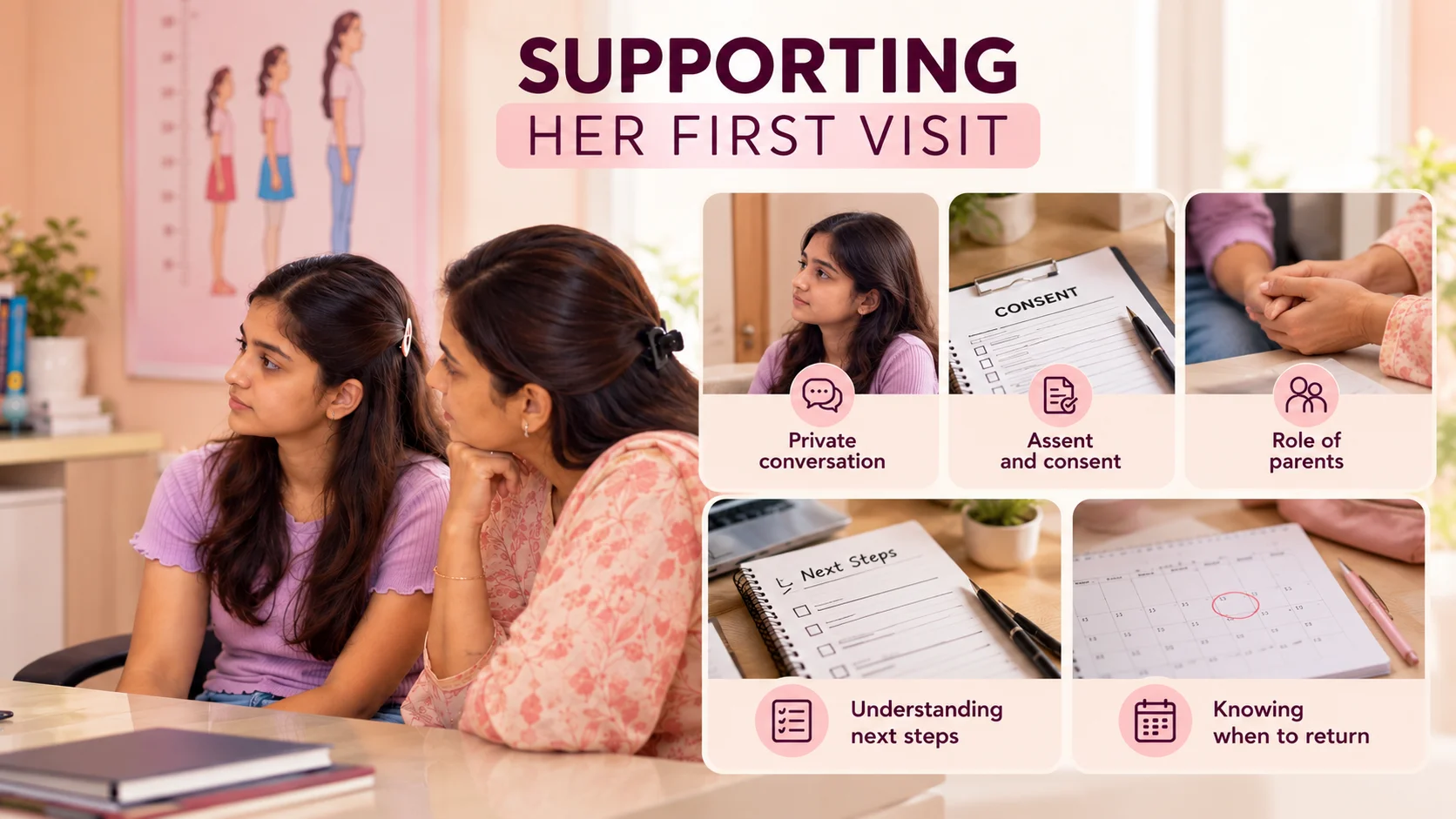 A teenager should feel comfortable discussing her concerns. Respecting her privacy, involving her in decisions and explaining each step helps build trust and confidence during her first consultation.
- Private conversation: She may be given time to speak privately. Confidentiality is respected within limits set by her age, safety and applicable requirements.
- Assent and consent: Any examination or test is explained first and needs her assent, with parent or guardian consent where law or clinical circumstances require it.
- Role of parents: A parent or trusted adult supports the visit and the decisions while she keeps her own voice.
- Understanding next steps: She leaves knowing what is normal for her and what evaluation or treatment, if any, is recommended.
- Knowing when to return: She understands which symptoms mean she should come back for guidance.
When a teenager feels respected and informed, the first visit becomes the start of lifelong healthcare literacy, and she is more likely to seek help early in the future.
A Confident First Gynaecologist Visit
A first gynaecologist visit can be preventive or symptom-led. Knowing which puberty and period patterns need attention helps families act at the right time, without fear and without unnecessary delay.
Preparation, an open conversation and consent-based care make the visit calm and useful. Most first consultations involve listening and guidance, and any examination is decided only when her symptoms call for it.
Whether your daughter has questions about growing up or concerns about her periods, she deserves guidance without embarrassment or fear. Book a consultation with me so we can address her concerns together and help her feel confident about her health.