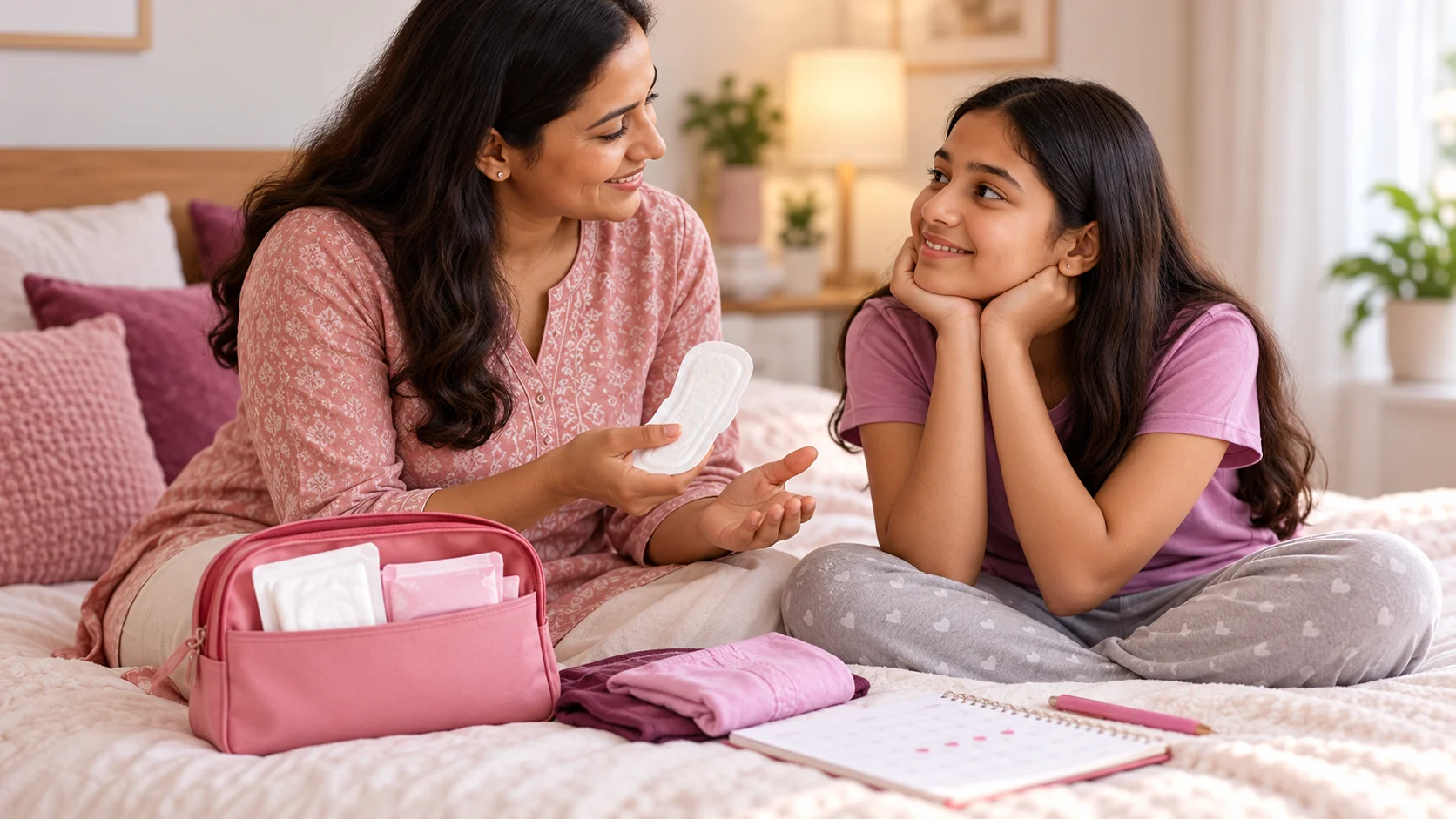

First Period in Girls: Signs, Preparation and What to Expect
For many parents who visit me for consultation, the first period in girls brings one quiet worry. They want to prepare their daughter, but they are unsure when to begin and how to talk about it without making her anxious.
The first period in girls usually arrives after other body changes have begun. In India, a culture of silence still surrounds periods. Yet girls hear about them at school and from friends anyway, often with half-correct information.
As a practising obstetrician and gynaecologist, I regularly counsel adolescent girls and their parents through this transition. My role is to give clear, age-appropriate guidance, answer questions without judgment and help families approach menstruation calmly.
In this blog, I explore the signs of first period approaching, talking to your daughter, the period bag, normal early cycles, pain and hygiene, and the warning signs that need medical care.
Also Read:
- Pregnancy After FGR: Risk, Prevention and Monitoring
- Foetal Growth Restriction in Pregnancy: Causes, Diagnosis and Management
First Period in Girls: Early Signs and Conversations at Home
The first period rarely arrives without warning. Recognising the signs of first period early gives a family time to prepare a daughter calmly and well before the day itself arrives.
The first period, called menarche, usually follows earlier changes such as breast development, height gain and vaginal discharge. Preparing a girl beforehand with calm, accurate information reduces fear when it arrives.
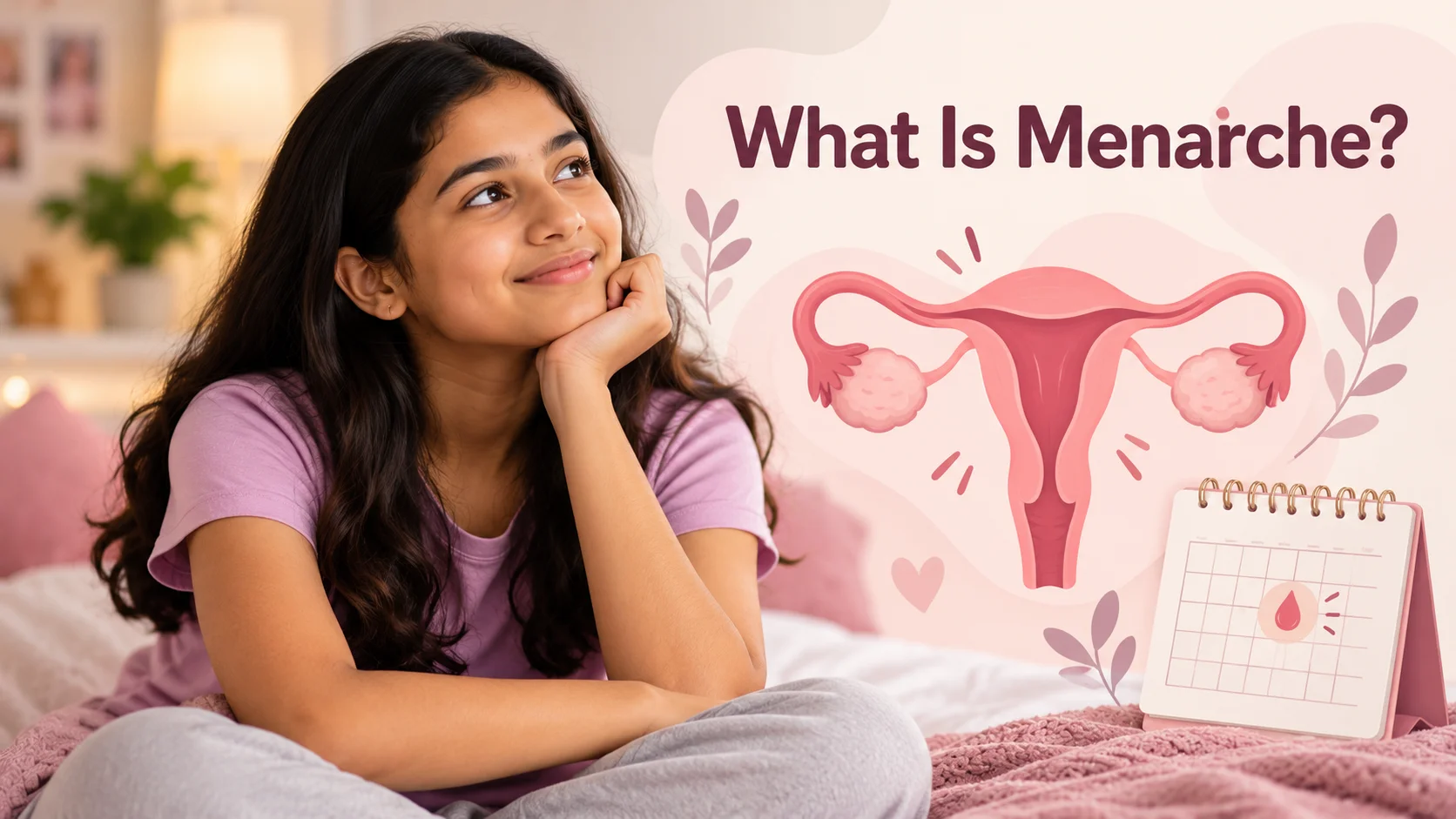 Signs the First Period Is Approaching
Parents who watch closely can often see the changes of puberty in girls appearing well before a first period arrives.
Breast development usually comes first, followed by height gain, some acne and new body hair. Many girls also notice a white vaginal discharge, which is normal and is the vagina’s own cleaning mechanism. These are general clues, and none of them predicts the exact date. When several appear, it is a good time to prepare her. Understanding adolescent health in teenage girls also helps parents support their daughters through these physical and emotional changes.
Talking to Your Daughter Before Her First Period
A first period is far less frightening when a girl already knows what it is. That understanding should come from home, before she bleeds.
The uterus, ovaries and vagina are part of her reproductive system. During a period, the uterus sheds its inner lining, which leaves the body as menstrual blood through the vagina.
In my practice, I have often seen mothers hold back out of their own shame or hesitation. Daughters sense that quickly, and they learn to see the period the same way. Encouraging open conversations and emotional wellbeing in children and teens can also help girls approach these changes with greater confidence
When a girl understands what is coming and why, her first period feels expected rather than alarming. The tone of that first conversation often shapes how she views menstruation for years.
Preparing for First Period and Understanding Early Cycles
Preparing for first period means giving a girl the right supplies and the right information. With both in place, she is far less likely to panic if bleeding starts at school.
Packing a First Period Bag for School
A small pouch in her school bag means she is never caught unprepared. It also shows her that her family planned for this.
- Pads and disposal: A sanitary pad, an old newspaper to wrap the used pad and a small disposal bag.
- Hygiene and clothing: Hand sanitiser, wet wipes and a change of clothes in case of a stain.
- Trusted adult: For younger girls, a short note for the teacher with a parent’s contact number.
Normal Bleeding Patterns in Early Periods
Early cycles rarely follow a fixed pattern at first. Knowing the usual range helps parents notice when a change needs attention.
- Usual duration: A period usually lasts two to seven days. The flow can be light or heavy, and both can be normal.
- Irregular start: Early cycles are often erratic, and the gap between periods may vary for a while. Noting the start date and bleeding days each month makes her pattern easier to follow. A menstrual cycle is counted from the first day of one period to the first day of the next. Tracking these dates helps identify changes over time. Understanding how hormonal changes influence menstrual health provides useful context for the variations girls experience during adolescence
- Individual pattern: Every girl’s period is her own, almost like a fingerprint. Comparing her with friends does not help. Her own record matters more, especially if bleeding gets heavier, longer or more painful.
Uncertainty often causes more anxiety than the period itself. A clear picture of normal variation, along with a simple record of her cycles, lets both of you notice a real change early.
Menstrual Health: Period Pain, Hygiene and Daily Life
Good menstrual health in the early years depends on a few simple habits. Managing discomfort and staying clean help a girl continue school and her daily routine during her period.
Period Pain Relief, Hygiene and Handling Stains
Some discomfort is common in early periods. With a few practical habits, most girls manage both pain and hygiene with confidence.
Mild cramps often ease with rest, plenty of fluids and a warm pack. When needed, appropriate pain relief is acceptable. Many families take a painkiller for a headache without hesitation, yet expect a daughter to bear period pain. Pain that is severe, or does not settle with these measures, needs a medical review.
She should change her pad regularly and wash her hands before and after each change. Plain soap and water during her bath are enough to keep the outer genital area clean. If a stain happens at school, there is no reason for panic or embarrassment. She simply changes her clothes and carries on.
Can Girls Bathe and Play Sports During Their Period?
Yes. Bathing, physical activity and sports are generally safe during a period. A girl can follow her normal routine, and there is no medical reason to stay away from these activities.
Girls often hear restrictions from friends that have no medical basis. When she feels free to bring her doubts and worries to you, these misconceptions are much easier to correct early.
Warning Signs After the First Period That Need Medical Care
Most girls experience some variation in their early menstrual cycles. However, unusually heavy bleeding, persistent pain or significant changes in menstrual patterns should not be dismissed as normal.
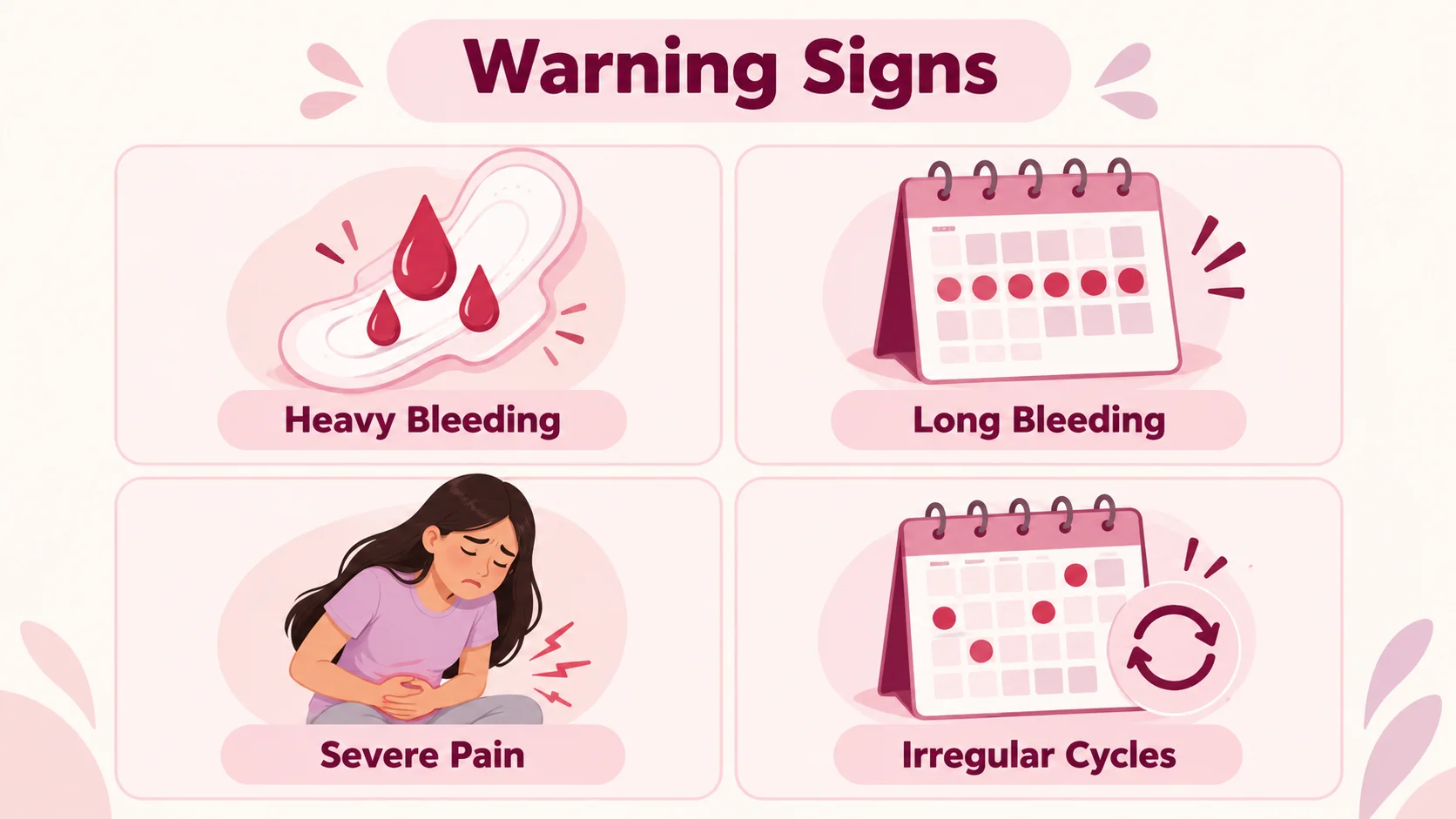 Recognising these warning signs helps parents seek timely medical advice without creating unnecessary anxiety.
- Very heavy bleeding: Soaking a sanitary pad every one to two hours, particularly when accompanied by weakness or dizziness.
- Prolonged bleeding: Periods lasting more than seven days, especially when bleeding remains heavy.
- Severe period pain: Pain that does not improve with appropriate pain relief, rest or warmth, or interferes with school.
- Irregular or frequent periods: Bleeding too frequently or gaps of 90 days or more between periods.
- Impact on daily life: Persistent tiredness, faintness or symptoms that prevent school, sports or routine activities.
As a gynaecologist, I encourage parents to observe menstrual patterns without becoming overly concerned about every variation. Timely assessment helps identify problems that need care. Equally important is creating a supportive environment where daughters feel comfortable discussing their symptoms and seeking help.
Also Read:
Understanding the First Period in Girls With Confidence
The first period in girls is a natural milestone. Early preparation and clear information help daughters understand the changes in their bodies without unnecessary fear or embarrassment.
Menstrual cycles may vary during the early years. Good hygiene, appropriate pain relief and open conversations at home help girls manage their periods confidently while recognising symptoms that need medical attention.
Every girl experiences menstruation differently. What matters most is helping her feel informed, supported and comfortable discussing her concerns. With the right guidance, this transition can become a positive part of growing up.
If you have concerns about your daughter’s periods or menstrual health, book a consultation with me for personalised guidance.
Our Digital Imprints:
Dr. Madhu Goel
Senior Consultant Obstetrician and Gynaecologist
Director, Fortis La Femme
I am passionate about women’s health and believe that informed, compassionate care empowers women to make confident choices. With experience in high-risk pregnancies, infertility, and gynaecological care, my focus remains on guiding patients with clarity, empathy, and trust.
Stay informed with Health Hub, my newsletter dedicated to women’s health and wellness, where I share evidence-based insights and practical guidance.
You can also connect with me on Instagram | Facebook | LinkedInfor regular updates on women’s health.