

Teenage Periods: What’s Normal, What’s Not and When to Worry
Is your period arriving early, coming late or skipping a month altogether? For many girls, these changes raise questions about what is normal. Teenage periods can be unpredictable, especially during the first few years after menstruation begins.
In India, conversations about menstruation are often limited by embarrassment, silence and traditional beliefs. Without clear information, teenagers may compare their cycles with friends, worry unnecessarily or overlook symptoms that deserve medical attention.
As a Senior Consultant Gynaecologist, I often emphasise that every teenager’s menstrual cycle develops differently. Hormonal changes during puberty can affect cycle length, bleeding patterns and discomfort. While some irregularity is expected, persistent changes, heavy bleeding and severe pain should never be dismissed as normal growing pains.
In this edition of Health Hub, we will explore what a normal menstrual cycle looks like during adolescence, why irregular periods occur, how to manage pain and menstrual hygiene, and when a gynaecologist visit becomes important for timely care and reassurance.
Also Read:
- PCOS in Teenagers: Symptoms, Diagnosis and Care
- First Gynaecologist Visit for Teen Girls: What to Expect and Prepare
Teenage Periods and the Normal Menstrual Cycle
In my OPD, teenage girls often visit with their mothers, worried about irregular periods. These concerns are common during adolescence. Understanding how menstrual cycles develop helps families recognise normal changes.
A normal menstrual cycle in teenagers typically ranges from 21 to 45 days during the first few years after menarche. Menstrual bleeding usually lasts 2 to 7 days. Cycles generally become more regular as hormonal development progresses.
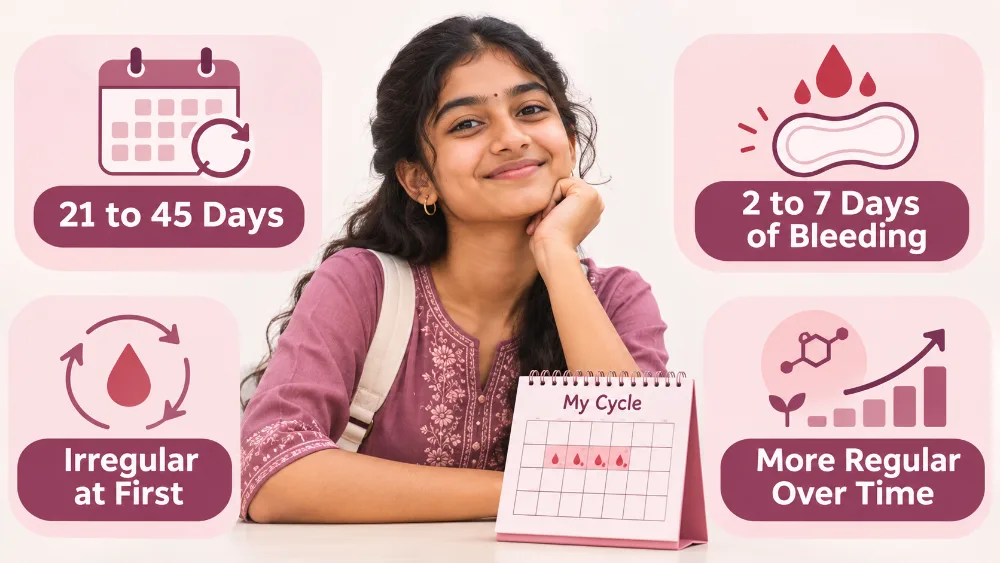 Menstrual Cycle Changes After the First Period
Each month, an ovary releases an egg and the lining of the uterus thickens for a possible pregnancy. When pregnancy does not happen, the lining sheds as a period, called menstruation.
Period blood is your own blood and tissue. It carries no toxins, and a period does not cleanse the body. After menarche, the first period, ovulation takes time to mature, so early cycles can come early, come late or skip a month.
Normal Menstrual Cycle Length and Bleeding Duration in Teenagers
In my conversations with teenage girls, I often remind them that periods are not a copy of someone else’s cycle. In my youtube videos, I explain, bleeding for two days may be normal for one girl, while another may bleed for seven days. Each teenager develops her own menstrual pattern.
I encourage girls to track their period dates, bleeding and discomfort rather than compare themselves with friends. Cycles may be irregular initially, but often become more regular as hormones mature.
Irregular periods are common during the early teenage years as hormones mature. Understanding your own menstrual pattern helps you recognise normal changes and identify when medical advice may be needed.
Managing Period Pain and Menstrual Hygiene
Periods should not keep a teenager away from school, sport or studies. Simple comfort measures and good hygiene habits let most girls carry on with their usual routine with confidence.
Easing Period Cramps and Everyday Discomfort
Mild cramps, low mood and food cravings are common during periods.
- Suitable pain relief: Medicine can ease cramps. Ask a parent or doctor which one suits you.
- Warmth and meals: A hot water bottle, plenty of fluids and regular meals ease discomfort.
- Mood changes: Irritability and chocolate cravings are common and usually pass.
- Normal activity: School, sport and exercise can all continue as usual.
Pain that keeps you home from school, wakes you at night or does not ease is different. It needs a doctor’s assessment.
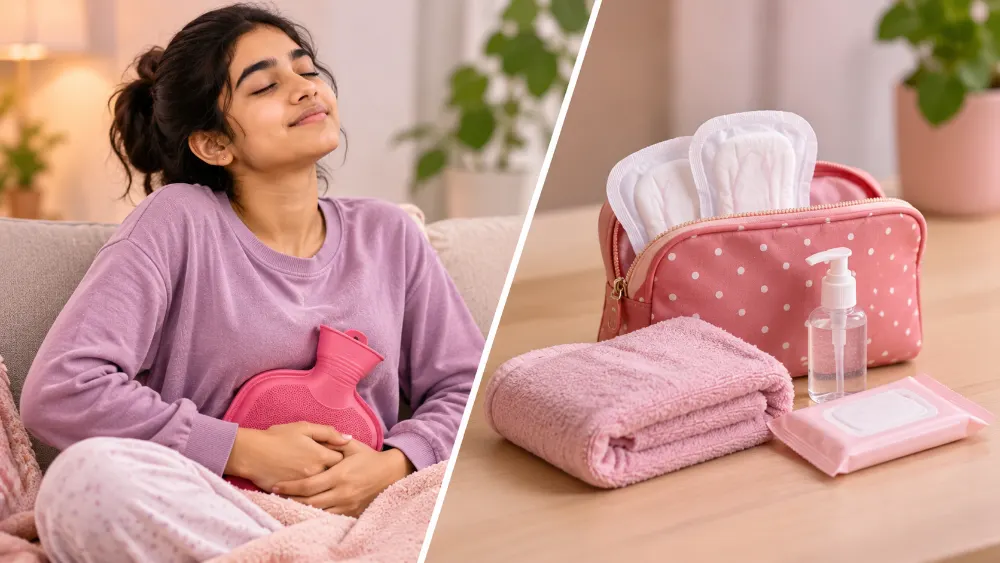 Menstrual Hygiene and Confidence Outside Home
- Regular changes: Change your pad every few hours, and more often on heavy days.
- Clean hands: Wash your hands before and after every change.
- Safe disposal: Wrap used pads in paper and place them in a bin, never in the toilet.
- School period kit: Keep spare pads and fresh underwear in a pouch in your bag.
- Trusted support: If a leak happens, ask a teacher or school nurse for help.
Preparation builds confidence. When a teenager knows how to handle pain and hygiene, her period becomes an ordinary part of the month and never a reason to miss a school day.
Irregular Periods and Heavy Bleeding in Teenage Years
Some variation is expected in the early years. Long gaps, very heavy bleeding and severe pain are different. These patterns deserve a doctor’s assessment, never acceptance as part of growing up.
Irregular Periods: Normal Variation and Warning Signs
Irregular periods are common during adolescence, but certain changes should not be ignored. Prolonged delays and unusual symptoms may indicate hormonal concerns, including teenage PCOS.
- Long gaps between periods: Repeated delays need attention. Even one gap of 90 days or more requires medical assessment.
- Excessive weight gain: Significant weight gain alongside irregular periods may indicate a hormonal imbalance.
- Unusual acne and hair growth: Severe acne or increased facial and body hair may suggest teenage PCOS.
- Heavy menstrual bleeding: Frequent pad changes, large clots, dizziness or faintness need medical attention.
These symptoms do not always mean PCOS. However, recognising them early helps teenagers and parents seek timely medical guidance.
When Should a Teenager See a Gynaecologist?
A teenager should see a gynaecologist for heavy menstrual bleeding, severe period pain, dizziness, fainting, bleeding beyond seven days, or a 90-day gap between periods. Consultation is also advised if menstruation has not started by age 15.
Severe period pain, heavy bleeding and long gaps between cycles are three warning signs every teenager should recognise. Early medical advice can help identify concerns and prevent complications.
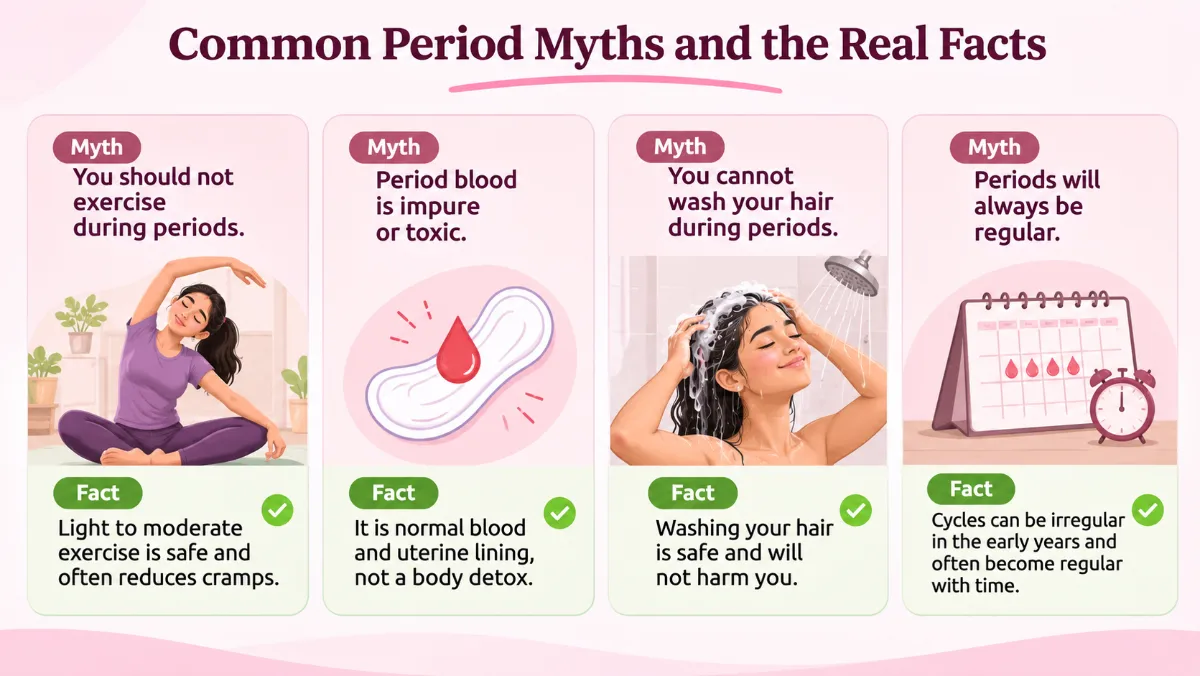 Period Myths and the Role Parents Play
Many beliefs about periods are passed down through generations without medical evidence. Parents can help teenagers separate myths from facts while building confidence through open conversations and practical guidance.
- Washing Hair and Food: Bathing, washing hair and touching pickles are safe during periods. Normal hygiene is all that is needed.
- Safe Pain Relief: Appropriate medicine can help manage period cramps. Parents should guide teenagers on safe pain relief rather than discourage treatment.
- Staying Active: School, sports and exercise can continue during periods. Encourage teenagers to track their cycles without comparing themselves with others.
- Open Conversations: Talk about periods without judgement. Respect your daughter’s privacy and encourage her to share concerns or unusual symptoms.
Parents who replace myths with medical facts help teenagers develop a healthy understanding of menstruation. Open communication builds confidence and makes it easier to recognise problems and seek timely medical advice.
Also Read:
- First Period in Girls: Signs, Preparation and What to Expect
- Puberty in Girls: Body Changes, Timeline and What Is Normal
Conclusion
Teenage periods can be irregular during the early years, but understanding your normal menstrual cycle helps reduce confusion and worry. Every teenager should feel confident discussing menstrual health without embarrassment.
Tracking irregular periods, menstrual flow and discomfort helps identify changes early. Heavy bleeding, severe cramps and prolonged gaps between periods should never be ignored. Timely medical advice can help prevent complications.
As a gynaecologist, I encourage parents to listen, guide and support their daughters. If you have concerns about your daughter’s menstrual health, book a consultation with me for personalised guidance and care.