

PCOS in Teenagers: Symptoms, Diagnosis and Care
For many parents who visit me for consultation, the worry begins with a daughter’s irregular periods, acne or new facial hair. Many have already read online that these signs point to PCOS in teenagers, and they arrive anxious for answers.
PCOS in teenagers is a real and common concern. The teenage years, however, also bring natural hormonal shifts that can look very similar. Telling the two apart takes a careful history, the right tests and, often, a little time.
As a practising obstetrician and gynaecologist, I counsel teenage girls and their parents on periods, skin and hormonal health. I guide each family with clear, age-appropriate and non-judgmental support, so that concerns are properly understood before any label is given.
In this article, I explore how normal hormonal changes differ from PCOS symptoms, how diagnosis works in adolescents, the link with insulin resistance and metabolic health, and how long-term management and follow-up protect a girl’s health.
Also Read:
PCOS in Teenagers and Normal Hormonal Changes
The early years after a first period bring hormonal shifts that affect cycles, skin and hair. Many of these changes are normal, yet they can overlap closely with the early signs of PCOS.
PCOS in teenagers is a hormonal condition marked by persistent irregular periods and signs of raised male-type hormones. These signs must continue beyond normal adolescent changes before a diagnosis is made.
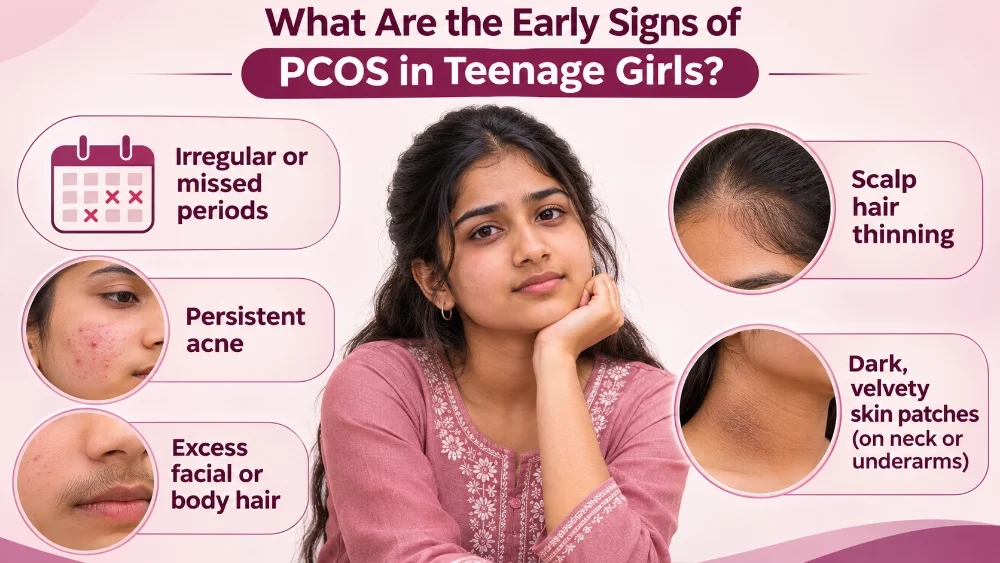 Hormonal Changes in the Years After the First Period
A teenage girl’s hormonal system continues to mature after menarche, her first period. The process that controls ovulation takes time to become regular, so menstrual cycles may vary during the early years.
Some cycles occur without ovulation, causing periods to arrive early, late or occasionally skip a month. Acne and new body hair are also common aspects of adolescent health. These normal changes can resemble PCOS symptoms, making careful observation important before assuming a hormonal disorder.
PCOS Symptoms in Teenagers That Persist Over Time
Early signs of PCOS may include persistent irregular periods, severe acne, excess facial or body hair, and scalp hair thinning. Dark, velvety patches on the neck or underarms may indicate insulin resistance.
A gap exceeding three months between periods, more than one year after menarche, requires medical assessment. These symptoms do not automatically confirm PCOS. Their persistence, severity and combination help doctors distinguish normal adolescent development from hormonal concerns that need further evaluation.
A single irregular cycle or a few pimples do not automatically indicate PCOS. However, persistent symptoms or menstrual cycles outside the expected range should prompt a timely gynaecological assessment rather than waiting for the symptoms to resolve
PCOS Diagnosis in Adolescents
Diagnosing PCOS in a teenager needs more care than in an adult woman. Clinicians rely on defined criteria and a detailed history, so that normal development is not mistaken for a hormonal disorder.
Adolescent Diagnostic Criteria for PCOS
International guidance sets clear criteria for teenagers. These criteria help separate a true hormonal condition from the ordinary changes of puberty and early menstrual life.
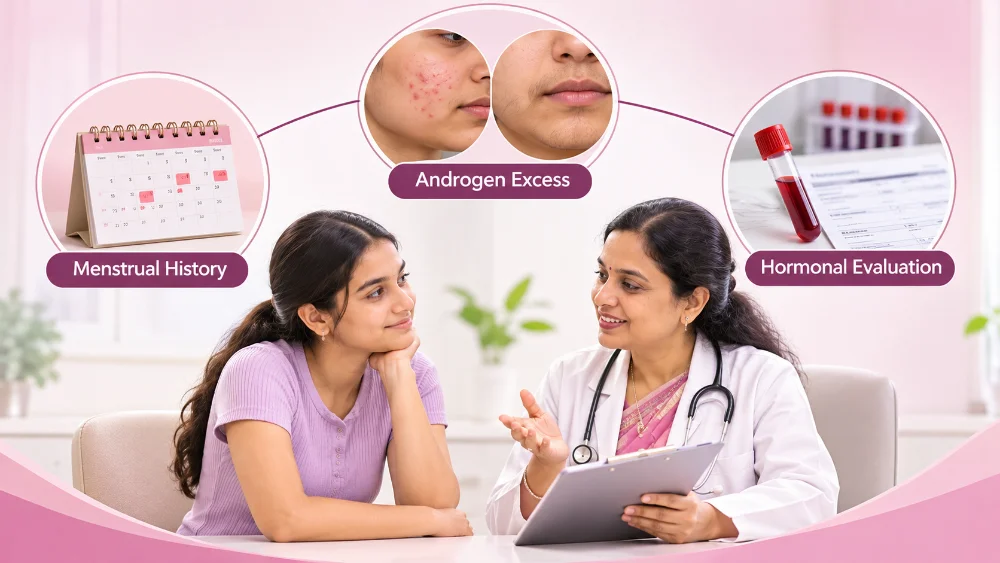
- Menstrual history: Cycle patterns are judged against the number of years that have passed since her first period.
- Androgen excess signs: Persistent acne or excess hair growth, or blood tests showing raised levels of male-type hormones.
- Both features present: Diagnosis needs irregular cycles and androgen excess together, after other possible causes are ruled out.
 Ultrasound Limits and Ruling Out Other Causes
Some tests used for adult women are not reliable in teenagers. Knowing their limits protects girls from an inaccurate diagnosis at a sensitive age.
- Ultrasound and AMH: Neither a pelvic ultrasound nor AMH, a hormone linked to the ovaries, should be used to diagnose PCOS in teenagers. Normal ovarian development can resemble polycystic changes.
- Other causes excluded: Blood tests help rule out thyroid, prolactin and other hormonal conditions that cause similar symptoms.
- Increased risk approach: Girls with some signs but not all criteria are reassessed over time rather than labelled early.
Careful diagnosis protects a teenager from an early and unnecessary label. It also makes sure that real hormonal concerns are identified early and followed up properly as she grows into adulthood.
Insulin Resistance and Metabolic Health in Teenage PCOS
PCOS affects more than periods and skin. It can also influence how the body handles sugar, and understanding this early helps protect long-term health without adding unnecessary worry for the family.
Insulin Resistance and Hormonal Imbalance in Adolescence
Insulin resistance is common in PCOS. It means the body needs more insulin than usual to keep blood sugar levels in balance.
Higher insulin levels can push the ovaries to make more male-type hormones, which may worsen acne, hair growth and irregular cycles. Insulin resistance can occur at any body weight, including in girls who are slim. For this reason, international guidance recommends assessing blood glucose status at diagnosis in every teenager with PCOS, regardless of weight. How often it is checked after that is personalised to each girl. Mood and body image also deserve attention, as PCOS can affect confidence at a sensitive age.
Can PCOS in Teenagers Be Managed Successfully?
Yes. With an accurate diagnosis, healthy daily habits, treatment matched to symptoms and regular follow-up, many teenagers with PCOS manage their symptoms well and protect their long-term reproductive and metabolic health.
With early glucose assessment, metabolic risks in teenage PCOS can be managed well. Steady medical support helps teenagers build healthy habits now that continue to protect their health into adulthood.
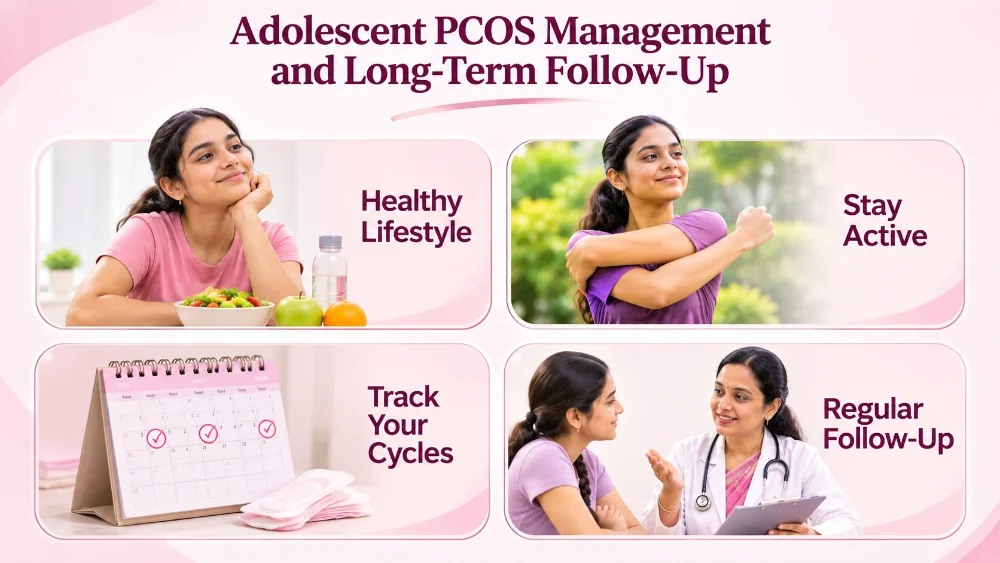 Adolescent PCOS Management and Long-Term Follow-Up
Adolescent PCOS management is gradual and personal. Lifestyle support comes first, treatment is matched to each girl’s symptoms, and regular review guides every step as her body continues to mature.
- Lifestyle support: Balanced meals, regular physical activity and good sleep support hormonal balance and metabolic health. Small, steady changes tend to last longer than strict plans.
- Symptom-led treatment: Treatment for irregular periods, acne or excess hair growth is chosen to suit each girl, her age and the concerns that matter most to her.
- Emotional wellbeing: Open conversations about body image and mood support her confidence, and parents can join these discussions when she is comfortable.
- Regular review: Follow-up visits track her cycles, symptoms and response to care, so the plan can be adjusted as she grows.
- Long-term monitoring: Metabolic and reproductive health stay under review as she moves into adulthood, which helps any change be picked up early.
Consistent care and follow-up help teenagers with PCOS stay healthy and informed. This approach reflects the wider importance of preventive healthcare across a woman’s life, from adolescent health awareness to maternal care in adulthood.
Also Read:
Clarity and Care for PCOS in Teenagers
The teenage years bring many hormonal changes, and most irregular cycles or skin changes are part of normal development. PCOS is different because its signs persist and tend to appear together over time.
A careful diagnosis, healthy daily habits and regular follow-up protect both her long-term health and her confidence. Early glucose assessment and steady review help keep metabolic concerns under watch.
If your daughter’s periods remain irregular, or her acne and hair growth are not settling, book an appointment with me. I will assess her symptoms carefully and guide you both with clear, personalised care.
Our Digital Imprints:
Dr. Madhu Goel
Senior Consultant Obstetrician and Gynaecologist
Director, Fortis La Femme
I am passionate about women’s health and believe that informed, compassionate care empowers women to make confident choices. With experience in high-risk pregnancies, infertility, and gynaecological care, my focus remains on guiding patients with clarity, empathy, and trust.
Stay informed with Health Hub, my newsletter dedicated to women’s health and wellness, where I share evidence-based insights and practical guidance.
You can also connect with me on Instagram | Facebook | LinkedInfor regular updates on women’s health.