
Pregnancy After FGR: Risk, Prevention and Monitoring
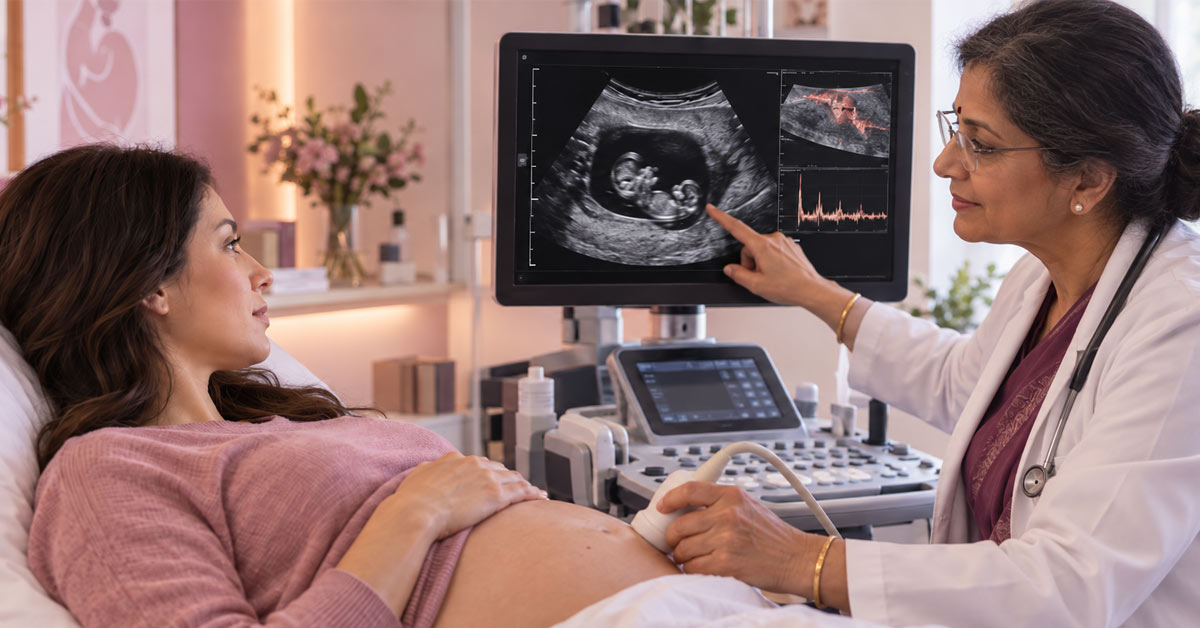
Kavita came to me before planning her second pregnancy. Her first baby had been diagnosed with growth restriction, and she still remembered the anxiety around every scan. Her first question about pregnancy after FGR was simple: “Can this happen again?”
The risk is higher after one affected pregnancy, but recurrence is not certain. What matters is understanding why growth restriction developed earlier and whether any maternal or pregnancy-related risks can be improved before conception.
As a practising obstetrician and gynaecologist managing high-risk pregnancies, I prefer to review the previous pregnancy before the next one begins. Old scans, blood pressure records, maternal health, timing of diagnosis, and delivery details often help shape that assessment.
In this blog, I explain FGR recurrence risk, preconception care, diet and early antenatal planning. I also cover how monitoring can be individualised in the next pregnancy based on previous history and current risk.
Also Read:
- Robotic-Assisted Surgery in Gynaecology: What It Means for Women
- Foetal Growth Restriction in Pregnancy: Causes, Diagnosis and Management
Previous Foetal Growth Restriction and Recurrence Risk
In my practice, I have seen women return after an FGR pregnancy carrying more fear than medical information. I do not begin with the percentage. I begin by understanding how the previous pregnancy unfolded and what that history means now.
After one pregnancy affected by foetal growth restriction, recurrence risk is close to 20 percent. However, risk varies with the timing, severity, maternal health, and underlying cause, so the next pregnancy should be assessed individually rather than treated as a repeat.
Previous FGR Changes Future Pregnancy Risk
A previous FGR pregnancy is not just a past event. In my practice, I read it as a clinical pattern. The timing, severity, maternal health, and placental findings help me judge the FGR recurrence risk before the next pregnancy progresses.
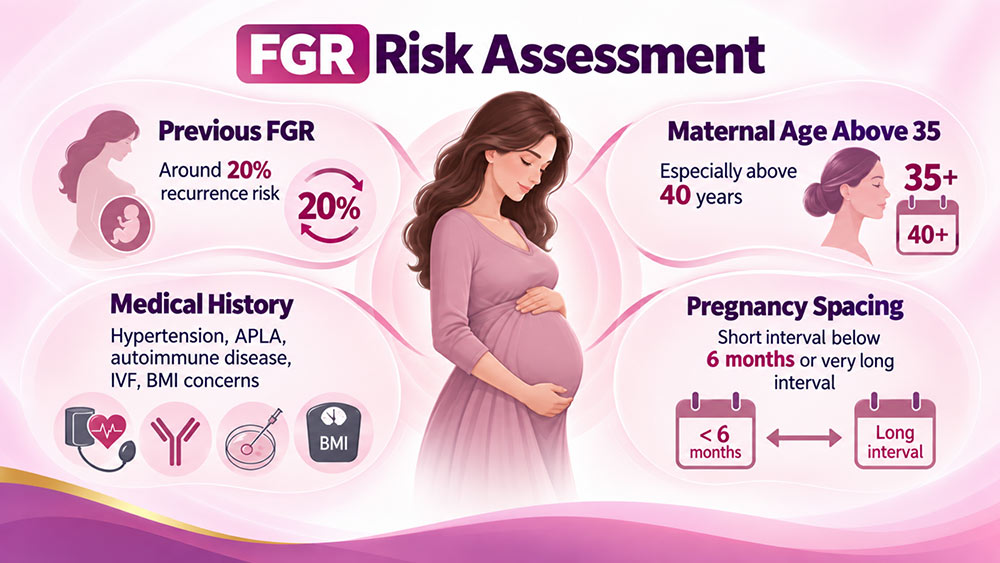 I discuss that risk early and in simple terms. Most women with previous FGR do not experience the same outcome again. Clear counselling matters because uncertainty often makes the perceived risk feel much greater than the actual one.
Severity and Timing Shape Future Risk
Earlier and later FGR can point to different clinical concerns, so timing matters. Early FGR may raise concern about foetal or genetic factors, while later FGR is more often linked with placental dysfunction. That distinction influences how I assess recurrence risk.
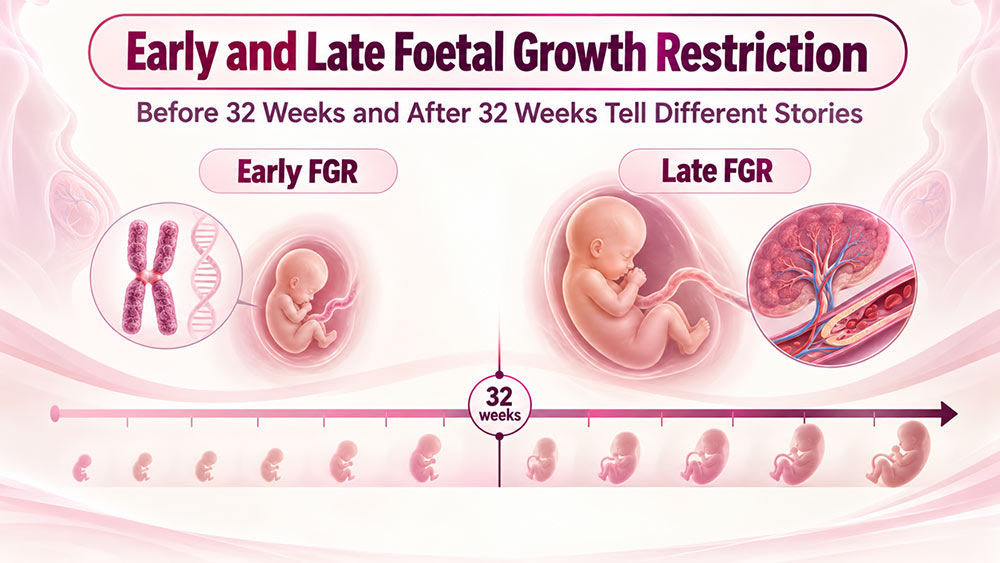 I therefore review the previous scans, blood pressure records, placental findings, and delivery notes together. These details help me separate modifiable risks from factors that simply need closer surveillance in the next pregnancy.
Preconception Planning After a Growth-Restricted Pregnancy
In my experience, the most useful planning for pregnancy after FGR often begins before conception. A preconception visit gives us time to review the previous pregnancy, identify modifiable risks, and optimise maternal health before the next pregnancy starts.
Reviewing the Previous FGR Pregnancy
I begin by reviewing the previous pregnancy in detail. The timing of growth restriction, scan pattern, maternal complications, and delivery course help me understand which risks may matter in the next pregnancy.
- Growth pattern: Old scan reports show when foetal growth slowed and whether the change was gradual or early.
- Pregnancy complications: Hypertension, pre-eclampsia, and placental findings help me understand whether placental dysfunction contributed to the previous FGR.
- Underlying health risks: Diabetes, hypertension, autoimmune conditions, and APLA syndrome are reviewed before conception because they may influence recurrence risk.
Optimising Maternal Health Before Conception
Not every risk factor can be changed, but several important ones can be addressed before pregnancy.
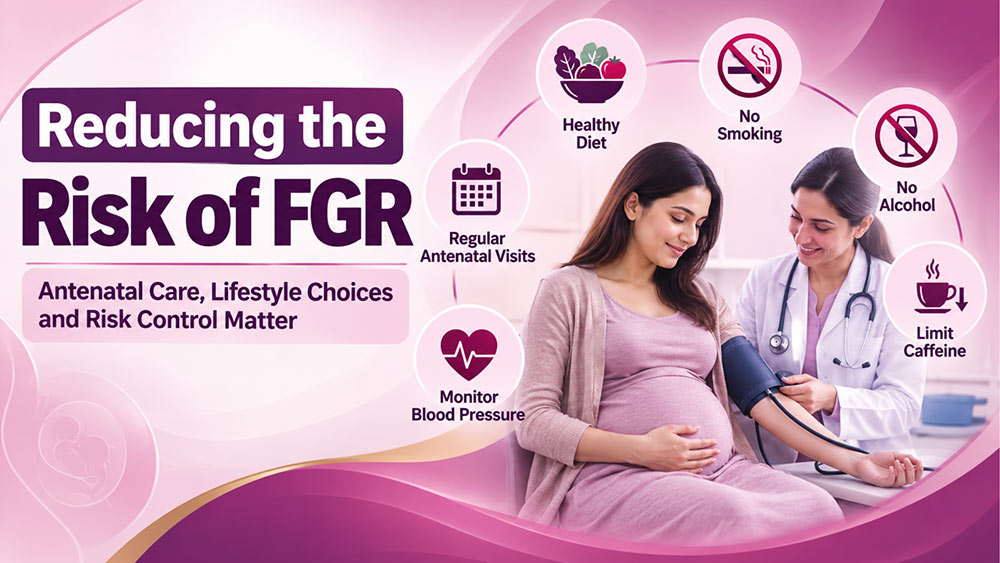
- Blood pressure control: Hypertension should be assessed and stabilised because it can affect placental function and foetal growth.
- Nutrition and weight: Anaemia should be corrected, nutrition reviewed, and a healthy weight encouraged before conception.
- Smoking cessation: Stopping smoking removes an important modifiable risk before placental development begins.
- Pregnancy spacing: A very short pregnancy interval, especially under six months, may increase risk and should be discussed during planning.
Preconception care cannot guarantee that FGR will not recur. It helps reduce avoidable risks and gives the next pregnancy a stronger clinical starting point.
 Early Pregnancy Care After Previous Growth Restriction
In women with a previous FGR pregnancy, I do not wait for growth concerns to appear before planning care. The first antenatal visits are used to establish accurate dating, review maternal risk, and decide how closely the pregnancy should be followed.
The First Antenatal Visits Are Planned Differently
I ask these women to book early because accurate dating matters from the start. An early scan confirms gestational age and gives me a reliable reference for interpreting every growth measurement later in the pregnancy.
I also establish the maternal baseline early. Blood pressure, haemoglobin, diabetes risk, and relevant autoimmune conditions are reviewed. If the individual risk profile warrants it, preventive treatment may be considered in early pregnancy under medical supervision.
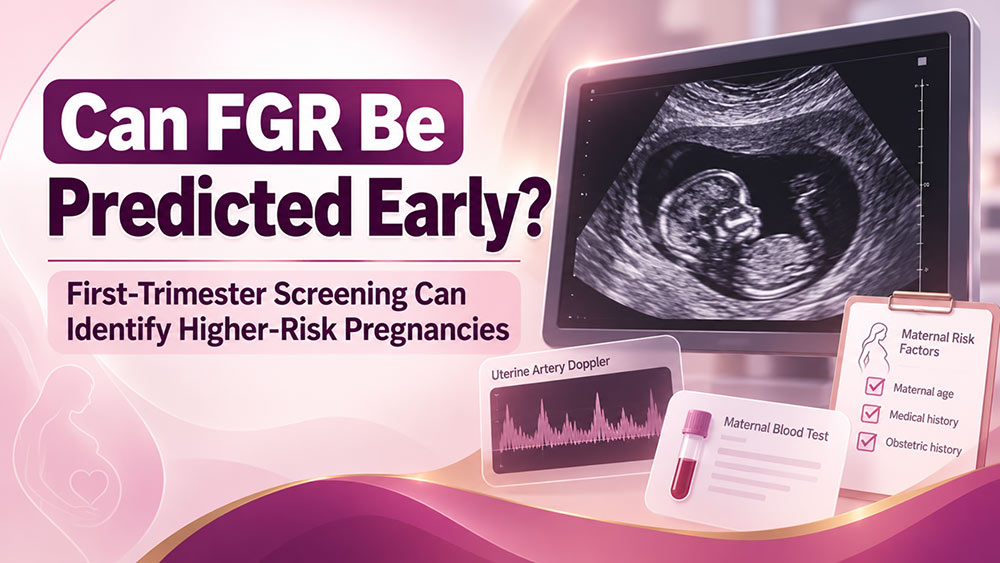 Can Foetal Growth Restriction Be Prevented in the Next Pregnancy?
Foetal growth restriction cannot always be prevented. However, identifying modifiable risks before conception, managing maternal health, and planning earlier antenatal surveillance can help doctors reduce avoidable risks and detect growth concerns sooner.
The purpose of these early visits is to build a clear plan before concerns develop. Decisions made at the start help guide monitoring more confidently as the pregnancy progresses.
Monitoring a Pregnancy After Previous FGR
After a previous FGR pregnancy, I usually plan surveillance more deliberately from the beginning. The aim is not to over-monitor, but to establish how the baby is growing and identify any change early.
- Planned growth surveillance: Growth scans may be scheduled earlier or more frequently, depending on the previous pregnancy and current maternal risk.
- Growth trajectory: I look at the pattern over time. A single measurement rarely tells the full story.
- Maternal assessment: Blood pressure and relevant clinical factors are reviewed alongside foetal growth throughout the pregnancy.
- Escalation when needed: Monitoring becomes more frequent only if new concerns appear. Previous FGR alone does not automatically mean intervention.
- Individualised follow-up: The schedule is guided by previous severity, maternal health, and how the current pregnancy is progressing.
A previous FGR pregnancy does not mean the same pattern will recur. Closer surveillance simply allows us to recognise change early and respond appropriately if it does.
Also Read:
- Preventing Anaemia in Pregnancy: Diet, Iron and Healthy Habits
- Anaemia During Pregnancy: Risks for Mother and Baby
Conclusion
Recurrence risk after foetal growth restriction is real, but it does not define the next pregnancy. The previous pregnancy helps identify which risks may need closer attention.
Pregnancy after FGR benefits from preconception planning and early antenatal assessment. Blood pressure, nutrition, weight, spacing, and relevant medical conditions should be reviewed before or early in pregnancy.
The aim is not to predict the same outcome, but to begin the next pregnancy with better information, clearer surveillance, and a plan shaped by individual risk.
If you have had a pregnancy affected by FGR, book a preconception consultation with me to review your previous records and plan ahead carefully.
Our Digital Imprints:
Dr. Madhu Goel
Senior Consultant Obstetrician and Gynaecologist
Director, Fortis La Femme
I am passionate about women’s health and believe that informed, compassionate care empowers women to make confident choices. With experience in high-risk pregnancies, infertility, and gynaecological care, my focus remains on guiding patients with clarity, empathy, and trust.
Stay informed with Health Hub, my newsletter dedicated to women’s health and wellness, where I share evidence-based insights and practical guidance.
You can also connect with me on Instagram | Facebook | LinkedIn for regular updates on women’s health.