

Robotic-Assisted Surgery in Gynaecology: What It Means for Women
Priya sat across from me with a list of questions she had written down. She had been told she needed surgery, and somewhere in that conversation three words had come up. Robotic, laparoscopic, open. She did not know what separated them, and she was not sure which one she was supposed to want.
It is a fair question, and most women are not given enough to answer it. The information available tends to sit at two extremes. Either it reads like an advertisement for the technology, or it is written for surgeons and assumes you already know what a console is.
I have professional working exposure to the SSI Mantra 3.0 system, with hands-on familiarity that has helped me understand how robotic assistance supports the surgeon in gynaecological practice. What it changes is what I can see inside the pelvis and how finely I can move instruments in a confined space. What it does not change is the decision about whether surgery is right for you, or which approach that surgery should take.
This article explains how robotic-assisted surgery works, what it offers the surgeon, which gynaecological procedures may use it, the potential benefits for patients, and how the right surgical approach is decided.
Also Read:
- Preventing Anaemia in Pregnancy: Diet, Iron and Healthy Habits
- Anaemia During Pregnancy: Risks for Mother and Baby
- Foetal Growth Restriction in Pregnancy: Causes, Diagnosis and Management
Robotic Surgery in Gynaecological Practice
Before anything else, it helps to be clear about what the system is and who is operating it. Two points settle most of the confusion I hear in consultation, and they are worth taking slowly.
Robotic-assisted surgery in gynaecology is a surgeon-controlled minimally invasive approach that uses robotic instruments, enhanced three-dimensional visualisation, and precise movement. The robotic system does not operate independently. It supports the surgeon while clinical judgement and decision-making remain with the operating team.
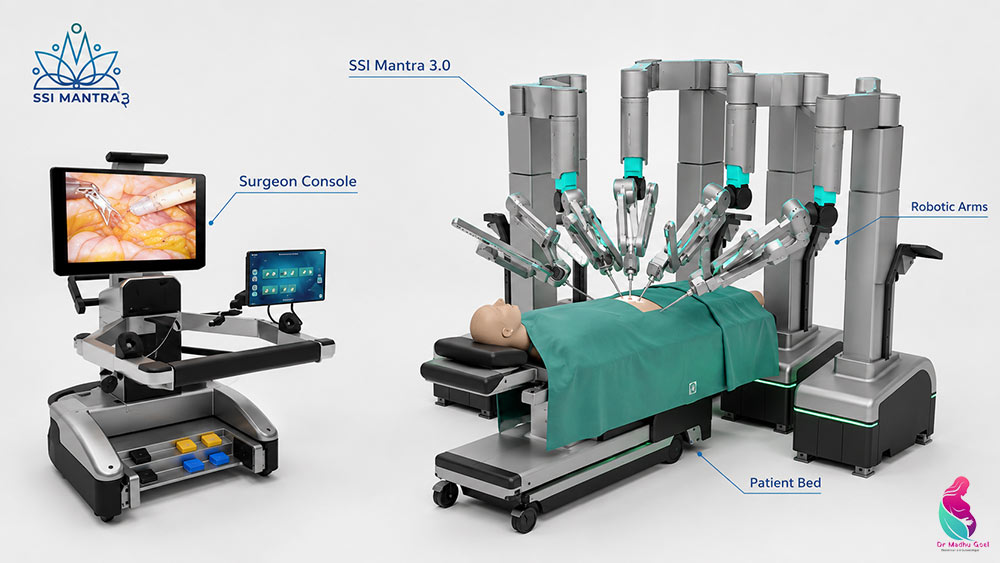
Robotic-Assisted Surgery in the Operating Theatre
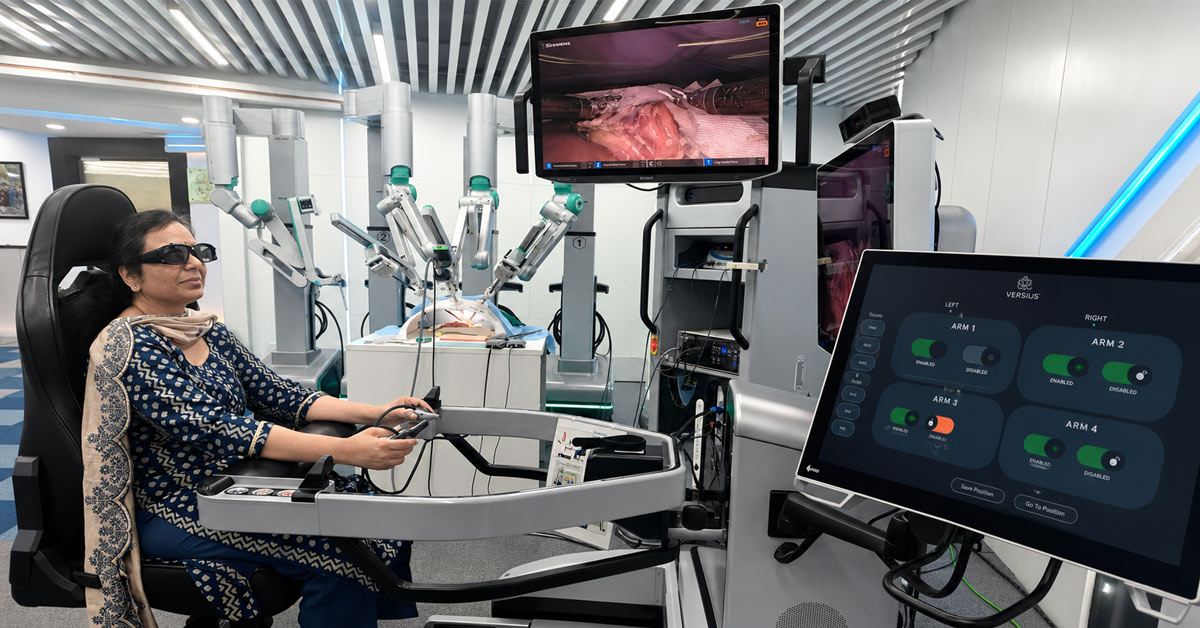
The surgeon works from a console in the operating theatre, controlling the instruments in real time through small-port access.
Your surgeon sits at that console for the whole procedure, hands on the controls. The instruments reach the surgical site through small ports rather than a large incision, and the camera sends back a magnified three-dimensional view of the field. Every movement the instruments make begins as a movement the surgeon makes. The system translates it. It does not originate it, and it does not act on its own.
Robotic Surgery and Conventional Laparoscopy
Both are minimally invasive. The differences sit in visualisation, instrument movement, range of motion, and which cases each suits.
Robotic surgery and conventional laparoscopy both reach the surgical site through small incisions. What separates them is the instrumentation. Robotic instruments articulate at the tip, which widens the range of movement available. Robotic systems typically provide enhanced three-dimensional visualisation, while conventional laparoscopic visualisation varies depending on the equipment used. None of that makes robotics automatically the better choice. Conventional laparoscopy remains effective and appropriate for a great many gynaecological procedures.
The technology extends what a surgeon can see and reach. It does not replace surgical judgement, and it does not substitute for the experience that decides how an operation should be approached.
Robotic Technology in Gynaecological Surgery
What robotic assistance offers the surgeon comes down to visualisation, access, and controlled instrument movement. More broadly, the integration of AI and robotics is reshaping how technology supports clinical precision. Working with the SSI Mantra system day to day has given me a practical sense of where each of those matters.
Visualisation in Complex Pelvic Surgery
Seeing clearly is half of pelvic surgery. Three things about the visual field change with robotic assistance. Understanding pelvic health also helps patients appreciate why surgery in this region can require careful access, visualisation, and control.
- Magnified view: The surgical field appears enlarged, which can help when tissue planes are difficult to distinguish.
- Depth perception: Three-dimensional imaging supports orientation within the pelvis.
- Stable field: The camera position remains steady during the procedure.
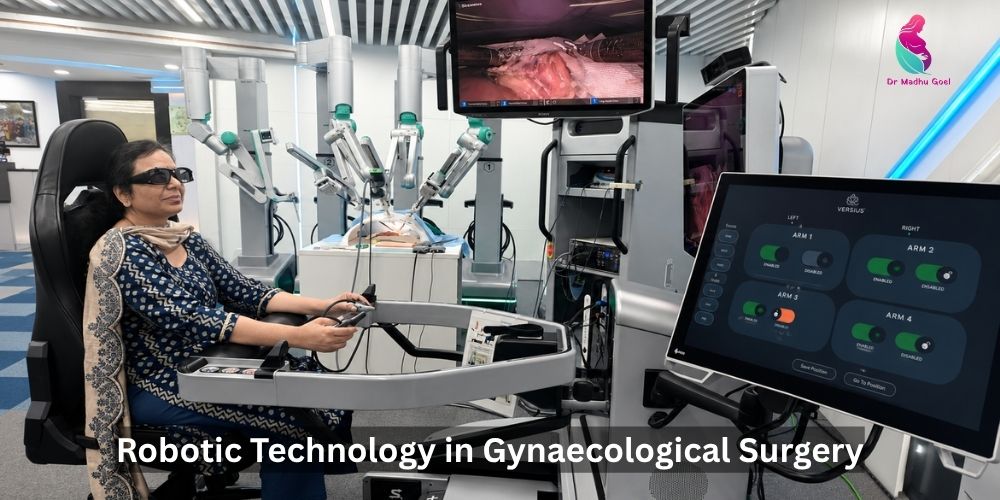 For surgeons, the value lies in enhanced visualisation, controlled movement and improved access in confined spaces. These capabilities can support precision while the surgeon remains fully responsible for every decision.
Robotic assistance can extend a surgeon’s vision, control and reach through 3D 4K visualisation, ergonomic hand controls and articulated instruments – Dr. Sudhir Srivastava, Founder, Chairman & CEO, SS Innovations International Inc.
Instrument Control and Surgical Precision
Alongside what the surgeon can see is what the surgeon can reach, and how finely those movements can be made.
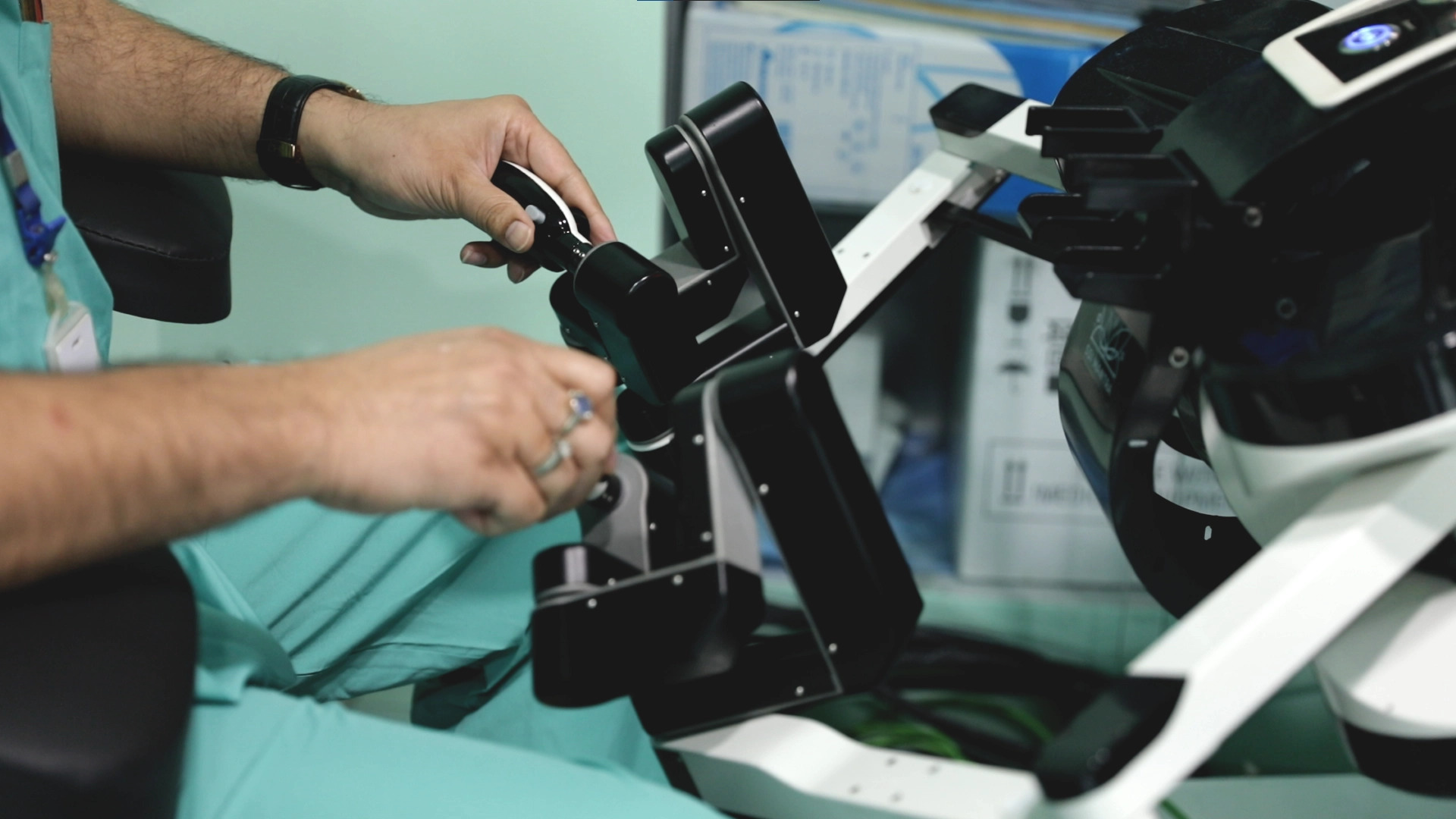
- Articulated instruments: Wristed movement allows access to angles that may be difficult to achieve otherwise.
- Tremor filtering: The system can smooth small hand movements during instrument control.
- Confined spaces: Fine control can assist when operating deep in the pelvis or around adhesions.
These are capabilities that matter to the surgeon. From where I sit, their real value depends on the procedure, the surgical complexity, and whether robotic assistance meaningfully supports that particular case.
Potential Patient Benefits of Robotic Gynaecological Surgery
What any of this means for you as a patient is a separate question. The potential benefits are real, but they depend on the procedure, on patient selection, and on the surgical plan as a whole.
Gynaecological Procedures Using Robotic Assistance
At Fortis La Femme, robotic-assisted gynaecological surgery using the SSI Mantra 3.0 system is offered for selected procedures, including:
- Fibroid removal: Robotic-assisted myomectomy may be used in selected cases requiring precise removal while preserving the uterus.
- Hysterectomy: Robotic assistance can support minimally invasive removal of the uterus in appropriately selected patients.
- Ovarian cyst surgery: Robotic technology may assist precise removal of selected ovarian cysts while supporting minimally invasive access.
- Endometriosis surgery: Robotic-assisted surgery may be considered in selected cases where disease involves complex or difficult-to-access pelvic areas.
Across these procedures, a robotic-assisted minimally invasive approach may support smaller incisions, less pain, reduced blood loss, and faster recovery in suitable patients. How your own recovery goes still depends on the procedure, the complexity of the surgery, and your individual clinical picture.
Some gynaecological conditions also highlight the wider importance of preventive women’s healthcare, including timely cervical screening and HPV vaccination

Is Robotic Surgery Better Than Laparoscopic Surgery?
Neither approach is better in every situation. Robotic surgery may offer advantages in complex or confined pelvic procedures, while laparoscopy remains highly effective for many cases. Suitability depends on the individual diagnosis and surgical plan.
Potential benefit is always specific. It rests on the procedure, your health, the surgical complexity, and whether robotic assistance offers a meaningful advantage in that case rather than simply being available.
Deciding When Robotic Surgery Is the Right Surgical Approach
Choosing robotic surgery is a clinical decision, not a technology preference. Depending on the diagnosis, surgical complexity, and individual patient factors, open surgery or conventional laparoscopy may still be the more appropriate option.
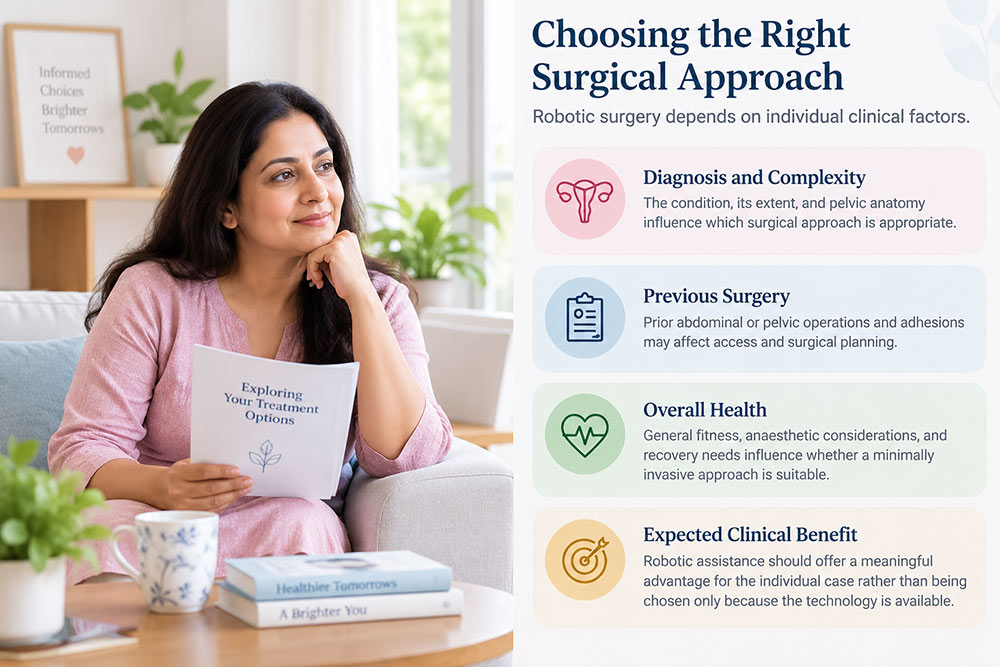
The decision should be based on clinical need, expected benefit, previous treatment, and the suitability of the chosen surgical approach.
- Diagnosis and complexity: The condition, its extent, and pelvic anatomy influence which surgical approach is most appropriate.
- Previous surgery: Prior abdominal or pelvic operations and adhesions may affect access and surgical planning.
- Overall health: General fitness, anaesthetic considerations, and recovery needs influence whether a minimally invasive approach is suitable.
- Expected clinical benefit: Robotic assistance should offer a meaningful advantage for the individual case rather than being selected only because the technology is available.
Patients should understand why a particular approach is being recommended. The right choice is the one that best matches the diagnosis, clinical situation, expected benefit, and recovery needs.
Also Read:
- High-Risk Pregnancy Tests and Monitoring: What to Expect
- Pregnancy After 35: Risks, Care, and Healthy Outcomes
- Pregnancy After FGR: Risk, Prevention and Monitoring
Conclusion
Robotic surgery is a surgeon-controlled minimally invasive approach. Systems such as SSI Mantra 3.0 support visualisation, instrument movement, and access during selected gynaecological procedures, with the surgeon directing every step.
Whether you benefit from robotic-assited surgery depends on your suitability, your diagnosis, the complexity of the surgery, your overall health. The advantage the approach is expected to offer. The technology alone does not decide that.
Ask why robotic, laparoscopic, or open surgery is being recommended in your case. Ask what the alternatives are. Ask which option fits your clinical needs, and expect an answer specific to you.
If you are weighing a gynaecological procedure and want to understand which surgical approach suits your situation, book a consultation with me for personalised guidance.




[…] Robotic-Assisted Surgery in Gynaecology: What It Means for Women […]