
Preventing Anaemia in Pregnancy: Diet, Iron and Healthy Habits
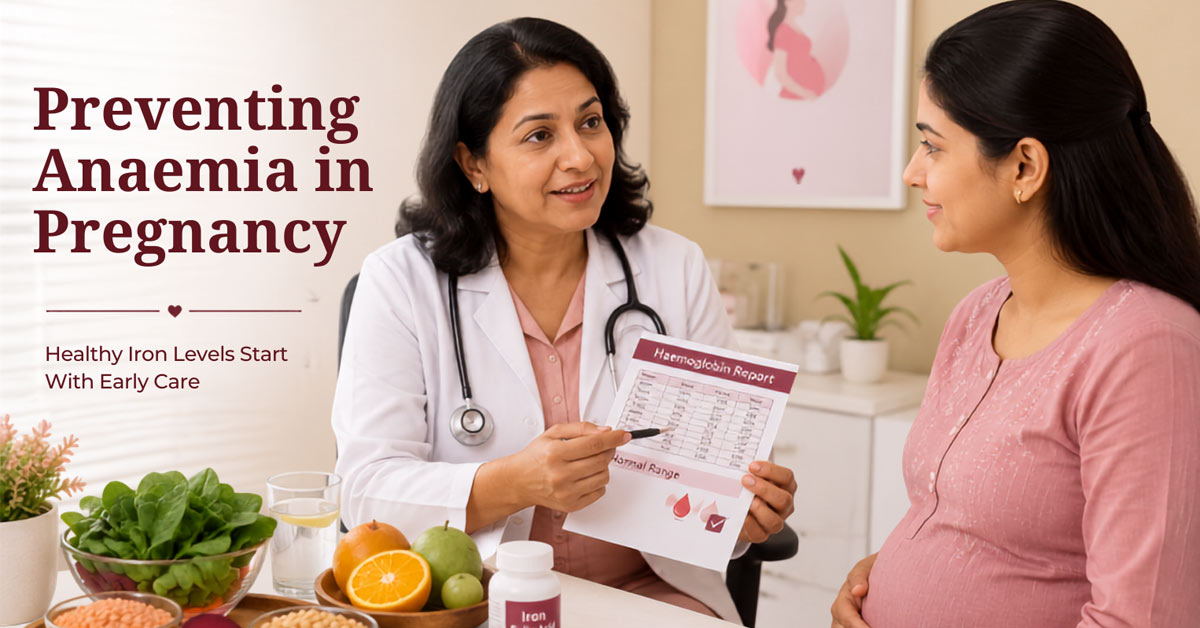
One question I hear very often at a first antenatal visit is, ‘Doctor, if I feel well and my haemoglobin is fine, why do I need iron?’ For me, this is where preventing anaemia in pregnancy really begins, before a woman feels anything is wrong
In my practice, I prefer to address nutrition and iron needs early rather than wait for haemoglobin to fall. Pregnancy requirements continue to increase over the months, so starting preventive support early gives us more time to protect healthy iron levels.
Iron requirements increase progressively during pregnancy. A balanced diet remains essential, but food alone may not always meet these increased needs. This is something I prefer women to understand early, while prevention is still the focus.
In this blog, I explore how food choices, iron supplementation, better absorption habits, routine haemoglobin monitoring and regular antenatal care can work together to help prevent anaemia during pregnancy. This blog is especially relevant for healthy diet for women. Specially the ones planning a pregnancy and those looking to maintain healthy iron levels throughout pregnancy
Also Read:
- Anaemia During Pregnancy: Risks for Mother and Baby
- Anaemia in Pregnancy: Causes, Symptoms, Diagnosis and Treatment
Preventing Anaemia in Pregnancy Starts Early
Iron requirements rise progressively through pregnancy, which is why preventive support works best when it is planned before stores become depleted rather than after a haemoglobin result raises concern.
Preventing anaemia in pregnancy starts early because iron requirements increase progressively as pregnancy advances. Balanced diet, appropriate iron supplementation and regular antenatal monitoring can help support maternal iron stores before increased pregnancy demands begin to affect haemoglobin levels later in pregnancy.
 Early Pregnancy Is the Window to Build Iron Support
I prefer to use the early months of pregnancy to establish the habits that will support a woman as her iron requirements increase. At this stage, she may feel completely well, which makes it easier to focus on prevention rather than correction.
This includes reviewing her usual diet, discussing iron and folic acid support, and making sure these measures are practical enough to continue consistently. I also explain that a normal early haemoglobin result does not mean iron needs will remain unchanged throughout pregnancy.
Early pregnancy is therefore an important time to establish a steady nutritional and antenatal routine that can support healthy iron levels as pregnancy progresses.
Starting Pregnancy With Stronger Iron Reserves
The iron a woman carries into pregnancy matters because those reserves support the increasing demands of the months ahead. During the first visit, I therefore look at her diet, previous pregnancies, and any history that may suggest she began pregnancy with limited nutritional reserves.
This does not mean anaemia reflects poor self-care. Two women can follow similar diets and still begin pregnancy with very different iron stores. My role is to recognise that difference early and plan support accordingly.
For me, prevention begins by understanding the woman’s starting point, then supporting her consistently as pregnancy places greater demands on her iron reserves.
Building an Iron-Rich Diet During Pregnancy
An iron-rich diet during pregnancy should be practical, varied, and easy to maintain. I usually advise women to strengthen foods they already eat rather than follow a complicated or restrictive diet.
Everyday Iron-Rich Foods for Pregnancy
Both vegetarian and non-vegetarian diets can provide useful iron. What matters is including suitable sources regularly across meals rather than depending on one particular food.
- Pulses and legumes: Dal, rajma, chana and other legumes can contribute useful plant-based iron as part of regular meals.
- Green leafy vegetables: Spinach, methi and other leafy greens add iron along with other nutrients important during pregnancy.
- Animal and fortified sources: Meat, poultry, fish and iron-fortified cereals can further strengthen daily dietary iron intake where appropriate.
Food Habits That Support Iron Absorption
The amount of iron in a meal is not the only thing that matters. I also guide women on simple food combinations that can help the body absorb dietary iron more effectively.
- Add vitamin C: Lemon, amla, oranges, guava or tomato alongside meals can improve absorption of iron from plant foods.
- Separate tea and coffee: Keeping these away from iron-rich meals and supplements can help avoid reducing iron absorption.
- Build consistency: Regular balanced meals containing iron sources are more useful than depending on occasional foods believed to be especially high in iron.
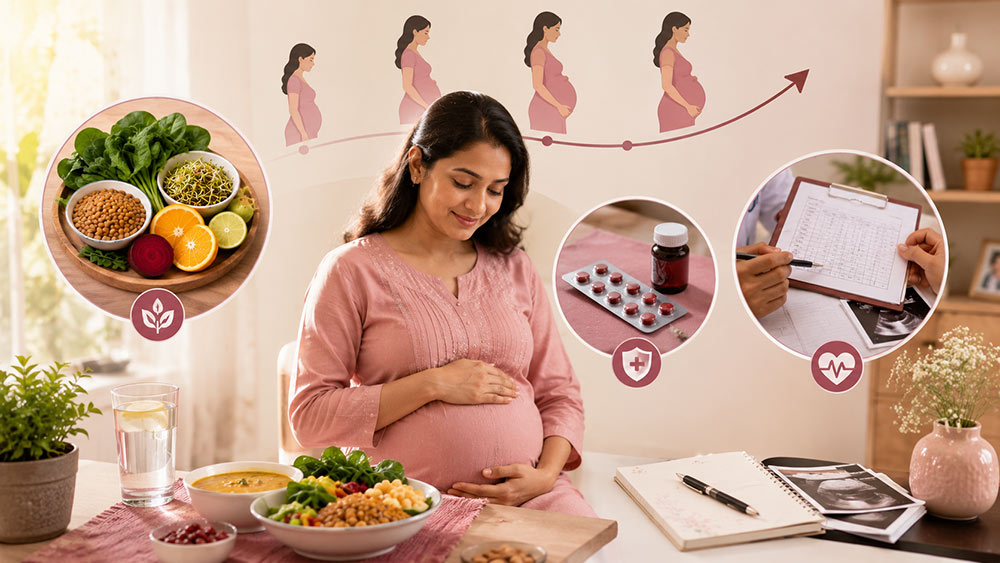
A healthy pregnancy diet supports iron stores best when good food choices and better absorption habits become part of everyday eating. Diet remains important, but it works alongside supplementation and regular antenatal care.
Iron Supplementation During Pregnancy
One of the most common questions women ask is whether a good diet can replace iron supplements during pregnancy. Diet remains essential, but supplementation may still be needed to support the increased iron requirements of pregnancy.
Diet and Supplementation Work Together
An iron-rich diet provides important nutrients and supports healthy iron levels throughout pregnancy. However, pregnancy places additional demands on maternal iron stores that food alone may not always meet consistently.
Iron and folic acid supplementation is therefore a routine part of antenatal care and may be advised preventively rather than only after haemoglobin levels fall. The timing and type of supplementation should always be guided by the treating doctor according to the individual pregnancy.
Consistency is equally important. Some women experience discomfort while taking iron supplements. Instead of stopping them on their own, I encourage women to discuss this during an antenatal visit so their doctor can review the approach and help them continue comfortably.
Can Diet Alone Prevent Anaemia in Pregnancy?
A balanced, iron-rich diet supports healthy iron levels, but food alone may not consistently meet the increased iron requirements of pregnancy. This is why iron and folic acid supplementation is commonly advised alongside good pregnancy nutrition as part of antenatal care.
For me, supplementation is not simply a response to low haemoglobin. It is part of preventive pregnancy care that works alongside good nutrition, regular monitoring, and individualised antenatal guidance.
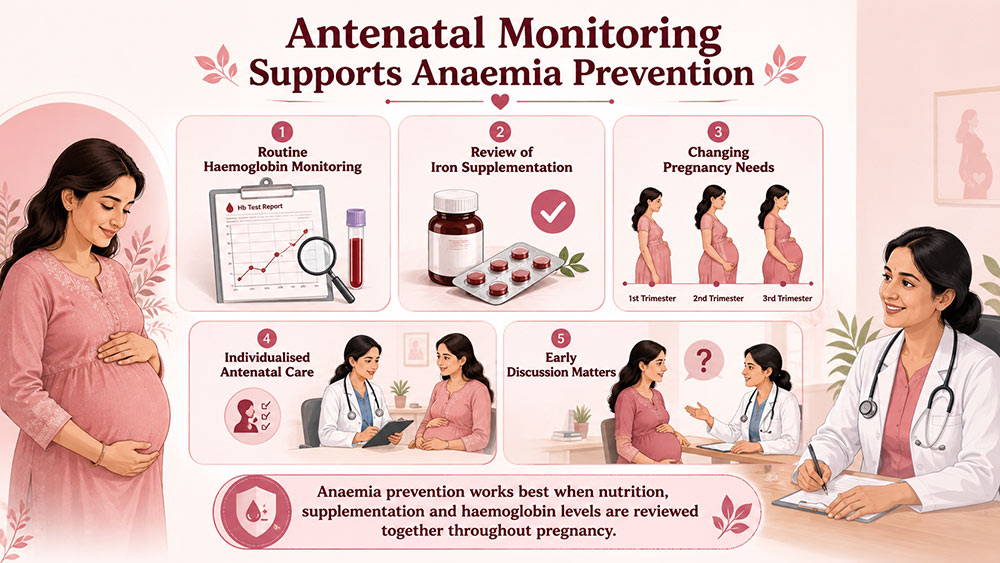 Antenatal Monitoring Supports Anaemia Prevention
Regular antenatal care is an important part of preventing anaemia in pregnancy because nutrition, iron supplementation and haemoglobin levels need to be reviewed as pregnancy progresses. A single normal result early in pregnancy does not replace continued monitoring.
- Routine haemoglobin monitoring: Haemoglobin testing at recommended intervals helps track changes over time and identify a downward trend before it becomes more significant.
- Review of iron supplementation: Antenatal visits allow the doctor to check whether supplements are being taken consistently and whether any side effects are making them difficult to continue.
- Changing pregnancy needs: Iron requirements increase as pregnancy advances, so nutritional and supplementation needs may also need to be reviewed over time.
- Individualised antenatal care: Women with previous anaemia, closely spaced pregnancies, multiple pregnancy or lower nutritional reserves may need closer monitoring and more personalised preventive support.
- Early discussion matters: Questions about diet, supplements or haemoglobin results are best addressed early rather than waiting until levels fall further.
In practice, anaemia prevention works best when nutrition, supplementation and haemoglobin levels are reviewed together throughout pregnancy. Timely adjustments can help maintain healthier iron levels and reduce the chance of anaemia developing later.
Also Read:
Supporting Healthy Iron Levels Throughout Pregnancy
Preventing anaemia in pregnancy depends on consistent nutrition, appropriate iron supplementation, better iron absorption, and regular haemoglobin monitoring. These measures work best together and should continue as pregnancy requirements change across the months.
Prevention also begins before symptoms appear. A woman may feel completely well while her iron needs are increasing, which is why early nutritional support and regular antenatal care remain important throughout pregnancy.
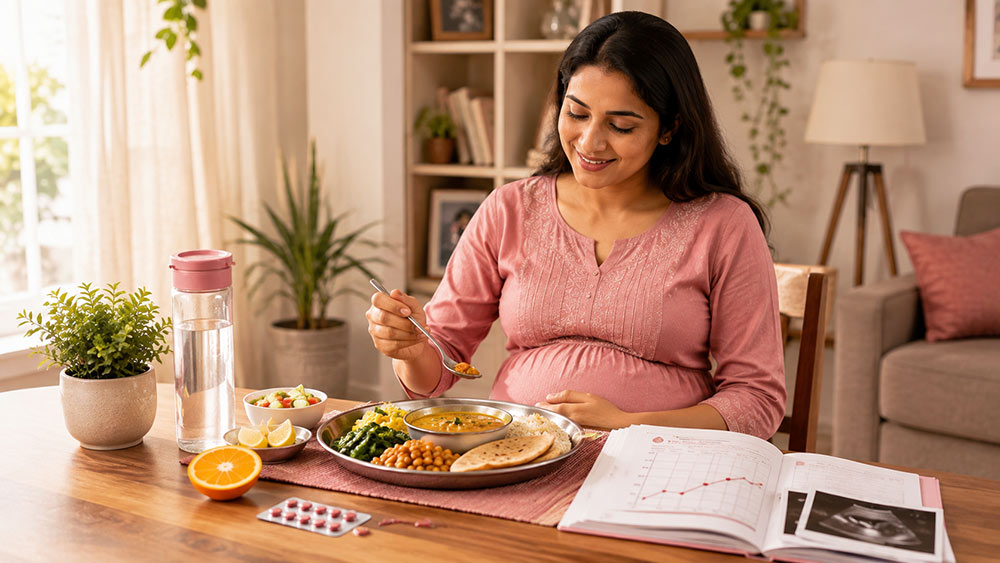 In practice, the goal is not simply to avoid a low haemoglobin result. It is to support healthy iron levels, identify changes early, and adjust pregnancy nutrition or supplementation when needed through personalised antenatal care.
If you are planning a pregnancy or are already pregnant, book a consultation with me to review your nutrition, iron support, and haemoglobin monitoring.
Our Digital Imprints:
Dr. Madhu Goel
Senior Consultant Obstetrician and Gynaecologist
Director, Fortis La Femme
I am passionate about women’s health and believe that informed, compassionate care empowers women to make confident choices. With experience in high-risk pregnancies, infertility, and gynaecological care, my focus remains on guiding patients with clarity, empathy, and trust.
Stay informed with Health Hub, my newsletter dedicated to women’s health and wellness, where I share evidence-based insights and practical guidance.
You can also connect with me on Instagram | Facebook | LinkedInfor regular updates on women’s health.