
Pregnancy After 35: Risks, Care, and Healthy Outcomes
“I’m 36. Does this mean my pregnancy is high risk?” It is one of the questions I am most frequently asked during a woman’s first prenatal consultation. As more women choose motherhood later in life, the number of pregnancies among women aged 35 and above continues to rise worldwide. Pregnancy after 35 is becoming increasingly common, but age alone does not determine whether you will have a healthy pregnancy.
Advances in fertility treatment, prenatal screening, and obstetric care have made late pregnancy safer than ever before.
 In my practice, I often meet women who become anxious after hearing the term advanced maternal age. I reassure them that pregnancy care is never planned on age alone. Your medical history, maternal age, overall health, lifestyle, and the progress of your pregnancy are equally important in deciding the care and monitoring you need.
This article explains the risks associated with Pregnancy after 35, why some women may require closer monitoring, how high-risk pregnancy is identified, and how personalised pregnancy care supports a healthy pregnancy and better outcomes for both mother and baby.
Also Read:
- High-Risk Pregnancy: Causes, Risk Factors, and Safe Pregnancy Care
- Premature Baby Care: Growth, Feeding and Development After Preterm Birth
- High-Risk Pregnancy Tests and Monitoring: What to Expect
Understanding Pregnancy After 35
In my practice, I have cared for many women who conceived after the age of 35. While many arrive worried that age alone will define their pregnancy, I reassure them that every pregnancy is unique. With timely assessment, personalised monitoring, and appropriate medical care, most women can look forward to a healthy pregnancy.
Pregnancy after 35 refers to pregnancy in women aged 35 years or older. While certain pregnancy risks increase with maternal age, advances in prenatal screening, personalised monitoring, and obstetric care help most women experience a healthy pregnancy.
Why Pregnancy After 35 Is Called Advanced Maternal Age
The age of 35 is used as a clinical reference point because certain pregnancy complications become more common as maternal age increases. However, this does not mean every woman will experience problems. It simply helps doctors identify women who may benefit from additional monitoring and timely investigations.
Modern prenatal screening, advanced ultrasound technology, fetal medicine, and personalised obstetric care allow many potential concerns to be identified early. This enables doctors to make informed decisions throughout pregnancy and support safer outcomes for both mother and baby.
Pregnancy After 35 Is Not Always High Risk
Being over 35 does not automatically mean you will have a high-risk pregnancy. While maternal age is one factor doctors consider, it is only one part of a much larger clinical assessment. Conditions such as diabetes, hypertension, thyroid disorders, obesity, autoimmune diseases, previous pregnancy complications, or multiple pregnancies often have a greater influence on the level of monitoring required. Many women over 35 who are otherwise healthy go on to have uncomplicated pregnancies and deliver healthy babies with regular antenatal care and appropriate medical supervision.
Rather than focusing on age alone, doctors evaluate your overall health, medical history, and pregnancy progress to develop a personalised care plan that supports the safest possible outcome.
Risks That Require Closer Monitoring
In my practice, I closely monitor women during Pregnancy after 35 because early identification of potential complications allows timely intervention, personalised care, and healthier outcomes for both mother and baby.
Maternal Health Considerations
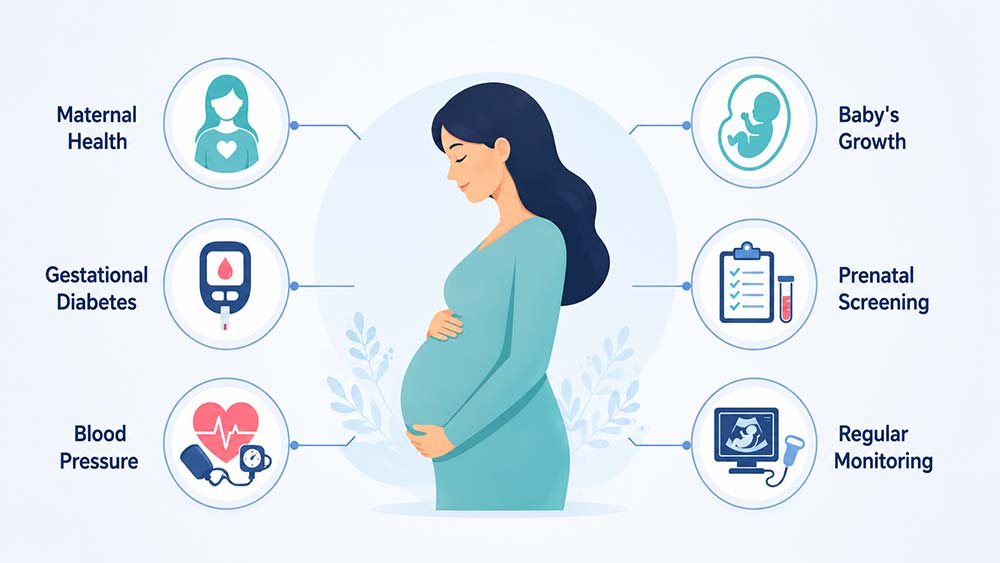
During Pregnancy after 35, doctors carefully monitor the mother’s health to identify conditions that may affect the pregnancy. Regular assessments help detect changes early and guide timely treatment.
- Gestational Diabetes — Early blood sugar testing helps identify the condition so dietary advice or treatment can begin promptly.
- High Blood Pressure and Preeclampsia — Regular blood pressure checks help detect these conditions early and reduce the risk of serious pregnancy complications.
- Placental Health and Birth Planning — Ultrasound scans monitor placental function, while ongoing assessments help determine the safest mode of delivery for mother and baby.
 Baby’s Health Considerations
Along with maternal health, doctors closely monitor the baby’s growth and wellbeing throughout pregnancy. Regular screening and ultrasound examinations help assess fetal development and identify concerns that may require additional care.
- Chromosomal Conditions — First-trimester screening and Non-Invasive Prenatal Testing (NIPT) help assess the likelihood of certain chromosomal conditions.
- Growth and Development — Growth scans monitor fetal growth, identify growth restriction, and assess birth weight throughout pregnancy.
- Preterm Birth and Fetal Surveillance — Regular antenatal reviews and fetal monitoring help identify early labour and guide clinical decisions during the later stages of pregnancy.
Understanding the risks associated with Pregnancy after 35 allows doctors to provide proactive, personalised care instead of reacting to complications after they occur. With regular monitoring and timely intervention, most women can achieve a healthy pregnancy and healthy outcomes for their baby.
Monitoring Pregnancy After 35
Regular monitoring is one of the most important aspects of Pregnancy after 35. In my practice, I explain that these tests are not meant to create anxiety but to identify potential concerns early. Timely prenatal screening, regular antenatal care, and personalised follow-up enable doctors to detect potential concerns early and provide appropriate care throughout pregnancy.
Not every woman with Pregnancy after 35 will have a high-risk pregnancy. However, women with late pregnancy may benefit from additional monitoring based on their medical history, existing health conditions, and the progress of their pregnancy.
Essential Tests and Ongoing Monitoring
Every pregnancy is unique, but women over 35 are usually advised to undergo a combination of routine investigations and specialised screening based on their medical history and pregnancy progress. These may include first trimester combined screening, Non-Invasive Prenatal Testing (NIPT), Nuchal Translucency (NT) scan, detailed anomaly scan, serial growth ultrasounds, blood pressure and blood sugar monitoring, urine tests, and fetal surveillance during the later stages of pregnancy when clinically indicated. Together, these assessments help evaluate fetal development, placental function, maternal health, and the early detection of pregnancy complications, allowing doctors to provide timely and personalised care.
What Monitoring Is Recommended During Pregnancy After 35?
Women with Pregnancy after 35 usually require regular antenatal check-ups, prenatal screening, blood pressure and blood sugar monitoring, ultrasound scans, and fetal surveillance when indicated. The frequency and type of monitoring depend on maternal age, medical history, and the progress of the pregnancy.
Regular monitoring allows doctors to remain proactive rather than reactive. By identifying changes early and adapting care accordingly, personalised pregnancy monitoring helps women achieve a healthy pregnancy and the best possible outcomes for both mother and baby.
Healthy Pregnancy After 35
With the right medical care and healthy lifestyle choices, most women can enjoy a healthy pregnancy after 35. In my practice, I encourage women to focus on proactive care rather than worrying about age alone. Early planning, regular monitoring, and informed decisions can make a significant difference to pregnancy outcomes.
- Book Early Antenatal Care — Schedule your first pregnancy visit early to begin timely investigations and receive a personalised care plan.
- Attend Every Appointment — Regular antenatal check-ups help monitor maternal health, fetal development, and identify potential concerns before they become complications.
- Complete Recommended Screening — Blood tests, prenatal screening, and ultrasound scans provide valuable information about your baby’s growth and overall pregnancy health.
- Follow Healthy Lifestyle Habits — Eat a balanced diet, stay physically active with medical guidance, remain well hydrated, and get adequate rest throughout pregnancy.
- Report New Symptoms Promptly — Seek medical advice without delay if you experience bleeding, severe headache, abdominal pain, swelling, reduced fetal movements, or vision changes.
- Build a Trusted Care Team — Regular communication with an experienced obstetrician provides reassurance, timely medical support, and personalised guidance throughout pregnancy.
With consistent antenatal care, recommended screening, and healthy daily habits, Pregnancy after 35 can be managed safely, helping most women achieve a healthy pregnancy and healthy outcomes for both mother and baby.

Also Read:
Conclusion
Pregnancy after 35 is becoming increasingly common, and age alone does not determine pregnancy outcomes. With regular antenatal care, prenatal screening, and personalised monitoring, most women can achieve a healthy pregnancy and healthy baby.
In my experience, informed decisions and timely medical care help replace uncertainty with confidence. Whether you are experiencing a routine pregnancy or a late pregnancy, regular monitoring allows potential pregnancy complications to be identified early and managed appropriately for the best possible outcomes.
If you are planning Pregnancy after 35 or have questions about your pregnancy, I would be happy to guide you with personalised care, comprehensive monitoring, and evidence-based advice to support a healthy pregnancy.
Our Digital Imprints:
Dr. Madhu Goel
Senior Consultant Obstetrician and Gynaecologist
Director, Fortis La Femme
I am passionate about women’s health and believe that informed, compassionate care empowers women to make confident choices. With experience in high-risk pregnancies, infertility, and gynaecological care, my focus remains on guiding patients with clarity, empathy, and trust.
Stay informed with Health Hub, my newsletter dedicated to women’s health and wellness, where I share evidence-based insights and practical guidance.
You can also connect with me on Instagram | Facebook | LinkedInfor regular updates on women’s health.