

Surgical Abortion Recovery: What to Expect and Future Planning
Just last week, a patient sat across from me and asked quietly, “Doctor, what happens after I go home?” In my practice, I often see that the anxiety after the procedure is greater than the procedure itself. Surgical abortion recovery is the stage where most women have the greatest uncertainty and need the clearest guidance.
Many women focus entirely on the procedure itself, only to feel uncertain once they return home. What should the body feel like? Are mood changes normal? When can daily life safely resume?
 In my clinical experience, recovery is rarely dramatic. It is gradual, structured, and medically predictable when guided properly. As a Senior Consultant Obstetrician and Gynaecologist, I have seen how clear guidance reduces anxiety and restores confidence.
Life after a surgical abortion is not a single event. It is a phase of physical healing, emotional recovery, and thoughtful future contraception planning. This guide explains what to expect, how to support post abortion care, and how to move forward safely.
Also Read:
- Surgical Abortion Law in India: Is It Legal and What Women Should Know
- Surgical Abortion in India: A Doctor’s Guide for Women
Surgical Abortion Recovery: What Is Normal and Expected
Surgical abortion recovery is usually straightforward when the procedure is performed by a qualified doctor. Many women assume recovery will be painful or prolonged, but this is a common misconception. In clinical practice, complications are rare when care is properly guided. Understanding what is medically expected helps women feel reassured and confident during post abortion care.
Immediate Recovery After Surgical Abortion
Physical recovery after surgical abortion is usually straightforward, especially when the procedure is performed by a qualified doctor in a clinical setting. Most women are able to return home the same day and begin healing immediately.
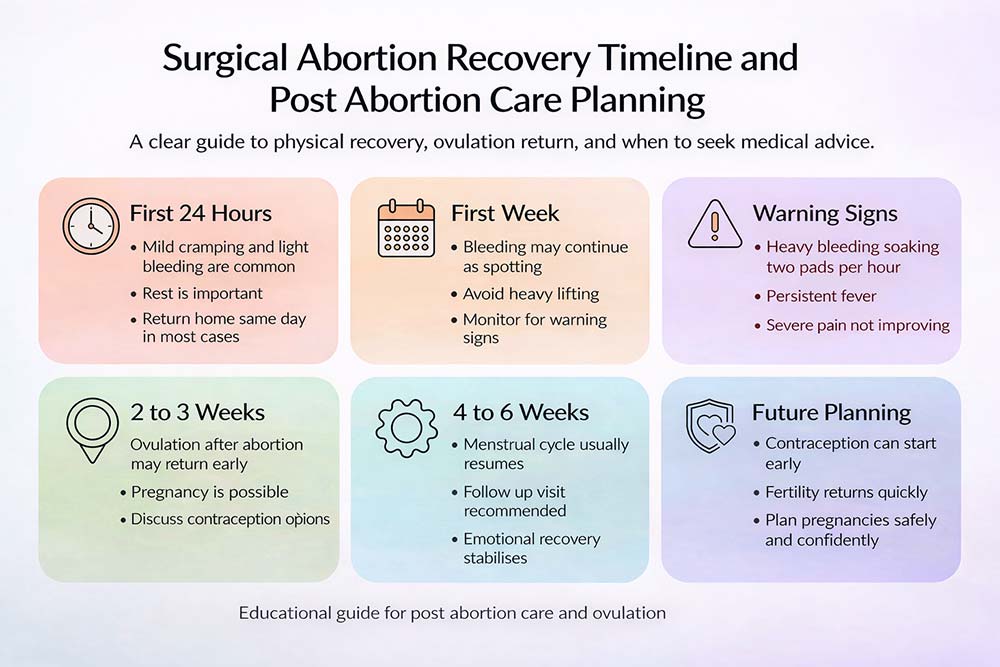
In the first 24 hours, it is common to feel tired or slightly weak. This is the body’s natural response to both the procedure and the medications used during it. Rest during this period is important. Gentle movement is encouraged, but strenuous activity should be avoided.
 Healing and Activity During Surgical Abortion Recovery
Over the next few days, the uterus gradually returns to its normal size, which may cause mild cramping similar to menstrual pain. These cramps usually lessen and can be managed with prescribed relief. Most women resume daily activities within days, avoiding heavy lifting for a week. Hydration, nutritious meals, and adequate sleep support steady healing.
Surgical abortion recovery progresses steadily when women follow medical advice and allow the body time to stabilise safely.
Bleeding and Cramping During Surgical Abortion Recovery
Bleeding and cramping are expected parts of surgical abortion recovery. Understanding what is normal helps reduce unnecessary worry and ensures timely medical attention when needed.
What Is Considered Normal Bleeding and Cramping?
Light to moderate bleeding is common for several days and may continue as spotting for one to two weeks. In my clinic, I often reassure patients that variation in bleeding patterns is normal, and comparison with others is unnecessary.
The bleeding may resemble a menstrual period or be slightly lighter. Small clots can occur in the first few days and are usually not a cause for concern.
Cramping occurs as the uterus contracts to return to its usual size. These cramps are typically strongest in the first few days and gradually reduce. For most women, the discomfort is manageable and improves steadily.
When Should You Contact a Doctor During Surgical Abortion Recovery?
During surgical abortion recovery, medical attention is required if bleeding soaks more than two pads per hour, severe pain does not respond to medication, fever persists, or discharge has a foul smell. These symptoms may indicate complications and should be evaluated promptly.
It is important to monitor symptoms without becoming anxious. However, certain signs require medical attention. Heavy bleeding that soaks more than two pads per hour for several hours, severe pain that does not improve with medication, persistent fever, or foul-smelling discharge should be reported to a doctor promptly.
Healing is not just about symptoms disappearing. It is about the body stabilising and returning to its normal rhythm. Menstrual cycles usually resume within four to six weeks, although this can vary.
Emotional Recovery After Surgical Abortion: What Is Normal
Emotional recovery after surgical abortion is a normal and expected part of healing. Understanding these changes helps women feel reassured during surgical abortion recovery and ongoing post abortion care.
Common Emotional Responses After Surgical Abortion
Emotional recovery after a surgical abortion is just as important as physical healing. Women experience a wide range of emotions, and all of them are valid. During my consultations, I frequently remind my patients that relief and sadness can coexist, and both are valid.
Some women feel relief. Others feel tired, emotionally sensitive, or unexpectedly low. Hormonal changes following pregnancy termination can influence mood, and these shifts are temporary. Emotional responses are not a reflection of weakness or regret. They are part of the body’s adjustment process.
There is no correct emotional response after abortion. Some women move forward quickly, while others need more time to process their experience. Emotional well-being should never be rushed or dismissed.
When to Seek Support for Emotional Recovery
Talking to a trusted person, practicing self-care, and allowing space for rest can be helpful. If emotions feel overwhelming or persist for several weeks, discussing them with a doctor can provide reassurance and guidance. Medical professionals are trained to support emotional health without judgment.
Recognising emotional recovery as a natural phase of surgical abortion recovery allows women to move forward with clarity and confidence.
Post Abortion Care and Follow-Up: Why It Matters
Follow-up care after surgical abortion plays a key role in ensuring complete recovery. Even when physical symptoms improve quickly, a follow-up visit allows the doctor to confirm that healing is progressing as expected.
What Happens During a Post Abortion Care Visit?
During a follow-up appointment, the doctor may assess bleeding patterns, discuss menstrual cycle return, and address any lingering discomfort. This visit also provides an opportunity to talk about emotional well-being and answer questions that may have emerged after the procedure.
 When Is Follow-Up Necessary After Surgical Abortion Recovery?
Skipping follow-up care is not advised. It ensures medical reassurance and helps prevent complications from going unnoticed. Follow-up visits are also a time to discuss future reproductive plans in a safe and supportive environment.
Women should view follow-up care not as an obligation, but as an extension of comprehensive healthcare and structured surgical abortion recovery.
Ovulation After Abortion and Future Contraception Planning
Ovulation after abortion can return within two to three weeks. Future contraception planning must begin early during surgical abortion recovery to prevent unintended pregnancy.
Ovulation after abortion can occur within two to three weeks, even before the first menstrual cycle. This means pregnancy is possible soon after the procedure, making early future contraception planning an essential part of post abortion care.
- Ovulation may occur early: It can happen before the first menstrual period. Many women assume fertility returns only after the first period, which is medically incorrect.
- Pregnancy risk resumes quickly: Fertility returns even if bleeding continues.
- Contraception should start immediately: Do not wait for the next cycle.
- Multiple methods are available: Pills, IUDs, injectables, and barrier options.
- Medical history guides choice: Health conditions influence method selection. A doctor can help assess medical history and future pregnancy plans.
- Doctor supervision strengthens safety: Structured post abortion care ensures correct initiation.
Future contraception planning protects reproductive health. It completes surgical abortion recovery with clarity, confidence, and long-term control.
Also Read:
- Life After Abortion: Recovery, Counselling, and Contraception Planning
- Abortion Laws in India: What Every Woman Should Know
Moving Forward With Confidence and Care
In my years of clinical practice, I have seen that surgical abortion recovery is rarely dramatic when guided properly. It is structured, predictable, and medically safe. What creates fear is not the procedure, but uncertainty. When women understand what to expect, healing becomes steady and controlled.
Recovery continues beyond the clinic. Follow-up care, emotional recovery, and timely future contraception planning protect long-term reproductive health. These steps are not optional. They complete responsible care.
Every woman deserves clarity, dignity, and evidence-based guidance. With the right medical support, women move forward not with doubt, but with strength and informed confidence.
If you need personalised, confidential guidance on surgical abortion recovery or future contraception planning, feel free to get in touch with me.
Our Digital Imprints:
Dr. Madhu Goel
Senior Consultant Obstetrician and Gynaecologist
Director, Fortis La Femme
I am passionate about women’s health and believe that informed, compassionate care empowers women to make confident choices. With experience in high-risk pregnancies, infertility, and gynaecological care, my focus remains on guiding patients with clarity, empathy, and trust.
Stay informed with Health Hub, my newsletter dedicated to women’s health and wellness, where I share evidence-based insights and practical guidance.
You can also connect with me on Instagram | Facebook | LinkedInfor regular updates on women’s health.




[…] Surgical Abortion Recovery: What to Expect and Future Planning […]
[…] responsibility as any other aspect of women’s health. When intervention is needed, doctors follow established pathways that prioritise predictability and patient […]
[…] Surgical Abortion Recovery: What to Expect and Future Planning […]