

Late Abortion in India: Medical Reasons and Legal Safeguards
Pregnancy does not always follow a predictable path. In clinical practice, I often see situations where serious complications appear later in pregnancy, forcing families and doctors to consider difficult decisions. One such situation is late abortion, a medical term used when a pregnancy is terminated beyond the early weeks. In India, thousands of women every year require termination of pregnancy due to maternal health risks or severe foetal abnormalities detected during routine screening.
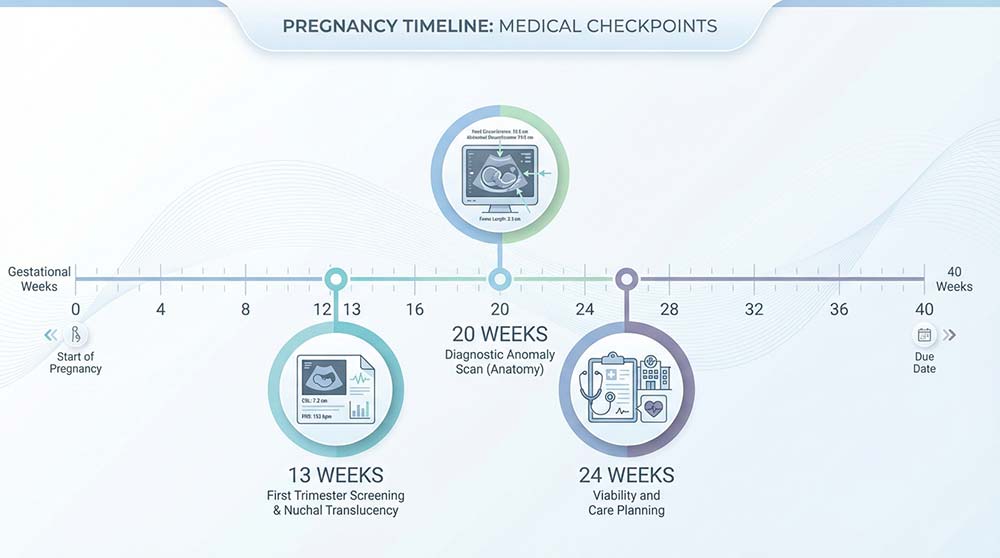 As a practising obstetrician and gynaecologist with decades of experience managing high-risk pregnancies, I have seen how complex these decisions can be. Late termination of pregnancy is rarely an elective decision. In most cases, it arises when continuing the pregnancy may endanger the mother or when a serious foetal condition is diagnosed during the anomaly scan. In such circumstances, medical termination of pregnancy is guided by clinical evidence, ethical responsibility, and legal safeguards.
This article explains what late abortion means in medical practice, why abortion after 20 weeks may sometimes be advised, and how Indian law protects women through structured medical oversight and doctor-guided care.
Also Read:
- Is Late Abortion Legal in India? Laws, Gestational Limits, and What Women Should Know
- Surgical Abortion Recovery: What to Expect and Future Planning
- Surgical Abortion Law in India: Is It Legal and What Women Should Know
What Late Abortion Means in Medical Practice
Late abortion refers to termination of pregnancy beyond the early weeks of gestation. In clinical practice, doctors use this term to describe later stage Medical Termination of Pregnancy that occurs after the first trimester under specific medical guidance.
Second Trimester Termination (13–20 Weeks)
Doctors often classify late abortion based on gestational stage to guide medical care. The second trimester termination usually occurs between 13 and 20 weeks of pregnancy. During this period, routine ultrasound scans and screening tests may identify serious foetal abnormalities or complications affecting the mother’s health.
In such situations, doctors may recommend late termination of pregnancy after careful medical evaluation. These decisions are always based on clinical findings and detailed counselling. The goal is to protect the mother’s health and address conditions that may make continuation of pregnancy medically unsafe.
Abortion After 20 Weeks
Termination beyond 20 weeks is commonly referred to as abortion after 20 weeks or late term abortion in general discussions. At this stage, pregnancy termination is undertaken only under specific medical and legal circumstances.
Under the Medical Termination of Pregnancy framework in India, such cases require careful medical review and, in many situations, approval from a designated Medical Board. This process ensures that late abortion is carried out only when strong medical reasons exist.
Late abortion is therefore very different from early pregnancy termination. Each case is individually assessed to ensure safe, ethical, and legally compliant care.
Why Late Abortion Is Different from Early Termination
Late abortion is medically different from early pregnancy termination because the stage of pregnancy changes how doctors approach care. As gestation advances, both the clinical evaluation and the procedure itself become more complex. This is why late termination of pregnancy is always managed with additional safeguards, specialist supervision, and structured medical assessment.
Medical and Procedural Differences in Later Pregnancy
A late term abortion involves greater physiological complexity than an early abortion. By the second trimester, the uterus and pregnancy tissues are more developed, which means the procedure requires specialised clinical expertise and careful monitoring. In many cases, termination is performed in a hospital setting so that doctors can manage the procedure safely and respond quickly if any complication arises.
Doctors also evaluate the medical situation in detail before recommending a late abortion. Investigation reports, ultrasound findings, and the overall health of the mother are reviewed carefully. In certain situations, more than one doctor may examine the case to ensure that the decision is medically appropriate.
Why do doctors follow stricter safeguards in late abortion?
These safeguards are designed to protect the woman’s health and ensure that medical termination of pregnancy is performed safely, ethically, and in accordance with established medical and legal standards.
Late abortion therefore involves a carefully supervised medical process. These safeguards are designed to prioritise patient safety, informed decision-making, and responsible clinical care as pregnancy advances.
Medical Reasons That May Lead Doctors to Advise Late Abortion
Late abortion is usually considered only when significant medical concerns arise during pregnancy. In many situations, these concerns become evident during routine medical screening or when the mother develops a serious health condition that makes continuation of pregnancy unsafe.
Foetal Conditions Identified During Pregnancy
Many foetal abnormalities are detected during the mid-pregnancy anomaly scan, which is typically performed between 18 and 20 weeks of gestation. In some situations, additional investigations such as genetic testing or amniocentesis may confirm a serious foetal condition. When these findings indicate a severe abnormality, doctors may discuss late termination of pregnancy as a medical option.
- Foetal anomalies: Structural conditions such as severe neural tube defects may be identified during ultrasound evaluation.
- Chromosomal disorders: Genetic abnormalities confirmed through diagnostic testing may affect long-term survival or quality of life.
- Progressive abnormalities: Some foetal conditions become visible only as pregnancy advances, leading to later medical evaluation.
 Maternal Health Risks and Special Circumstances
In certain cases, late abortion may be recommended because continuing the pregnancy could pose a serious risk to the mother’s health. Doctors assess the overall medical condition carefully before advising medical termination of pregnancy.
- Severe maternal illness: Conditions such as serious cardiac disease or aggressive cancer may require urgent treatment that cannot be delayed.
- Life-threatening complications: Certain hypertensive disorders or medical emergencies can make pregnancy unsafe for the mother.
- Late detection of pregnancy: Pregnancy may sometimes be discovered late in adolescents or women with irregular cycles.
- Pregnancy after sexual assault: Indian law recognises this as a special category under abortion law in India.
In every situation, the doctor evaluates medical findings, explains the risks and options, and provides guidance. The final decision remains with the woman after informed medical counselling.
Gestational Limits Under the MTP Act Explained Simply
The legal framework for abortion in India is governed by the Medical Termination of Pregnancy Act. These provisions define when and how doctors may advise late abortion or other forms of pregnancy termination while ensuring medical safety and legal protection for women.
Termination Up to 20 Weeks
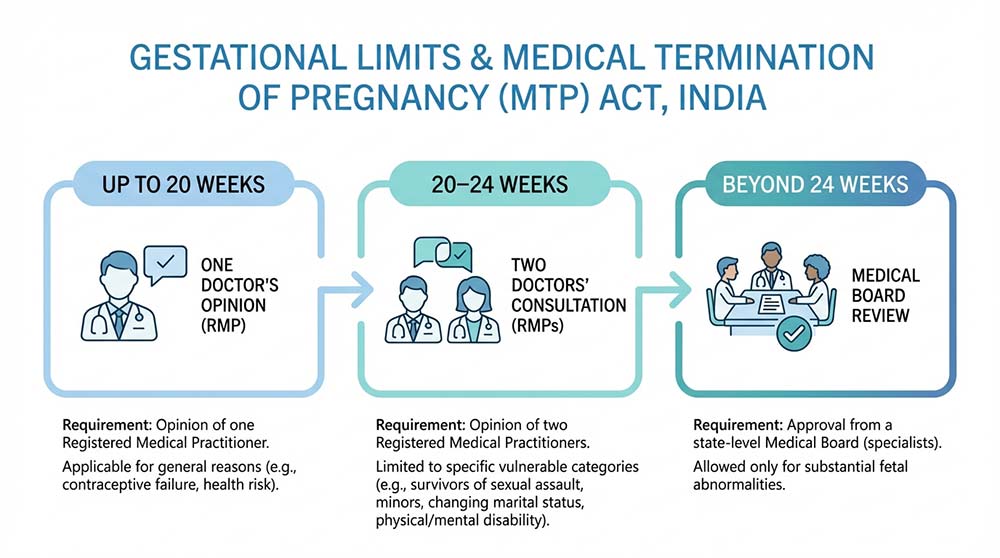
Under the Medical Termination of Pregnancy Act, termination of pregnancy up to 20 weeks can be performed if one registered medical practitioner believes the procedure is medically justified. Doctors may recommend medical termination of pregnancy in situations involving maternal health concerns, foetal abnormalities, or contraceptive failure. The decision is based on medical evaluation and clinical judgement.
 Termination Between 20 and 24 Weeks
For termination between 20 and 24 weeks, the law requires the opinion of two qualified doctors. This provision applies to certain categories of women recognised under the Act, including survivors of sexual violence, minors, and women facing specific medical or social circumstances. These safeguards help ensure that late termination of pregnancy is recommended only after careful medical review.
Termination Beyond 24 Weeks
If a serious foetal abnormality is diagnosed after 24 weeks, the case must be evaluated by a State Medical Board before termination can proceed. This process ensures that abortion after 20 weeks and later stage procedures follow strict medical and legal oversight.
These gestational limits help balance medical safety, legal accountability, and access to appropriate reproductive healthcare in India.
Doctor-Guided Hospital Care and Medical Safeguards
Late abortion requires structured medical supervision because the clinical, ethical, and legal aspects of care become more complex as pregnancy advances. For this reason, late termination of pregnancy must be performed only in registered hospitals or approved medical facilities where specialist expertise and emergency support are available.
- Specialist supervision: A senior gynaecologist evaluates the patient’s medical condition, reviews investigations, explains risks and options, and supervises the procedure to ensure safe medical termination of pregnancy.
- Hospital-based environment: Abortion after 20 weeks usually requires hospital monitoring, appropriate medical equipment, infection control protocols, anaesthesia support, and post-procedure recovery care.
- Multidisciplinary evaluation: In complex cases, additional experts such as foetal medicine specialists, geneticists, or physicians managing underlying illnesses may participate in clinical assessment.
- Medical Board review: When a late term abortion is considered beyond 24 weeks because of serious foetal abnormality, a State Medical Board evaluates the medical reports and imaging findings before approving termination.
- Confidentiality protections: Under Indian law, hospitals and doctors must maintain strict patient confidentiality, ensuring privacy and respectful care during every stage of treatment.
These safeguards are not barriers to care. They are structured medical protections designed to ensure that late abortion decisions are guided by expert evaluation, patient safety, and responsible clinical practice.

Also Read:
Conclusion
Facing a difficult pregnancy situation can feel overwhelming. When unexpected medical complications arise, timely medical advice helps women and families understand their options with clarity. Late abortion is never a casual decision. In clinical practice, it is considered only when medical findings indicate serious concerns affecting the mother or the foetus.
Understanding the medical reasons behind late termination of pregnancy, along with the legal safeguards under the Medical Termination of Pregnancy Act, helps reduce fear and confusion. These laws exist to ensure that abortion after 20 weeks is guided by medical evidence, specialist evaluation, and patient safety.
Seeking early consultation allows doctors to assess the situation carefully. Explain available choices, and support women through responsible decision-making with compassion and clinical care.
As a gynaecologist, I provide confidential consultations to help women understand their medical situation. These help them make informed decisions with clarity and reassurance.
Our Digital Imprints:
Dr. Madhu Goel
Senior Consultant Obstetrician and Gynaecologist
Director, Fortis La Femme
I am passionate about women’s health and believe that informed, compassionate care empowers women to make confident choices. With experience in high-risk pregnancies, infertility, and gynaecological care, my focus remains on guiding patients with clarity, empathy, and trust.
Stay informed with Health Hub, my newsletter dedicated to women’s health and wellness. I share evidence-based insights and practical guidance.
You can also connect with me on Instagram | Facebook | LinkedInfor regular updates on women’s health.





[…] According to the National Family Health Survey (NFHS-5), a significant proportion of pregnancies in India are unintended, highlighting why abortion recovery and follow-up care are essential parts of reproductive healthcare. Physical recovery after a surgical abortion can take a few days to a couple of weeks, with follow-up care usually scheduled during this period. This timeline reflects what we routinely see in clinical practice. […]
[…] Late Abortion in India: Medical Reasons and Legal Safeguards […]
[…] Late Abortion in India: Medical Reasons and Legal Safeguards […]