

Abortion Laws in India: What Every Woman Should Know
“Doctor, am I doing something illegal?” This question comes up repeatedly in my consultation room and highlights how abortion laws in India continue to be misunderstood, even among otherwise well-informed women. In over two decades of clinical practice, I have seen how fear around abortion laws in India delays care far more than the medical procedure itself. Many women arrive anxious not about health, but about legality, privacy, and judgment.
 Abortion laws in India are often misunderstood, leading to hesitation and unnecessary distress. From a doctor’s perspective, the law is clear and protective. What matters clinically is that care is sought early, safely, and under medical guidance. Abortion legality in India is well established and designed to protect women’s health, dignity, and autonomy.
The Medical Termination of Pregnancy MTP Act and its amendments recognise real-life situations women face today. Whether married or unmarried, young or older, the law prioritises safety, confidentiality, and doctor-led decision making.
This perspective is shaped by years of clinical experience caring for women in complex and sensitive situations. In this blog, I explain abortion laws calmly and clearly. The aim is to empower you with accurate medical and legal information. This will surely help you make informed, medically safe decisions without fear or stigma.
Also Read:
- When Contraception Fails: A Doctor’s Guide to Safe Abortion Care
- Contraceptive Counseling Access: Empowering Informed Choices
- Life After Abortion: Recovery, Counselling, and Contraception Planning
Understanding the MTP Act India and Its Purpose
In clinical practice, legal clarity around abortion is as important as medical safety. The MTP Act India exists to ensure women are not forced into unsafe decisions due to fear, misinformation, or delayed care. Understanding its intent helps patients and doctors act confidently within the law.
What is the MTP Act and Why Does it Exist?
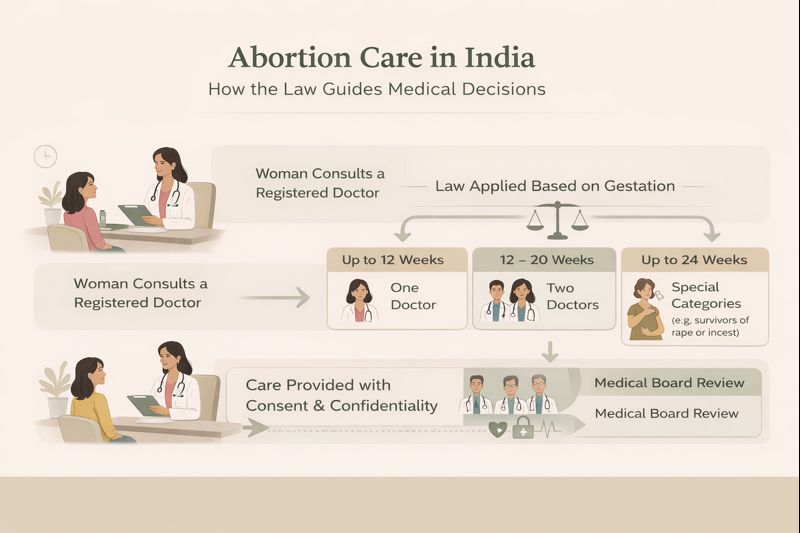
The MTP Act India was introduced to reduce unsafe abortion risks in India and to ensure women have access to regulated medical care. Before this law, many women resorted to unsafe and illegal methods due to lack of awareness or fear of social judgment. The Act legally permits abortion under defined medical conditions, placing the responsibility in the hands of qualified doctors rather than untrained individuals.
Amendment in 2021
The 2021 amendment to the Act modernised abortion laws in India by acknowledging changing social realities. It expanded access, increased gestational limits in specific cases, and clearly included unmarried women within its scope. The focus of the law is not moral judgment but patient safety, medical necessity, and dignity.
Doctors Are Legally Backed
Doctors are legally empowered to assess each case based on medical facts, gestational age, and patient wellbeing. This structured approach ensures abortion legality in India is not arbitrary but guided by science and ethics.
Abortion Laws in India
Key Takeaways from the MTP Act India
The MTP Act India establishes abortion as a regulated medical service rather than a moral or legal grey area. It places decision-making responsibility with trained doctors and protects women from unsafe practices driven by fear or misinformation.
- Medical supervision is mandatory: Abortion is legal only under qualified doctor guidance
- Patient safety comes first: Health and gestational assessment guide all decisions
- Legal protection exists: Doctors acting in good faith are supported by law
- Unsafe abortions are preventable: The Act directly addresses public health risks
Understanding the MTP Act India reassures women that abortion care is not a legal risk when guided by a doctor. The law exists to protect health, dignity, and safety, ensuring timely medical decisions are supported, not questioned.
Gestation Limit for Abortion & How It Is Applied?
In clinical consultations, gestational limits are one of the most misunderstood aspects of abortion care. Many women fear deadlines without understanding that these limits exist to guide safe, timely, and medically appropriate decisions for birth control.
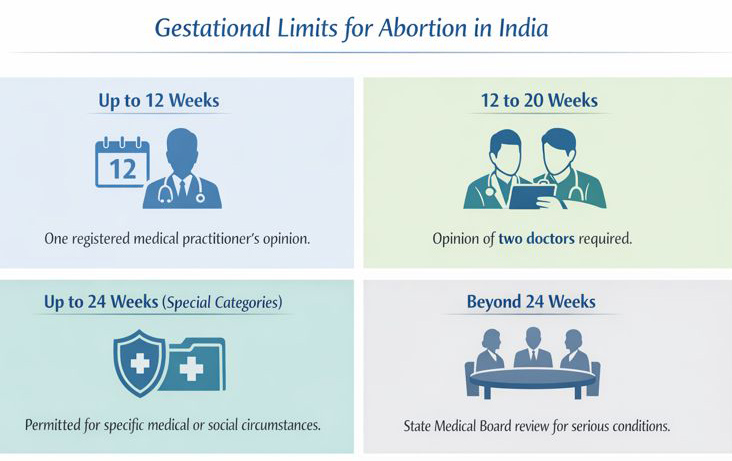
- Up to 12 Weeks: The gestation limit for abortion is clearly defined to balance medical safety and patient needs. Up to 12 weeks of pregnancy, abortion can be performed based on the opinion of one registered medical practitioner. This period generally carries lower medical risk and simpler procedures.
- From 12 to 20 Weeks: From 12 to 20 weeks, the opinion of two doctors is required. This ensures an added layer of medical evaluation, especially as pregnancy advances.
- Up to 24 Weeks : In special categories of women, including rape survivors and women with certain medical or social vulnerabilities, abortion is allowed up to 24 weeks.
- Beyond 24 Weeks : Beyond 24 weeks, abortion is not routine but may still be legally permitted after review by a state-appointed Medical Board. This board evaluates risks to the woman’s life, severe fetal abnormalities, and long-term health concerns. This process exists to protect both patient safety and legal accountability.
abortion limit in India
Takeaway Summary:
- Up to 12 weeks requires one doctor’s opinion
- 12 to 20 weeks needs two doctors
- Up to 24 weeks allowed for special categories
- Beyond 24 weeks requires Medical Board approval
Once gestational limits are understood, the next common concern women raise is whether their marital status affects access to care. Clinically and legally, abortion decisions are guided by health and consent, not by whether a woman is married.
Abortion Rights for Unmarried Women & Married Women
In my daily consultations at Fortis La Femme, women often hesitate before asking about abortion because they believe marital status determines their rights. Clinically and legally, this assumption is one of the most common and most unnecessary fears I encounter.
1️⃣ Married Women are Always Covered
All married women are covered under the abortion laws in India. Therefore, they need not worry about anything while undergoing a willful abortion with consent of their partner.
2️⃣ Unmarried Women are Legally Protected
One of the most important clarifications in recent years is that abortion rights for unmarried women are fully recognised under abortion laws in India. Marital status does not determine a woman’s right to medical care. This change reflects social realities and removes discrimination that previously caused confusion.
3️⃣ Unmarried women can seek abortion for contraceptive failure, emotional readiness, or personal circumstances, just like married women. The law does not require proof of marriage, spousal consent, or partner involvement. What matters is the woman’s health and informed choice.
 Trained Doctors for Abortion
This legal clarity has significantly improved access to safe care and reduced unsafe abortion risks in India caused by secrecy and fear. Doctors are trained to approach every patient with neutrality, confidentiality, and respect.
Abortion access in India is guided by medical judgment, not marital status. Unmarried women are legally protected, and consent remains a personal decision without any requirement for partner or spousal approval. Health, safety, and informed consent are the only criteria that guide care.
Consent, Autonomy, and Privacy Under Abortion Laws
In abortion care, consent and privacy matter as much as medical safety. In my clinical experience, women often worry about who must be informed or consulted, even though the law clearly places decision-making and confidentiality in the woman’s hands.
- Consent is Important. Consent is central to abortion legality in India. Only the pregnant woman’s consent is legally required if she is an adult and mentally sound. No parent, husband, or family member has legal authority to override her decision. This reinforces bodily autonomy and ethical medical practice.
- Safeguard’s Privacy of Patients. Patient privacy is strictly protected under the MTP Act. Doctors and hospitals are legally bound to maintain confidentiality. Disclosure of abortion details without consent is a punishable offence. This protection encourages women to seek timely, safe care instead of unsafe alternatives.
- Minors & Mentally Unstable Women. For minors or women with mental illness, guardian consent is required, but the woman’s wellbeing remains the priority. The law is structured to prevent coercion while ensuring protection.
When women understand that consent and privacy are legally protected, anxiety reduces significantly. These safeguards exist to support autonomy, encourage timely care, and ensure that medical decisions remain ethical, confidential, and centred on the woman’s wellbeing.
Role of Doctors and the Medical Board in Decision Making
In medical practice, abortion decisions are never taken in isolation. They are guided by clinical assessment, legal responsibility, and ethical judgment. Doctors and Medical Boards exist to support safe, lawful care, especially when pregnancies involve higher medical or gestational complexity.
 Expert Review
Doctors play a critical role in applying abortion laws responsibly. Their duty is to assess gestational age, medical risk, and patient circumstances while following legal guidelines. This doctor-led approach prevents misuse while ensuring compassionate care based on individual clinical needs.
Role of the Medical Board
In later gestation cases, the Medical Board includes senior specialists who evaluate complex medical conditions. Their role is not to deny care but to ensure decisions are evidence-based, ethical, and legally sound, particularly when risks to the woman’s health or severe fetal abnormalities are involved.
Legal Protection for Doctors
This structured system reassures patients that abortion legality in India is guided by medical science, not personal bias. It also protects doctors who act in good faith within the law, allowing them to prioritise patient safety without fear of legal repercussions.
Before summarising, it is important to understand what this system achieves in practice.
- Doctor-led decisions: Clinical judgment remains central to care
- Medical Board oversight: Complex late cases receive expert review
- Science-based approach: Decisions rely on medical evidence, not opinion
- Legal safeguards: Both patients and doctors are protected under the law
Understanding this framework helps women see that abortion care in India is carefully regulated. These safeguards exist to support ethical decision-making, protect health, and ensure that complex cases are managed with expertise, accountability, and compassion.
Also Read:
- Common Myths and Misconceptions About Contraception: A Doctor’s Perspective
- Surgical Abortion Recovery: What to Expect and Future Planning
Conclusion
Abortion laws in India are designed to protect women, not punish them. When guided by a qualified doctor, abortion is legal, confidential, and safe within defined gestational limits. The MTP Act India recognises autonomy, medical ethics, and the real-life situations women face.
Clear understanding of these laws reduces fear, prevents unsafe abortion risks in India, and encourages timely medical care. In clinical practice, informed decisions always lead to safer outcomes.
When uncertainty exists, seeking guidance from a registered medical practitioner ensures that care remains lawful, ethical, and centred on a woman’s health and dignity.
If you need clarity or personalised guidance, consult Dr Madhu Goel for confidential, doctor-led abortion care focused on safety, dignity, and informed reproductive health decisions.
Our Digital Imprints:
Dr. Madhu Goel
Senior Consultant Obstetrician and Gynaecologist
Director, Fortis La Femme
I am passionate about women’s health and believe that informed, compassionate care empowers women to make confident choices. With experience in high-risk pregnancies, infertility, and gynaecological care, my focus remains on guiding patients with clarity, empathy, and trust.
Stay informed with Health Hub, my newsletter dedicated to women’s health and wellness, where I share evidence-based insights and practical guidance.
You can also connect with me on Instagram | Facebook | LinkedInfor regular updates on women’s health.





[…] Abortion Laws in India: What Every Woman Should Know […]
[…] Abortion Laws in India: What Every Woman Should Know […]
[…] Abortion Laws in India: What Every Woman Should Know […]