
Life After Abortion: Recovery, Counselling, and Contraception Planning
Abortion is a medical procedure, and like all medical interventions, life after abortion involves recovery that continues well beyond the procedure itself. In my clinic, many women ask a simple but deeply human question once the procedure is over: “What should I expect now, and how do I move forward safely?” That concern is both valid and common.
According to the National Family Health Survey (NFHS-5), a significant proportion of pregnancies in India are unintended, highlighting why abortion recovery and follow-up care are essential parts of reproductive healthcare. Physical recovery after a surgical abortion can take a few days to a couple of weeks, with follow-up care usually scheduled during this period. This timeline reflects what we routinely see in clinical practice.
 As a gynaecologist, my responsibility extends far beyond the procedure itself. It includes supporting physical healing, emotional wellbeing, post abortion counselling, and guiding women on contraception after abortion or future pregnancy planning with clarity and confidence. Birth control is an important part of recovery after abortion, helping prevent unintended pregnancy while giving the body time to heal and allowing women to plan their next steps with clarity and confidence.
This article explains what patients can medically expect after an abortion, how structured follow-up supports safe recovery, and how fertility after abortion and future planning are addressed through doctor-guided care.
Also Read:
- Abortion Laws in India: What Every Woman Should Know
- When Contraception Fails: A Doctor’s Guide to Safe Abortion Care
- Surgical Abortion in India: A Doctor’s Guide for Women
Physical Recovery After Abortion
Physical recovery after abortion follows predictable medical patterns. Understanding what is normal helps patients recover with confidence and recognise when medical review is needed.
Recovery After Medical Abortion
After a medical abortion, physical recovery occurs gradually over several days. During abortion pill recovery, bleeding is usually heavier during the first two to four days and then steadily reduces. Cramping is expected as the uterus contracts and clears remaining tissue.
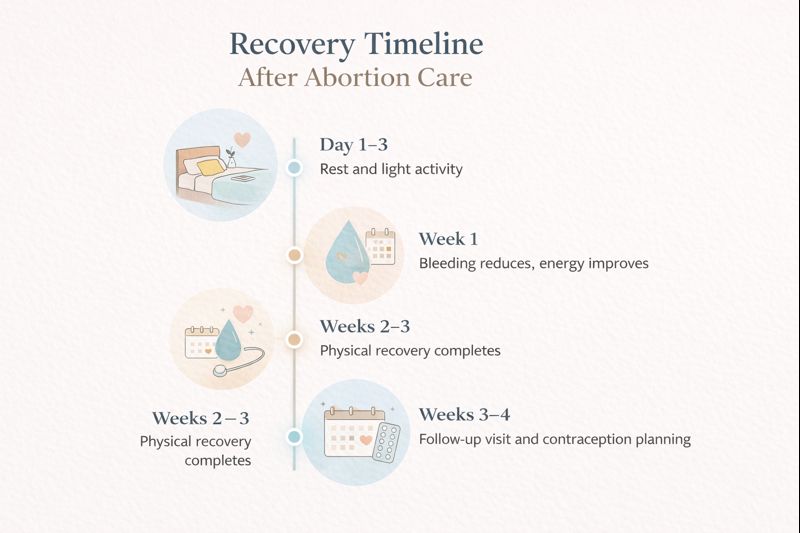 Mild fatigue may continue for a few days. Recovery timelines vary between individuals. Many patients feel physically settled within a week, while others may take slightly longer. The first period after abortion usually returns within four to six weeks, depending on hormonal adjustment.
In my experience, reassurance during this phase is often more important than medication. Knowing that symptoms are expected reduces anxiety and improves recovery.
Recovery After Surgical Abortion
For many patients, recovery after surgical abortion is physically quicker. Light bleeding or spotting may continue for a few days, along with mild lower abdominal discomfort. Most women are able to return to their usual daily routines within a few days, depending on individual recovery and overall health.
I usually recommend short rest after the procedure, and heavy physical exercise should be avoided briefly, as advised by medical guidelines. Listening to the body during this period supports smoother healing.
What Is Considered Normal During Healing
During abortion recovery, light to moderate bleeding, mild cramping, temporary breast tenderness, or fatigue are considered normal. Patients should seek medical advice if bleeding becomes very heavy, pain increases instead of improving, or fever develops. These checks are a routine part of safe post-abortion care.
From a clinical perspective, clear expectations reduce unnecessary fear and help patients seek care promptly when symptoms fall outside the normal range.
Emotional Wellbeing and Post Abortion Counselling
Emotional wellbeing is an important part of recovery after abortion. In my clinical experience, emotional responses vary widely. Post abortion counselling helps women understand these feelings, normalise emotional changes, and access timely support when emotions feel overwhelming or persist beyond the initial recovery phase.
Emotional Responses After Abortion
Emotional responses after abortion vary widely. Some patients feel relief, while others feel neutral, tired, or emotionally sensitive for a short period. Hormonal changes following pregnancy can influence mood, similar to what happens after childbirth or during menstrual cycles.
It is also common to experience sadness, guilt, or emotional numbness temporarily. These feelings do not indicate that something is wrong. In most cases, emotional intensity gradually settles within a few weeks as hormones stabilise and daily routines resume.
Why Emotional Experiences Differ
Every patient’s emotional experience is shaped by personal circumstances. Support systems, relationship dynamics, current life stress, and previous emotional health all play a role.
I often remind patients that comparison is unnecessary. Two individuals can have the same medical experience and respond emotionally in completely different ways, and both can be normal.
When Post Abortion Counselling Can Help
Post abortion counselling is voluntary and patient-led. It is helpful when emotions feel overwhelming, persistent, or difficult to discuss with family or friends. Professional counselling offers a safe, confidential, and non-judgmental environment where patients can explore their feelings and receive supportive guidance.
Clinically, seeking counselling reflects self-care and awareness. It is not a sign of weakness, but of taking recovery seriously.
Follow-Up Care and Fertility After Abortion
Follow-up care is a vital part of life after abortion, allowing doctors to confirm proper healing, address concerns, and provide reassurance while guiding patients safely through the recovery period.
Importance of Follow-Up Visits
A follow-up appointment allows confirmation that the uterus has healed appropriately and that there are no signs of infection or excessive bleeding. Patients often use this visit to clarify symptoms, discuss concerns, and ask when normal activities can be resumed.
In practice, follow-up visits often provide emotional reassurance alongside medical confirmation of recovery.
How Soon Fertility Returns
One important medical point is that fertility after abortion can return quickly. Ovulation may occur within a few weeks, sometimes even before the first period after abortion. This surprises many patients because there may be no obvious sign that fertility has returned.
Medically, abortion does not delay or harm future fertility. The reproductive system usually returns to its normal rhythm promptly.
Why Fertility Awareness Matters
Understanding early fertility return helps prevent unintended pregnancy. Pregnancy can occur before menstruation resumes. Clear information allows patients to make informed decisions without fear.
From a doctor’s perspective, fertility awareness empowers patients to make informed choices, reduces anxiety during recovery, and supports confident, well-planned reproductive decisions moving forward.
Contraception After Abortion and Future Planning
Contraception after abortion is a vital part of post-abortion care. It supports recovery, prevents unintended pregnancy, and helps women plan their reproductive future with medical clarity, safety, and confidence.
- Early return of fertility: Ovulation can occur within a few weeks after abortion, sometimes before the first period, making early protection important.
- When contraception can be started: Most contraceptive methods can be started immediately after an abortion. Waiting is usually unnecessary once recovery has begun.
- Doctor-guided timing: In my clinical practice, I advise contraception based on medical status, recovery progress, and patient preference to ensure safety and comfort.
- Short-term options: Suitable for women who wish to plan a pregnancy in the near future and need temporary protection.
- Long-acting methods: Helpful for those seeking reliable, low-maintenance contraception over a longer period.
- Hormonal and non-hormonal choices: Selected based on health history, tolerance, and individual comfort.
- Individualised decision-making: My role is to explain benefits and limitations clearly, allowing patients to choose what aligns with their health and life plans.
- Future pregnancy planning: Abortion does not affect future fertility. Most women conceive naturally when they are ready, and allowing time between pregnancies supports reproductive health.
With timely counselling and appropriate contraception, women can recover safely, protect their health, and plan future pregnancies with confidence, reassurance, and ongoing medical support.
Also Read:
- Contraceptive Counseling Access: Empowering Informed Choices
- Surgical Abortion Law in India: Is It Legal and What Women Should Know
Conclusion
Life after abortion involves more than physical healing. Ongoing care addresses physical recovery, emotional wellbeing, fertility awareness, and future planning. Follow-up visits provide reassurance and allow patients to understand early fertility return.
Clear counselling supports safe recovery, prevents unintended pregnancy, and guides contraception after abortion or future pregnancy planning. Personalised medical guidance helps patients move forward with clarity and confidence.
Patients are encouraged to get in touch with any questions or concerns at any stage of their care. Continued care is an essential part of recovery, and support remains available throughout this phase.
Our Digital Imprints:
Dr. Madhu Goel
Senior Consultant Obstetrician and Gynaecologist
Director, Fortis La Femme
I am passionate about women’s health and believe that informed, compassionate care empowers women to make confident choices. With experience in high-risk pregnancies, infertility, and gynaecological care, my focus remains on guiding patients with clarity, empathy, and trust.
Stay informed with Health Hub, my newsletter dedicated to women’s health and wellness, where I share evidence-based insights and practical guidance.
You can also connect with me on Instagram | Facebook | LinkedInfor regular updates on women’s health.